Department of Neuromuscular Diseases, UCL Queen Square Institute of Neurology and The National Hospital for Neurology and Neurosurgery, London WC1N 3BG, UK.
Institute of Child Health and Centre for Neuromuscular Diseases, Neurosciences Unit, The Dubowitz Neuromuscular Centre, University College London, UCL Great Ormond Street, Great Ormond Street Hospital, London WC1N 3JH, UK.
Brain. 2023 Dec 1;146(12):5098-5109. doi: 10.1093/brain/awad254.
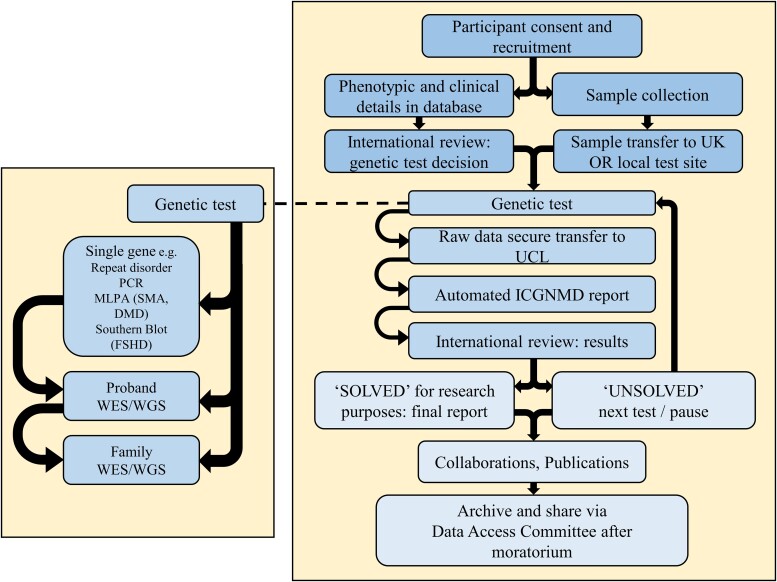
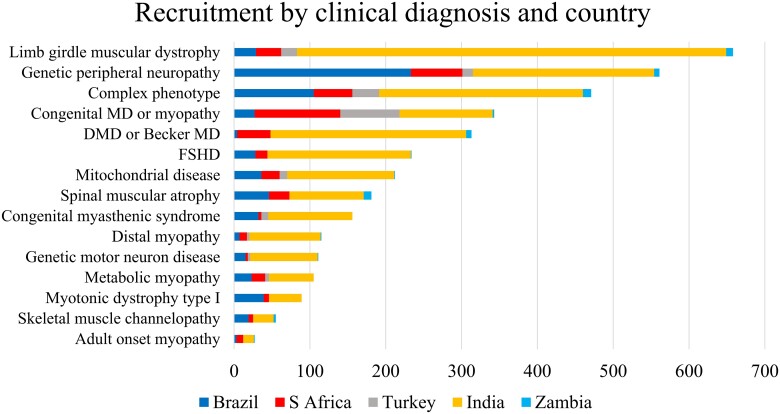
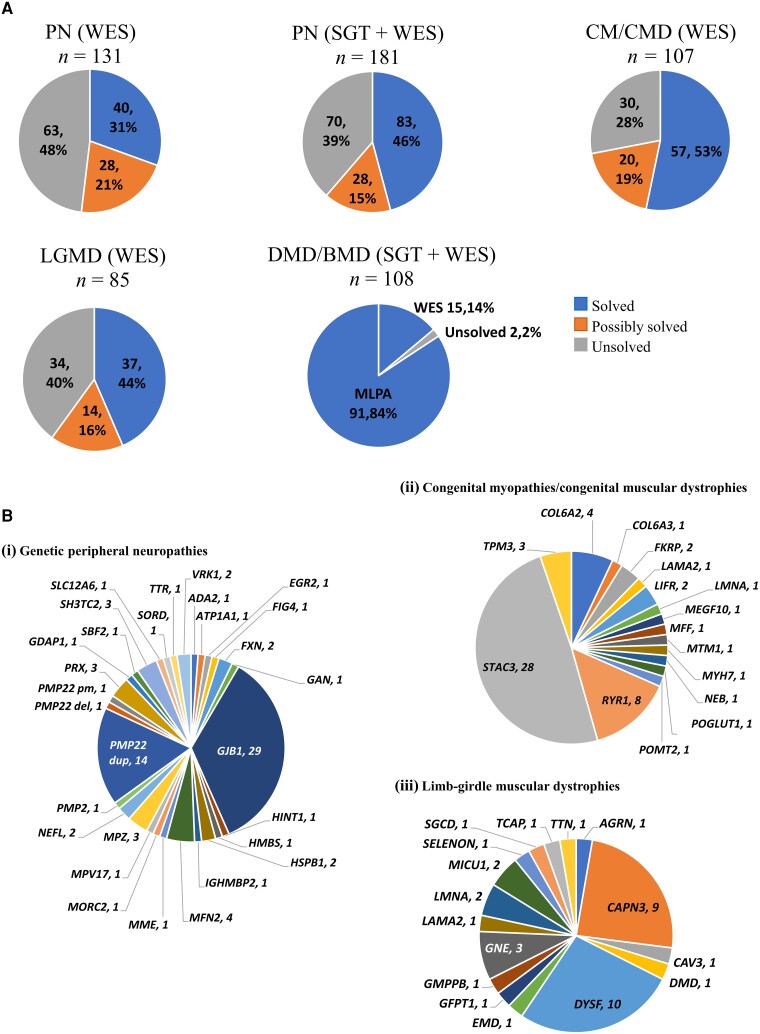
Neuromuscular diseases (NMDs) affect ∼15 million people globally. In high income settings DNA-based diagnosis has transformed care pathways and led to gene-specific therapies. However, most affected families are in low-to-middle income countries (LMICs) with limited access to DNA-based diagnosis. Most (86%) published genetic data is derived from European ancestry. This marked genetic data inequality hampers understanding of genetic diversity and hinders accurate genetic diagnosis in all income settings. We developed a cloud-based transcontinental partnership to build diverse, deeply-phenotyped and genetically characterized cohorts to improve genetic architecture knowledge, and potentially advance diagnosis and clinical management. We connected 18 centres in Brazil, India, South Africa, Turkey, Zambia, Netherlands and the UK. We co-developed a cloud-based data solution and trained 17 international neurology fellows in clinical genomic data interpretation. Single gene and whole exome data were analysed via a bespoke bioinformatics pipeline and reviewed alongside clinical and phenotypic data in global webinars to inform genetic outcome decisions. We recruited 6001 participants in the first 43 months. Initial genetic analyses 'solved' or 'possibly solved' ∼56% probands overall. In-depth genetic data review of the four commonest clinical categories (limb girdle muscular dystrophy, inherited peripheral neuropathies, congenital myopathy/muscular dystrophies and Duchenne/Becker muscular dystrophy) delivered a ∼59% 'solved' and ∼13% 'possibly solved' outcome. Almost 29% of disease causing variants were novel, increasing diverse pathogenic variant knowledge. Unsolved participants represent a new discovery cohort. The dataset provides a large resource from under-represented populations for genetic and translational research. In conclusion, we established a remote transcontinental partnership to assess genetic architecture of NMDs across diverse populations. It supported DNA-based diagnosis, potentially enabling genetic counselling, care pathways and eligibility for gene-specific trials. Similar virtual partnerships could be adopted by other areas of global genomic neurological practice to reduce genetic data inequality and benefit patients globally.
神经肌肉疾病(NMDs)影响全球约 1500 万人。在高收入环境中,基于 DNA 的诊断已经改变了护理途径,并导致了针对特定基因的治疗方法。然而,大多数受影响的家庭都在中低收入国家(LMICs),获得 DNA 诊断的机会有限。发表的大多数(86%)遗传数据都源自欧洲血统。这种明显的遗传数据不平等阻碍了对遗传多样性的理解,并阻碍了所有收入环境中准确的遗传诊断。我们建立了一个基于云的跨国合作伙伴关系,以建立多样化、深度表型和基因特征化的队列,以提高遗传结构知识,并有可能推进诊断和临床管理。我们连接了巴西、印度、南非、土耳其、赞比亚、荷兰和英国的 18 个中心。我们共同开发了一个基于云的数据解决方案,并培训了 17 名国际神经学研究员进行临床基因组数据分析。通过定制的生物信息学管道分析单基因和全外显子数据,并在全球网络研讨会上与临床和表型数据一起审查,以告知遗传结果决策。在最初的 43 个月中,我们招募了 6001 名参与者。最初的遗传分析总体上“解决”或“可能解决”了约 56%的先证者。对最常见的四个临床类别(肢体带肌营养不良症、遗传性周围神经病、先天性肌病/肌营养不良症和杜兴/贝克肌营养不良症)进行深入的遗传数据分析,得出了约 59%的“解决”和约 13%的“可能解决”的结果。近 29%的疾病引起的变异是新的,增加了不同的致病变异知识。未解决的参与者代表一个新的发现队列。该数据集为遗传和转化研究提供了来自代表性不足人群的大量资源。总之,我们建立了一个远程跨国合作伙伴关系,以评估不同人群中 NMD 的遗传结构。它支持基于 DNA 的诊断,可能使遗传咨询、护理途径和基因特异性试验的资格成为可能。其他全球基因组神经实践领域可以采用类似的虚拟伙伴关系,以减少遗传数据不平等,使全球患者受益。