Department of Biochemistry, Ludwig-Maximilians-University Munich, Munich, Germany.
Gene Center, Ludwig-Maximilians-University Munich, Munich, Germany.
EMBO J. 2023 Sep 18;42(18):e113360. doi: 10.15252/embj.2022113360. Epub 2023 Jul 31.
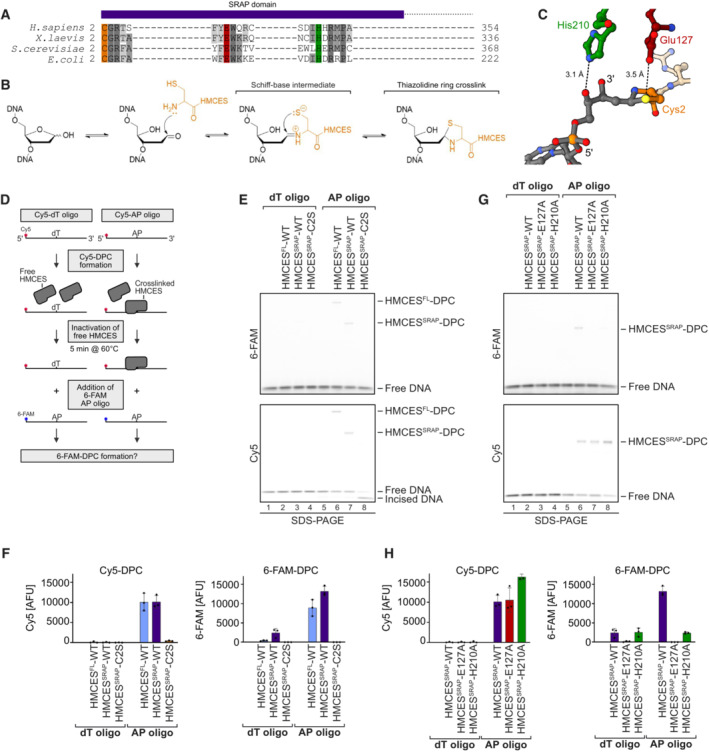
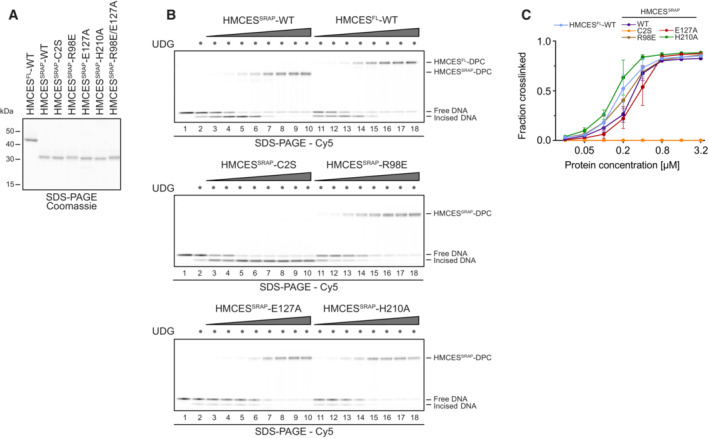
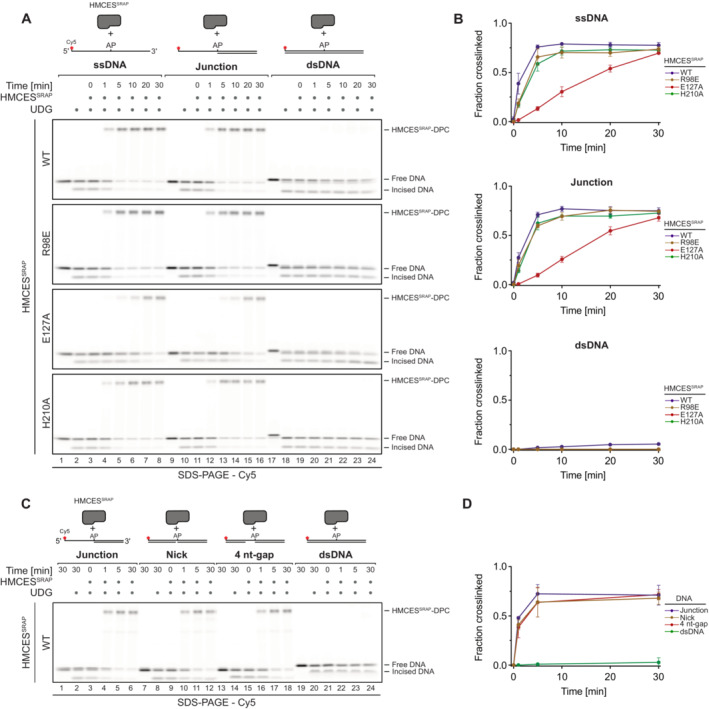
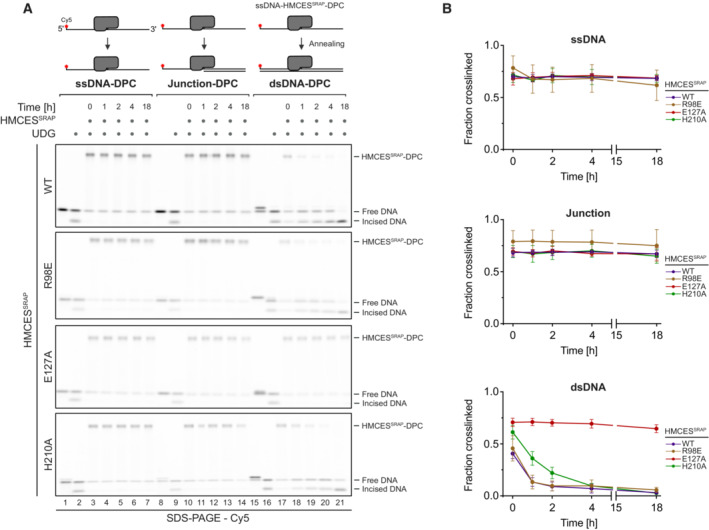
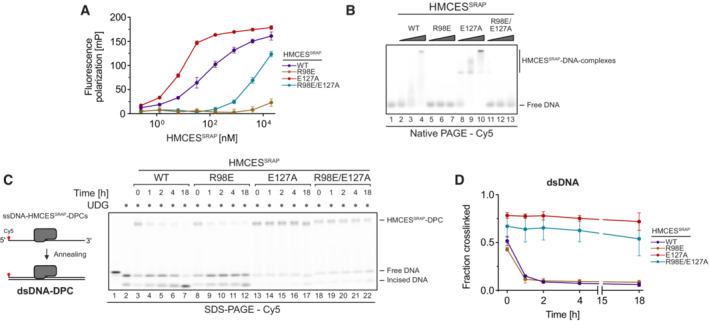
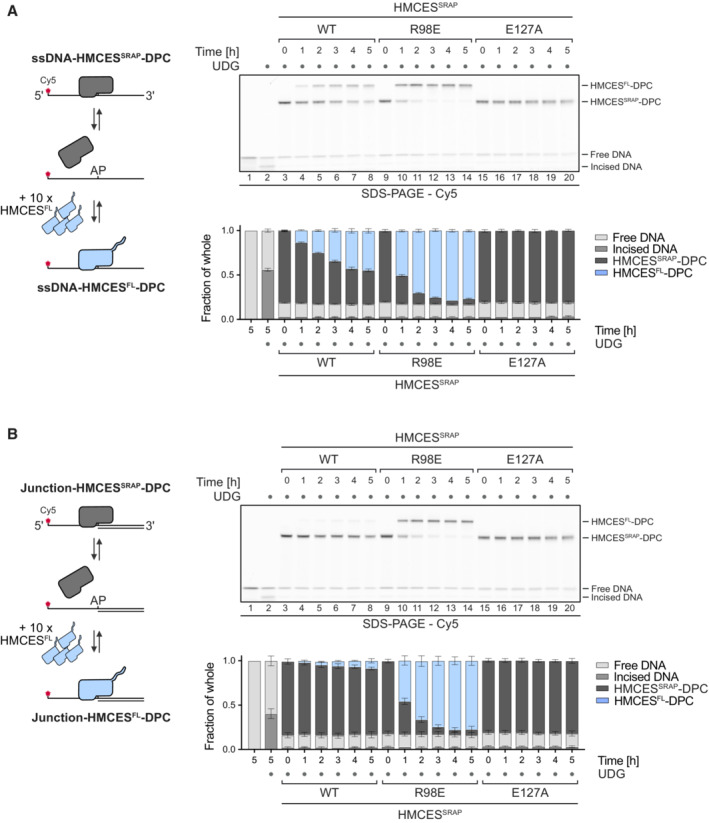
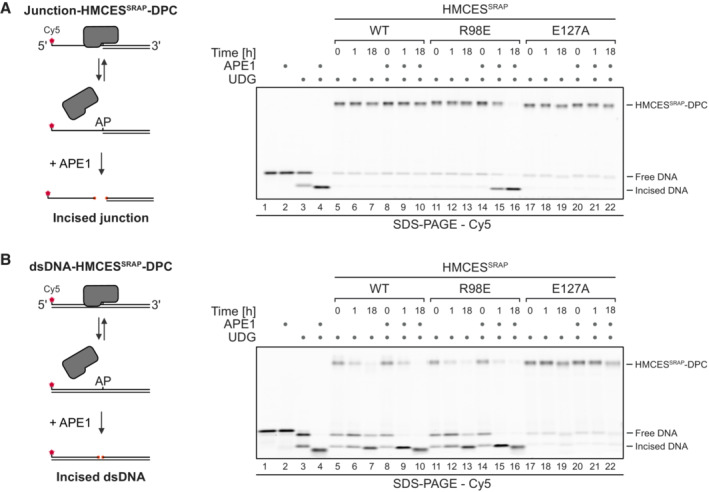
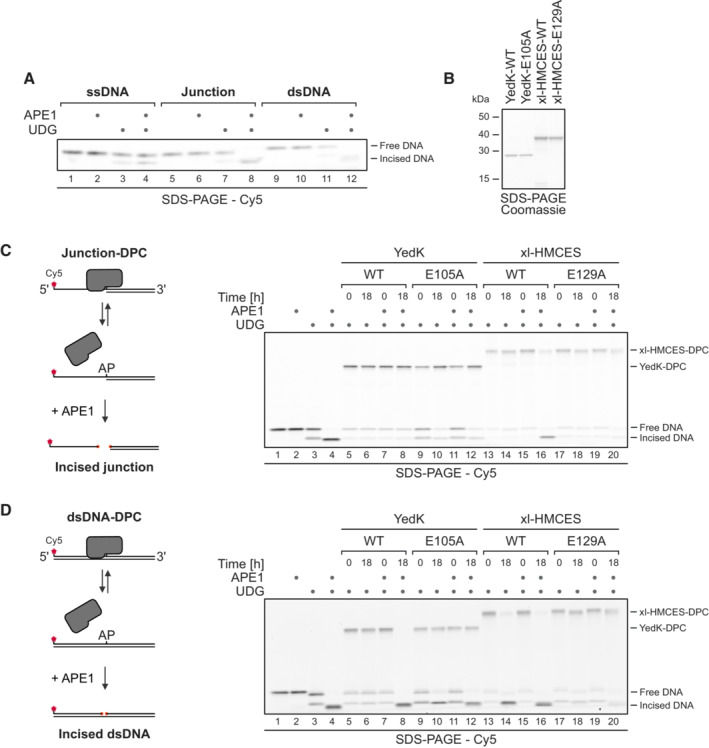
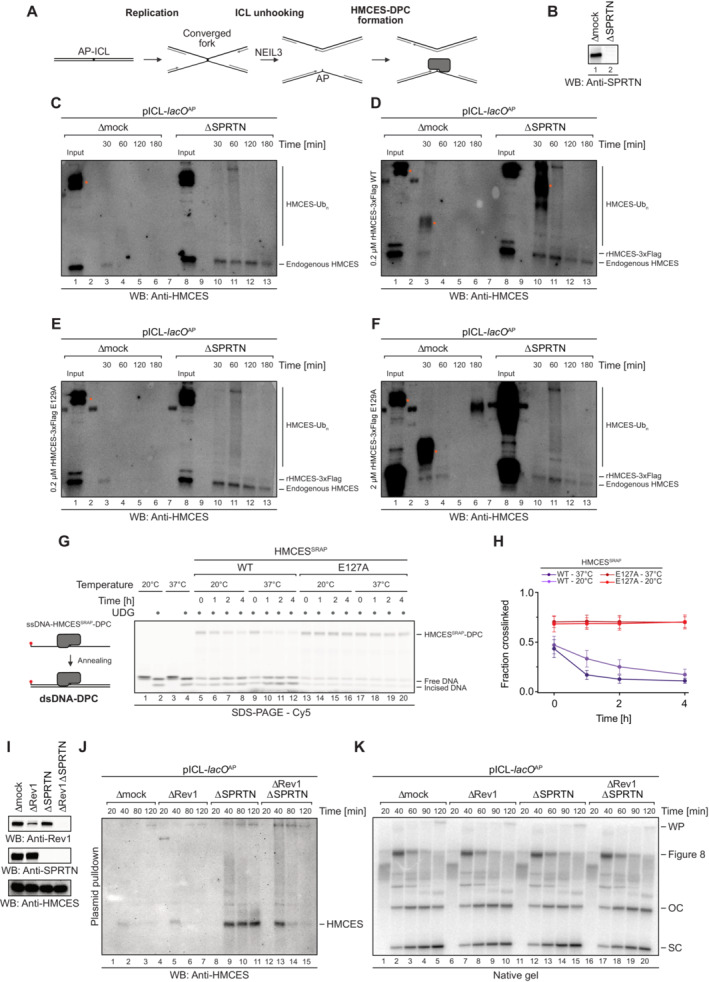
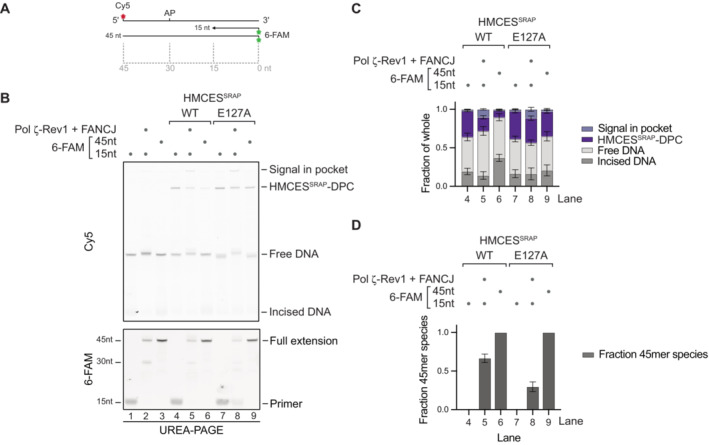
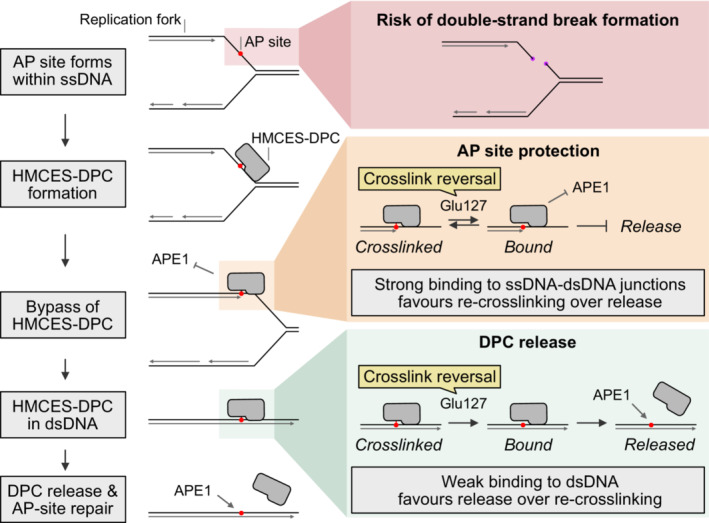
The conserved protein HMCES crosslinks to abasic (AP) sites in ssDNA to prevent strand scission and the formation of toxic dsDNA breaks during replication. Here, we report a non-proteolytic release mechanism for HMCES-DNA-protein crosslinks (DPCs), which is regulated by DNA context. In ssDNA and at ssDNA-dsDNA junctions, HMCES-DPCs are stable, which efficiently protects AP sites against spontaneous incisions or cleavage by APE1 endonuclease. In contrast, HMCES-DPCs are released in dsDNA, allowing APE1 to initiate downstream repair. Mechanistically, we show that release is governed by two components. First, a conserved glutamate residue, within HMCES' active site, catalyses reversal of the crosslink. Second, affinity to the underlying DNA structure determines whether HMCES re-crosslinks or dissociates. Our study reveals that the protective role of HMCES-DPCs involves their controlled release upon bypass by replication forks, which restricts DPC formation to a necessary minimum.
该保守蛋白 HMCES 可与 ssDNA 中的碱基切除(AP)位点交联,以防止复制过程中链的断裂和产生有毒的双链 DNA 断裂。在这里,我们报告了一种非蛋白水解的 HMCES-DNA-蛋白交联物(DPC)释放机制,该机制受 DNA 结构的调控。在 ssDNA 中以及在 ssDNA-dsDNA 连接处,HMCES-DPC 很稳定,能有效地保护 AP 位点免受自发切口或 APE1 内切酶的切割。相比之下,在 dsDNA 中,HMCES-DPC 会释放,从而使 APE1 能够启动下游修复。从机制上讲,我们表明释放由两个组件控制。首先,在 HMCES 的活性部位内的一个保守谷氨酸残基催化交联的逆转。其次,与基础 DNA 结构的亲和力决定了 HMCES 是重新交联还是解离。我们的研究表明,HMCES-DPC 的保护作用涉及到复制叉绕过时它们的受控释放,这将 DPC 的形成限制在必要的最小程度。