Poh Sharon S, Tan Boon Fei, Yong Fang Yue, Fong Kam Weng, Wee Joseph T S, Tan Terence W K, Chua Melvin L K, Sommat Kiattisa, Wang Fu Qiang, Soong Yoke Lim
Division of Radiation Oncology, Duke-NUS Graduate Medical School, National Cancer Centre Singapore, Singapore, Singapore.
Duke-NUS Graduate Medical School, Oncology Academic Clinical Programme, Singapore, Singapore.
Holist Integr Oncol. 2023;2(1):17. doi: 10.1007/s44178-023-00041-0. Epub 2023 Jun 7.
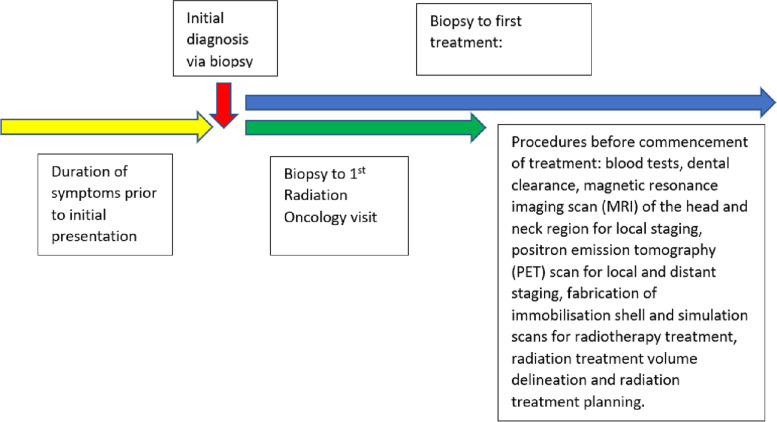
The COVID-19 pandemic has resulted in significant healthcare implications, with care for cancer patients compromised due to resource diversion towards battling the pandemic. We aim to investigate the impact of the peak wave of the pandemic in 2020 on the delivery of cancer care in Singapore, specifically via our nasopharyngeal carcinoma (NPC) treatment data. This study applies real world numbers to the impact of COVID-19 on cancer care delivery in Singapore. The choice of nasopharyngeal cancer allows a good direct estimate of common treatment measures such as time to biopsy, time to staging scans, time to treatment commencement, due to its clear protocol and algorithms for staging and treatment; thus serving as an excellent surrogate for the effectiveness and timeliness of the different aspects of cancer care delivery.
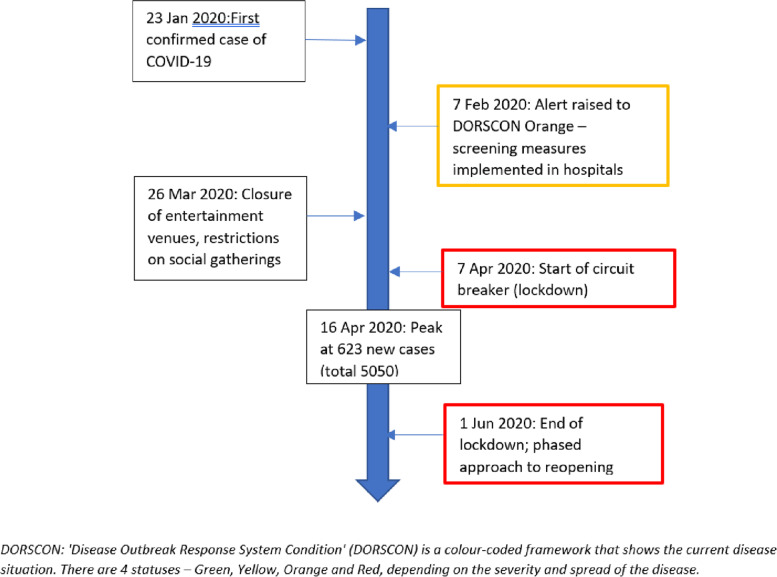
In this retrospective study, we included all patients with newly diagnosed NPC from 1st January to 31st May from 2017 to 2020 at our centre. This time period was chosen as it coincided with the period in 2020 during the COVID-19 pandemic where there was the most strain on healthcare resources and the most restrictions on population movement within Singapore, which may impact on healthcare seeking behaviour. Narrowing down the time period to the first 5 months of the 4 respective years also allowed us to reduce the effect of annual seasonal variation in patient numbers seen as a result of holidays and festive periods such as the Lunar New Year and scheduled school holidays. Electronic medical records (EMR) were accessed. Only newly diagnosed NPC cases were included in our analysis. Patients with second synchronous primary malignancies or NPC disease recurrence were excluded. Data analysis was carried out using a combination of SPSS and Microsoft Excel.
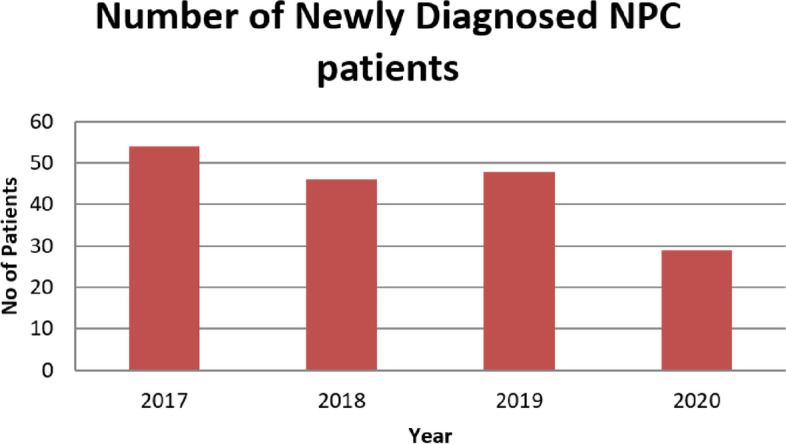
Significantly, there was a reduction of 37-46.3% in newly diagnosed NPC cases during the peak of the COVID-19 pandemic from January to end May 2020 compared to the preceding three years. Despite the reduction in numbers of newly diagnosed NPC, there was no statistically significant differences in delay from biopsy to the first radiation oncology visit and from biopsy to the first day of treatment in 2020 compared to the preceding years. All the patients treated in our centre also received the standard NPC treatment for their disease stage as per international guidelines.
We recommend a heightened awareness of the dangers of delaying cancer presentation and care in healthcare policies and resource allocation and at the same time, encourage patient's confidence in their ability to seek care. With the resurgence of new COVID-19 variants and case numbers worldwide and in Singapore, this study focuses upon the need to be aware of the exigencies of other clinical groups in resource utilization. It would be instructive to compare this study with future long term follow up to investigate the trajectory of our cancer care delivery, as well as survival outcomes.
新冠疫情对医疗保健产生了重大影响,由于资源转向抗击疫情,癌症患者的护理受到影响。我们旨在研究2020年疫情高峰期对新加坡癌症护理的影响,特别是通过我们的鼻咽癌(NPC)治疗数据。本研究将实际数据应用于新冠疫情对新加坡癌症护理的影响。选择鼻咽癌是因为其具有明确的分期和治疗方案及算法,能够很好地直接估计活检时间、分期扫描时间、开始治疗时间等常见治疗措施,从而成为癌症护理不同方面有效性和及时性的良好替代指标。
在这项回顾性研究中,我们纳入了2017年至2020年1月1日至5月31日在我们中心新诊断为鼻咽癌的所有患者。选择这个时间段是因为它与2020年新冠疫情期间相吻合,当时新加坡的医疗资源压力最大,人口流动限制也最多,这可能会影响就医行为。将时间段缩小到这四年各自的前5个月,还能减少因春节和学校假期等节假日导致的患者数量年度季节性变化的影响。我们查阅了电子病历(EMR)。分析仅纳入新诊断的鼻咽癌病例。排除患有第二原发性同步恶性肿瘤或鼻咽癌疾病复发的患者。使用SPSS和Microsoft Excel相结合的方式进行数据分析。
值得注意的是,与前三年相比,2020年1月至5月底新冠疫情高峰期新诊断的鼻咽癌病例减少了37% - 46.3%。尽管新诊断的鼻咽癌病例数量有所减少,但与前几年相比,2020年从活检到首次放疗就诊以及从活检到治疗第一天的延迟在统计学上没有显著差异。在我们中心接受治疗的所有患者也都按照国际指南接受了针对其疾病阶段的标准鼻咽癌治疗。
我们建议在医疗政策和资源分配中提高对延迟癌症就诊和护理风险的认识,同时鼓励患者对寻求护理的能力充满信心。随着全球及新加坡新冠病毒新变种的再度出现和病例数的增加,本研究强调了在资源利用方面需要关注其他临床群体的紧急情况。将本研究与未来的长期随访进行比较,以调查我们癌症护理的轨迹以及生存结果,将具有指导意义。