Xia Handai, Zhang Wengang, Zheng Qi, Zhang Yuqing, Mu Xin, Wei Chenxi, Wang Xiuwen, Liu Yanguo
Department of Medical Oncology, Qilu Hospital of Shandong University, 107 Wenhuaxi Road, Jinan, Shandong, China.
Department of Medical Imaging Center, Third People's Hospital of Jinan, Jinan, Shandong, China.
Heliyon. 2023 Jul 19;9(8):e17400. doi: 10.1016/j.heliyon.2023.e17400. eCollection 2023 Aug.
The prognostic nutritional index (PNI), which is derived from the albumin concentration and absolute lymphocyte number, is an effective indicator of cancer patients' nutritional and immunological status. According to multiple studies, PNI was strongly linked to the prognosis of patients with non-small cell lung cancer (NSCLC). The predictive value of PNI for survival outcomes in NSCLC patients receiving immune checkpoint inhibitors (ICIs) is still in dispute at present. This meta-analysis is devoted to fill this information gap and investigate the predictive ability of PNI in NSCLC patients treated with ICIs.
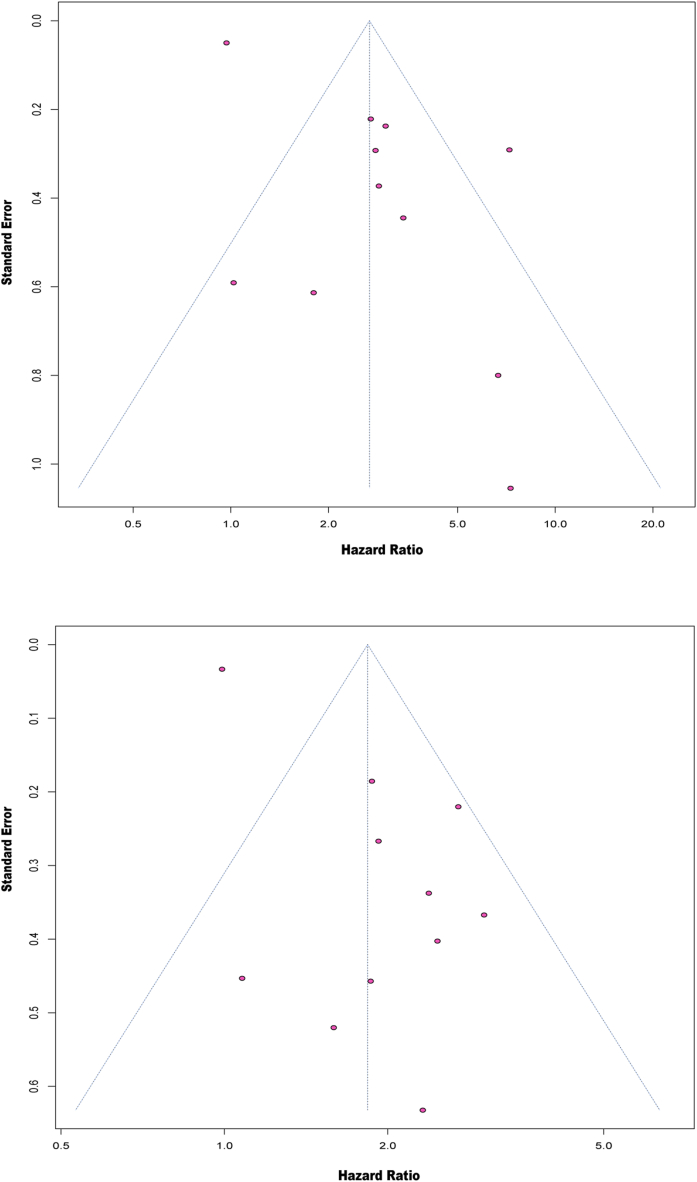
The PubMed, Embase, Cochrane Library databases, and conference proceedings were searched for eligible studies without language restriction. Overall survival (OS) and progression-free survival (PFS) were included. The predictive value of PNI was estimated using hazard ratios and their 95% confidence intervals.
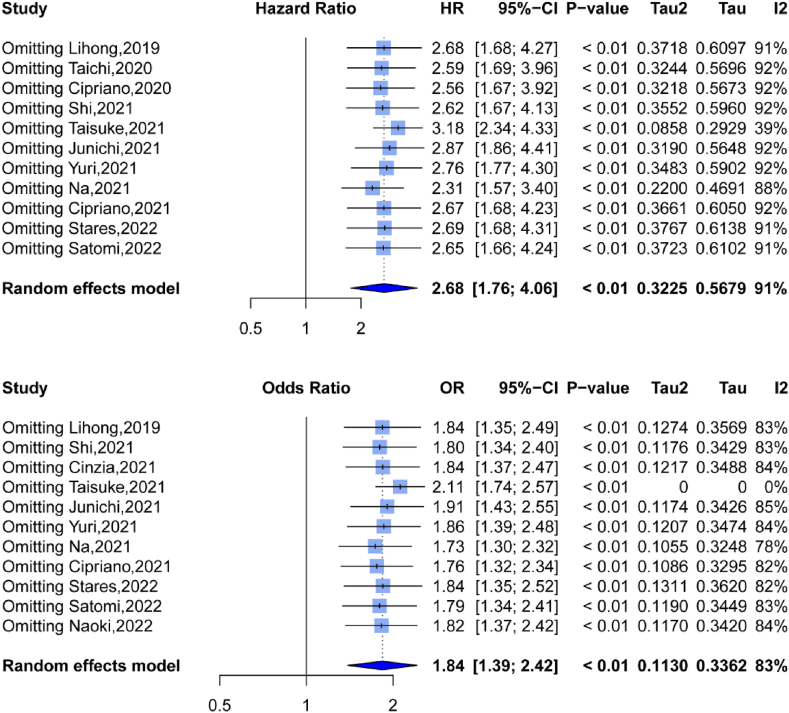
Thirteen relevant retrospective cohort studies were included and these studies included 1119 patients with stage III-IV NSCLC. Lower PNI status was found to be an independent risk factor for worse survival outcomes in patients with NSCLC (OS HR = 2.68; 95%CI: 1.76-4.06; P < 0.0001; PFS HR = 1.84; 95%CI: 1.39-2.42; P < 0.0001). According to the subgroup analysis, PNI was similarly connected to OS in most subgroups of NSCLC patients receiving ICIs, except for those receiving chemoimmunotherapy or first-line treatment, and those with a cut-off value < 45.
Our findings indicated that lower PNI was associated with poorer prognosis in NSCLC patients undergoing ICI therapy. Further prospective research with bigger patient groups is required.
International Prospective Register of Systematic Reviews (PROSPERO), identifier CRD42022327528.
预后营养指数(PNI)由白蛋白浓度和绝对淋巴细胞计数得出,是癌症患者营养和免疫状态的有效指标。多项研究表明,PNI与非小细胞肺癌(NSCLC)患者的预后密切相关。目前,PNI对接受免疫检查点抑制剂(ICI)治疗的NSCLC患者生存结局的预测价值仍存在争议。本荟萃分析旨在填补这一信息空白,研究PNI在接受ICI治疗的NSCLC患者中的预测能力。
检索PubMed、Embase、Cochrane图书馆数据库及会议论文集,纳入无语言限制的符合条件的研究。纳入总生存期(OS)和无进展生存期(PFS)。使用风险比及其95%置信区间评估PNI的预测价值。
纳入13项相关回顾性队列研究,这些研究共纳入1119例Ⅲ-Ⅳ期NSCLC患者。结果发现,较低的PNI状态是NSCLC患者生存结局较差的独立危险因素(OS风险比=2.68;95%置信区间:1.76-4.06;P<0.0001;PFS风险比=1.84;95%置信区间:1.39-2.42;P<0.0001)。亚组分析显示,在接受ICI治疗的大多数NSCLC患者亚组中,PNI与OS同样相关,但接受化疗免疫治疗或一线治疗的患者以及临界值<45的患者除外。
我们的研究结果表明,较低的PNI与接受ICI治疗的NSCLC患者预后较差相关。需要进一步开展更大患者群体的前瞻性研究。
国际系统评价前瞻性注册库(PROSPERO),标识符CRD42022327528。