Liu Chunxun, Zhao Haoran, Zhang Rujia, Guo Zuoming, Wang Peng, Qu Zhaowei
Department of Hepatobiliary and Pancreatic Surgery, Harbin Medical University Cancer Hospital, Harbin Medical University, Harbin, Heilongjiang 150081, P.R. China.
Department of Operating Room, The Second Affiliated Hospital of Harbin Medical University, Harbin Medical University, Harbin, Heilongjiang 150086, P.R. China.
Oncol Lett. 2023 Aug 23;26(4):437. doi: 10.3892/ol.2023.14024. eCollection 2023 Oct.
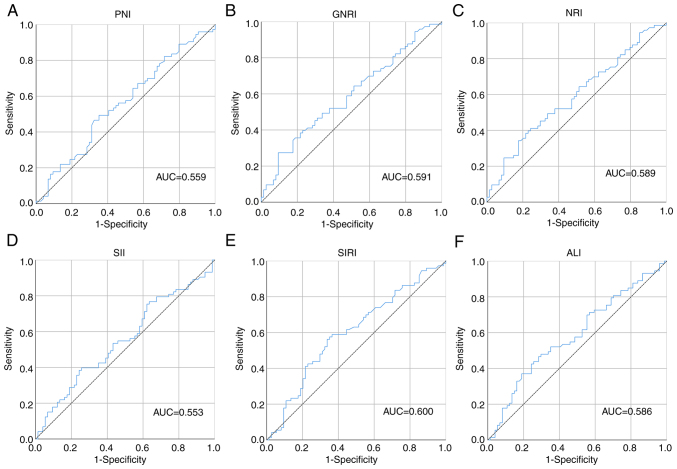
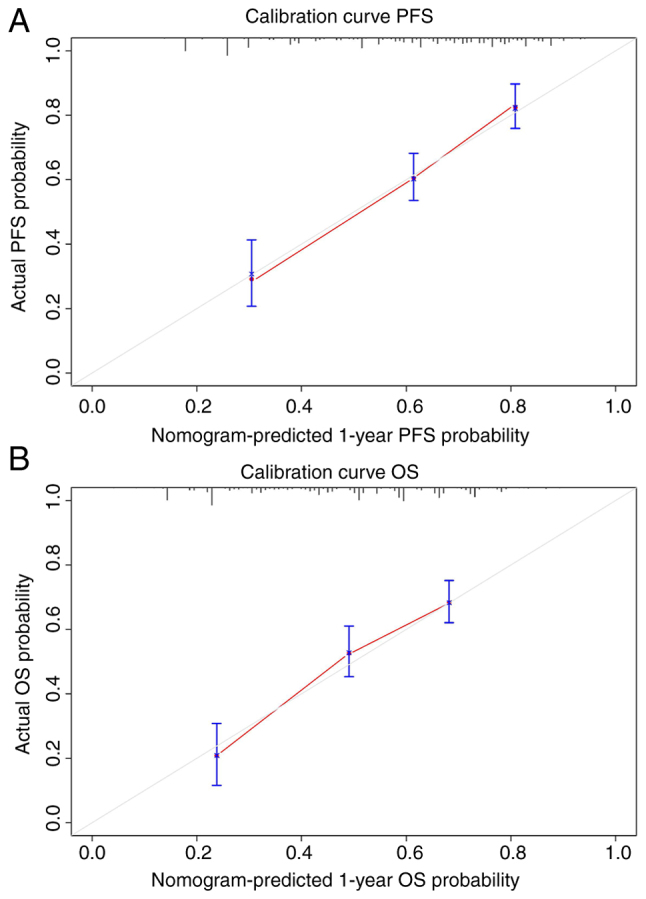
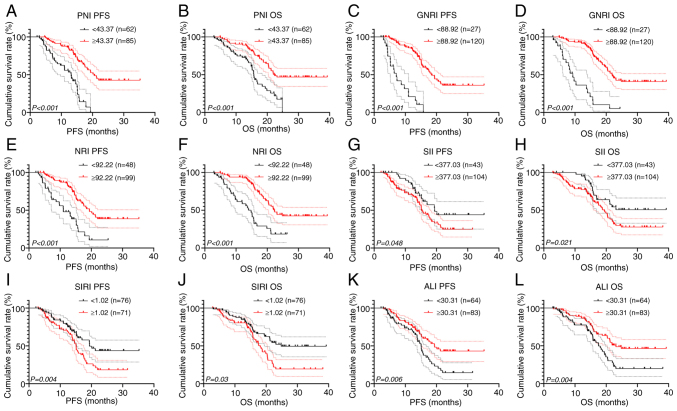
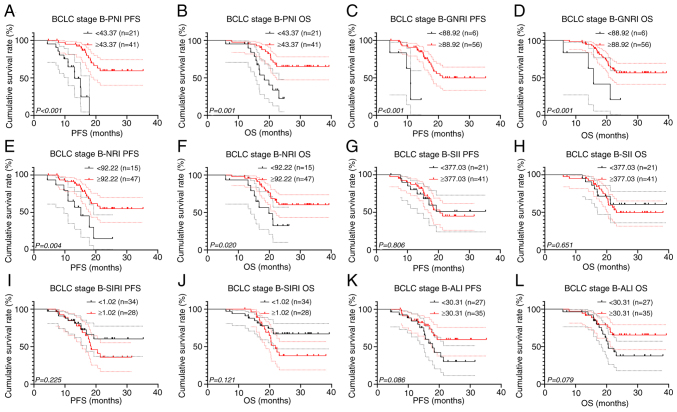
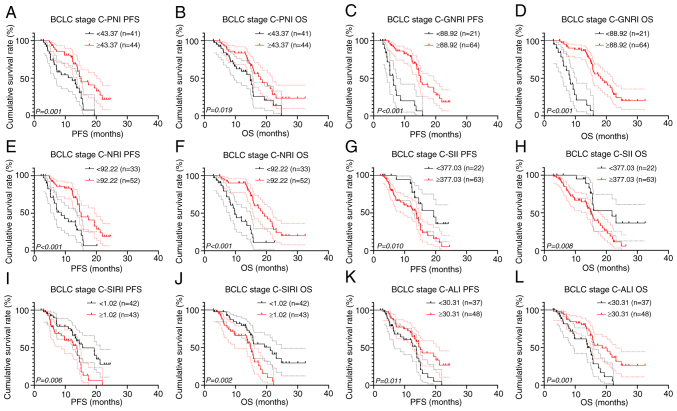
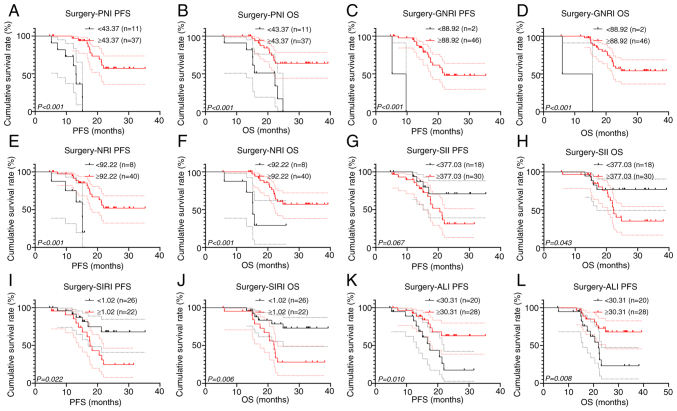
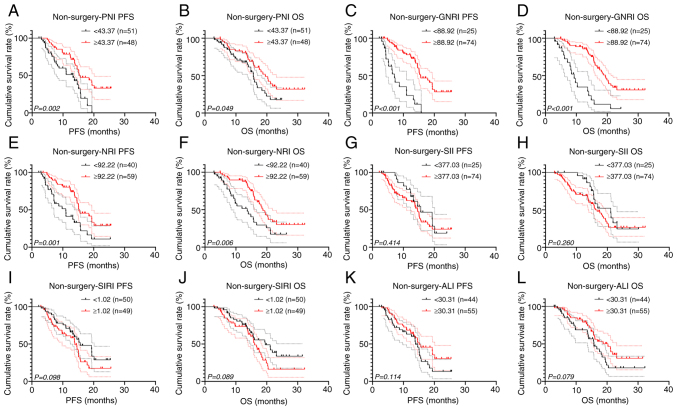
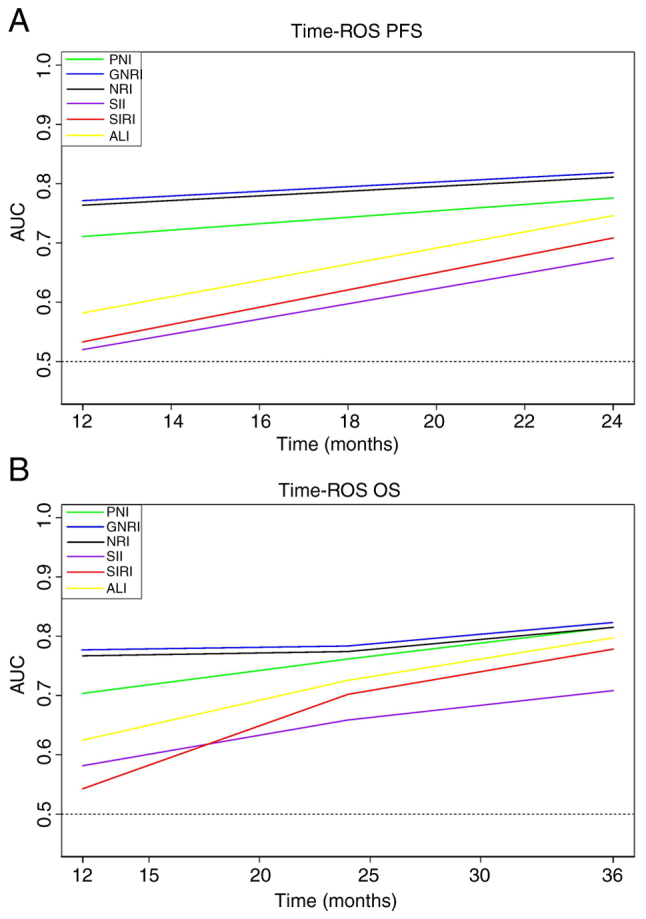
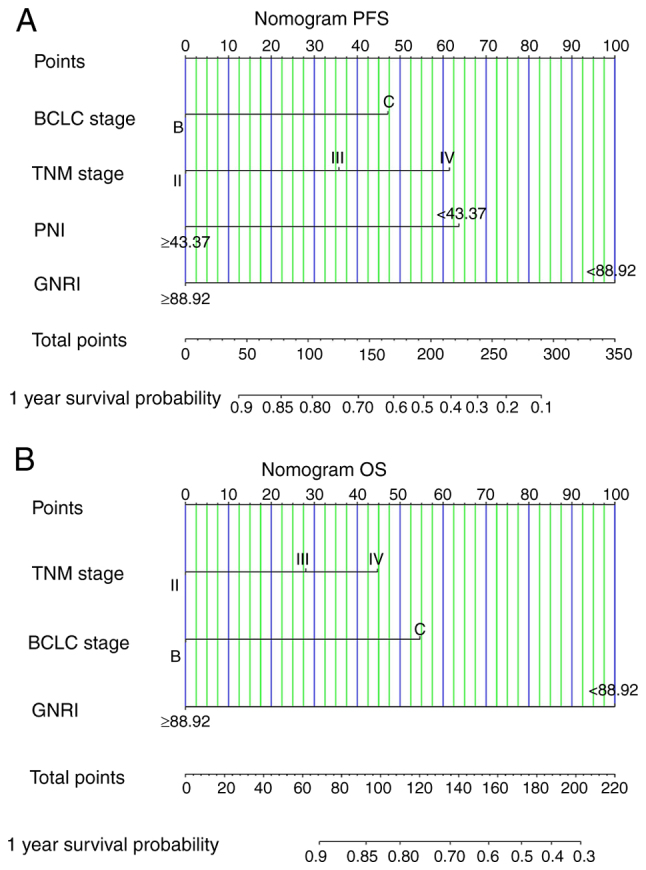
The emergence of immune checkpoint inhibitors (ICIs) has provided a new treatment option for patients with hepatocellular carcinoma (HCC). However, further evaluation is needed for determining biomarkers for the use of ICIs. The present study evaluated the prognostic value of certain nutritional and inflammatory markers in patients with HCC who received ICIs. In the present study, the clinical data of 151 patients with HCC who received ICIs at Harbin Medical University Cancer Hospital from January 2019 to December 2021 were collected. The blood parameters of all patients before treatment were collected to evaluate certain nutritional and inflammatory markers, including the prognostic nutrition index (PNI), nutritional risk index (NRI), geriatric NRI (GNRI), systemic immune-inflammation index (SII), systemic inflammation response index (SIRI) and advanced lung cancer inflammation index (ALI). Patients were grouped using the cut-off value calculated using receiver operating characteristic (ROC) curves, and the relationship between these biomarkers and prognosis was evaluated through survival analysis. Furthermore, the prognostic value of these biomarkers was assessed through multivariate Cox regression analysis and construction of nomograms. Finally, time-ROC curves were plotted to compare the differences in predicting prognosis between the biomarkers. In the preliminary survival analysis, all inflammatory and nutritional markers included in the present study were significantly associated with the prognosis of HCC in patients who received ICIs. Similar results were obtained in a subgroup analysis of patients with different Barcelona Clinic Liver Cancer (BCLC) stages. Multivariate Cox regression analysis demonstrated that GNRI, PNI, BCLC stage and Tumor-Node-Metastasis (TNM) stage were significantly associated with progression-free survival (PFS), whereas GNRI, BCLC stage and TNM stage were also significantly associated with overall survival (OS). Furthermore, the time-ROC curves indicated that nutritional indicators had a higher prognostic value in all indexes, especially GNRI. The C-index (95% confidence interval) of the nomograms for predicting the survival probability of patients who received ICIs were 0.801 (0.746-0.877) and 0.823 (0.761-0.898) for PFS and overall OS, respectively, which also showed high accuracy. In conclusion, the present study demonstrated that PNI, GNRI, NRI, SII, SIRI and ALI were all related to the efficacy of ICIs in HCC and could serve as non-invasive biomarkers for ICI treatment effectiveness. Moreover, compared with inflammatory markers, nutritional markers had greater predictive ability, with GNRI being the biomarker with the best prognostic value.
免疫检查点抑制剂(ICIs)的出现为肝细胞癌(HCC)患者提供了一种新的治疗选择。然而,需要进一步评估以确定ICIs使用的生物标志物。本研究评估了接受ICIs治疗的HCC患者中某些营养和炎症标志物的预后价值。在本研究中,收集了2019年1月至2021年12月在哈尔滨医科大学附属肿瘤医院接受ICIs治疗的151例HCC患者的临床资料。收集所有患者治疗前的血液参数,以评估某些营养和炎症标志物,包括预后营养指数(PNI)、营养风险指数(NRI)、老年营养风险指数(GNRI)、全身免疫炎症指数(SII)、全身炎症反应指数(SIRI)和晚期肺癌炎症指数(ALI)。使用受试者工作特征(ROC)曲线计算的临界值对患者进行分组,并通过生存分析评估这些生物标志物与预后之间的关系。此外,通过多变量Cox回归分析和列线图构建评估这些生物标志物的预后价值。最后,绘制时间ROC曲线以比较生物标志物在预测预后方面的差异。在初步生存分析中,本研究纳入的所有炎症和营养标志物均与接受ICIs治疗的HCC患者的预后显著相关。在不同巴塞罗那临床肝癌(BCLC)分期患者的亚组分析中也得到了类似结果。多变量Cox回归分析表明,GNRI、PNI、BCLC分期和肿瘤-淋巴结-转移(TNM)分期与无进展生存期(PFS)显著相关,而GNRI、BCLC分期和TNM分期也与总生存期(OS)显著相关。此外,时间ROC曲线表明,营养指标在所有指标中具有更高的预后价值,尤其是GNRI。预测接受ICIs治疗患者生存概率的列线图的C指数(95%置信区间),PFS和总OS分别为0.801(0.746 - 0.877)和0.823(0.761 - 0.898),也显示出较高的准确性。总之,本研究表明PNI、GNRI、NRI、SII、SIRI和ALI均与ICIs治疗HCC的疗效相关,可作为ICI治疗效果的非侵入性生物标志物。此外,与炎症标志物相比,营养标志物具有更强的预测能力,其中GNRI是预后价值最佳的生物标志物。