Kalathil Akil A, Guin Subham, Ashokan Akash, Basu Uttara, Surnar Bapurao, Delma Katiana S, Lima Leonor M, Kryvenko Oleksandr N, Dhar Shanta
NanoTherapeutics Research Laboratory, Department of Biochemistry and Molecular Biology, University of Miami Miller School of Medicine, Miami, Florida 33136, United States.
Sylvester Comprehensive Cancer Centre, Miller School of Medicine, University of Miami, Miami, Florida 33136, United States.
ACS Cent Sci. 2023 Jul 12;9(7):1297-1312. doi: 10.1021/acscentsci.3c00286. eCollection 2023 Jul 26.
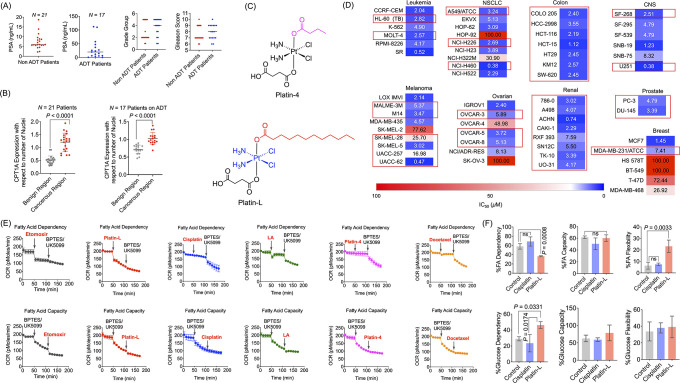
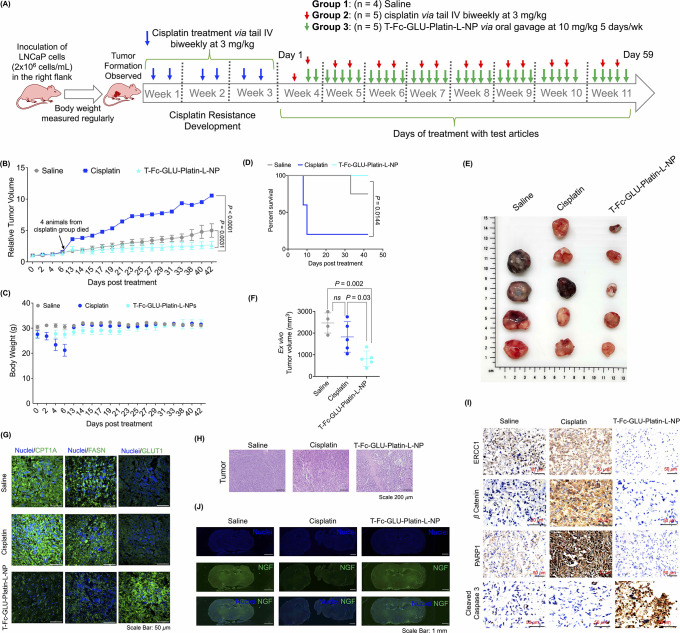
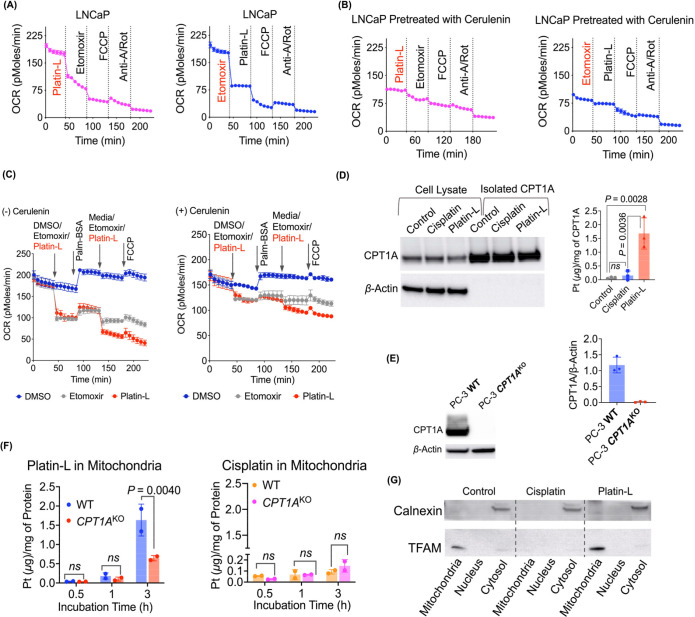
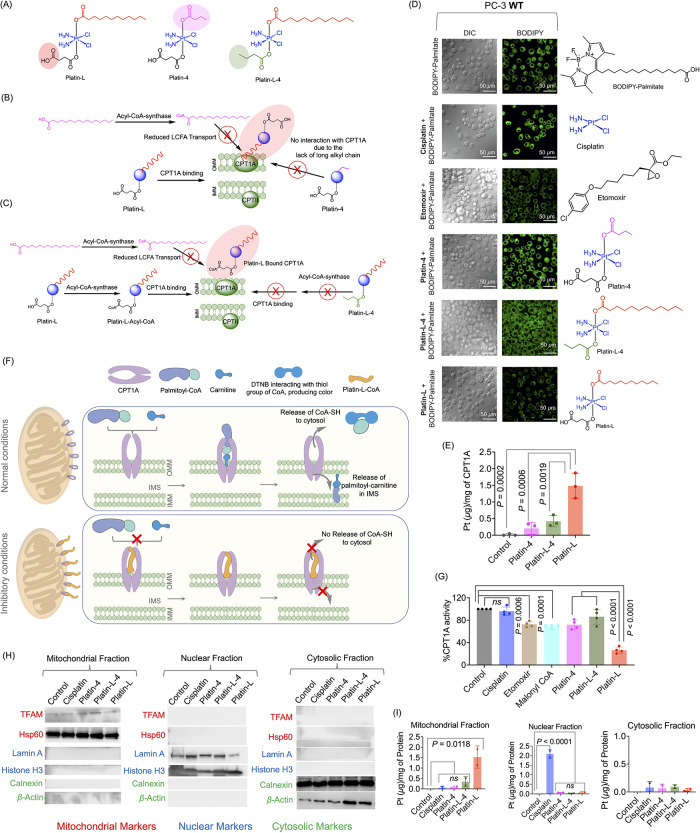
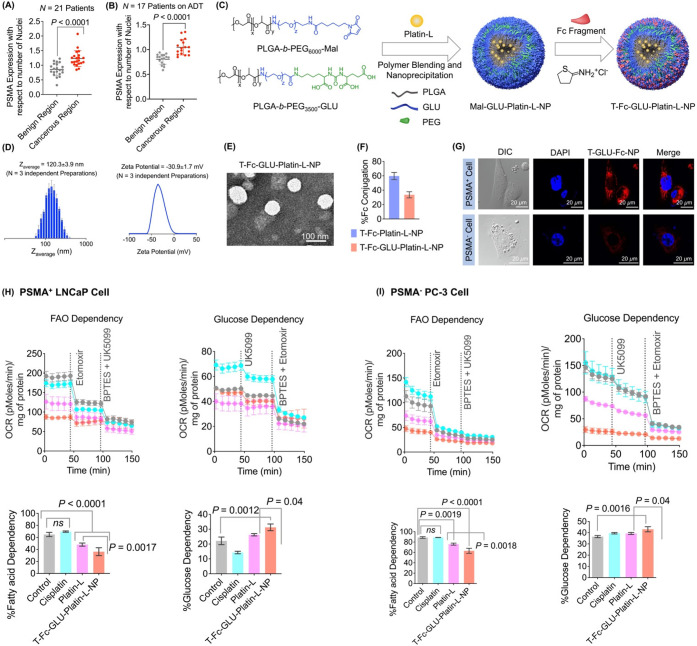
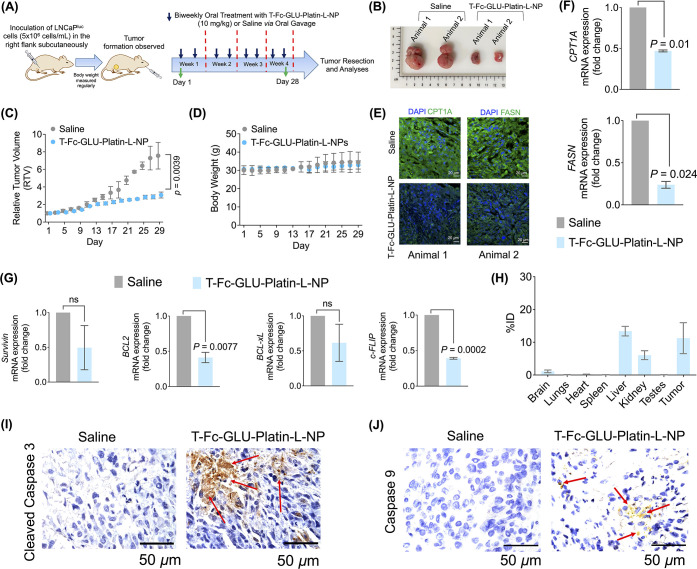
Tumor cells adapt to diverse survival strategies defying our pursuit of multimodal cancer therapy. Prostate cancer (PCa) is an example that is resistant to one of the most potent chemotherapeutics, cisplatin. PCa cells survive and proliferate using fatty acid oxidation (FAO), and the dependence on fat utilization increases as the disease progresses toward a resistant form. Using a pool of patient biopsies, we validated the expression of a key enzyme carnitine palmitoyltransferase 1 A (CPT1A) needed for fat metabolism. We then discovered that a cisplatin prodrug, Platin-L, can inhibit the FAO of PCa cells by interacting with CPT1A. Synthesizing additional cisplatin-based prodrugs, we documented that the presence of an available carboxylic acid group near the long chain fatty acid linker on the Pt(IV) center is crucial for CPT1A binding. As a result of fat metabolism disruption by Platin-L, PCa cells transition to an adaptive glucose-dependent chemosensitive state. Potential clinical translation of Platin-L will require a delivery vehicle to direct it to the prostate tumor microenvironment. Thus, we incorporated Platin-L in a biodegradable prostate tumor-targeted orally administrable nanoformulation and demonstrated its safety and efficacy. The distinctive FAO inhibitory property of Platin-L can be of potential clinical relevance as it offers the use of cisplatin for otherwise resistant cancer.
肿瘤细胞会采用多种生存策略,这给我们对多模式癌症治疗的追求带来了挑战。前列腺癌(PCa)就是一个例子,它对最有效的化疗药物之一顺铂具有抗性。PCa细胞通过脂肪酸氧化(FAO)来存活和增殖,并且随着疾病向抗性形式发展,对脂肪利用的依赖性会增加。通过对一组患者活检样本的研究,我们验证了脂肪代谢所需的关键酶肉碱棕榈酰转移酶1A(CPT1A)的表达。然后我们发现一种顺铂前药Platin-L可以通过与CPT1A相互作用来抑制PCa细胞的FAO。在合成了其他基于顺铂的前药后,我们证明在Pt(IV)中心的长链脂肪酸连接基团附近存在一个可利用的羧酸基团对于CPT1A结合至关重要。由于Platin-L破坏了脂肪代谢,PCa细胞转变为适应性的葡萄糖依赖性化疗敏感状态。Platin-L的潜在临床应用需要一种递送载体将其导向前列腺肿瘤微环境。因此,我们将Platin-L纳入一种可生物降解的靶向前列腺肿瘤的口服纳米制剂中,并证明了其安全性和有效性。Platin-L独特的FAO抑制特性可能具有潜在的临床意义,因为它为治疗原本具有抗性的癌症提供了使用顺铂的方法。