Public Health and Sport Sciences, Faculty of Health and Life Sciences, University of Exeter, Exeter EX1 2LU, United Kingdom.
University of Exeter Medical School, Faculty of Health and Life Sciences, University of Exeter, Exeter EX1 2LU, United Kingdom.
Proc Natl Acad Sci U S A. 2023 Aug 8;120(32):e2216141120. doi: 10.1073/pnas.2216141120. Epub 2023 Jul 31.
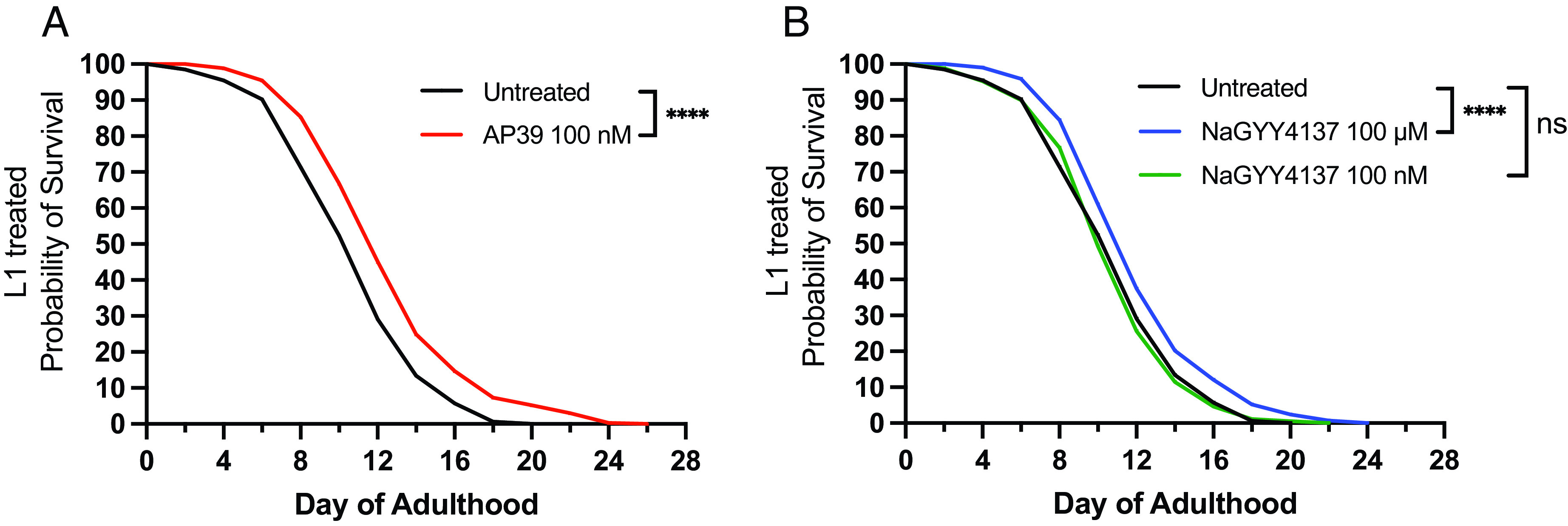
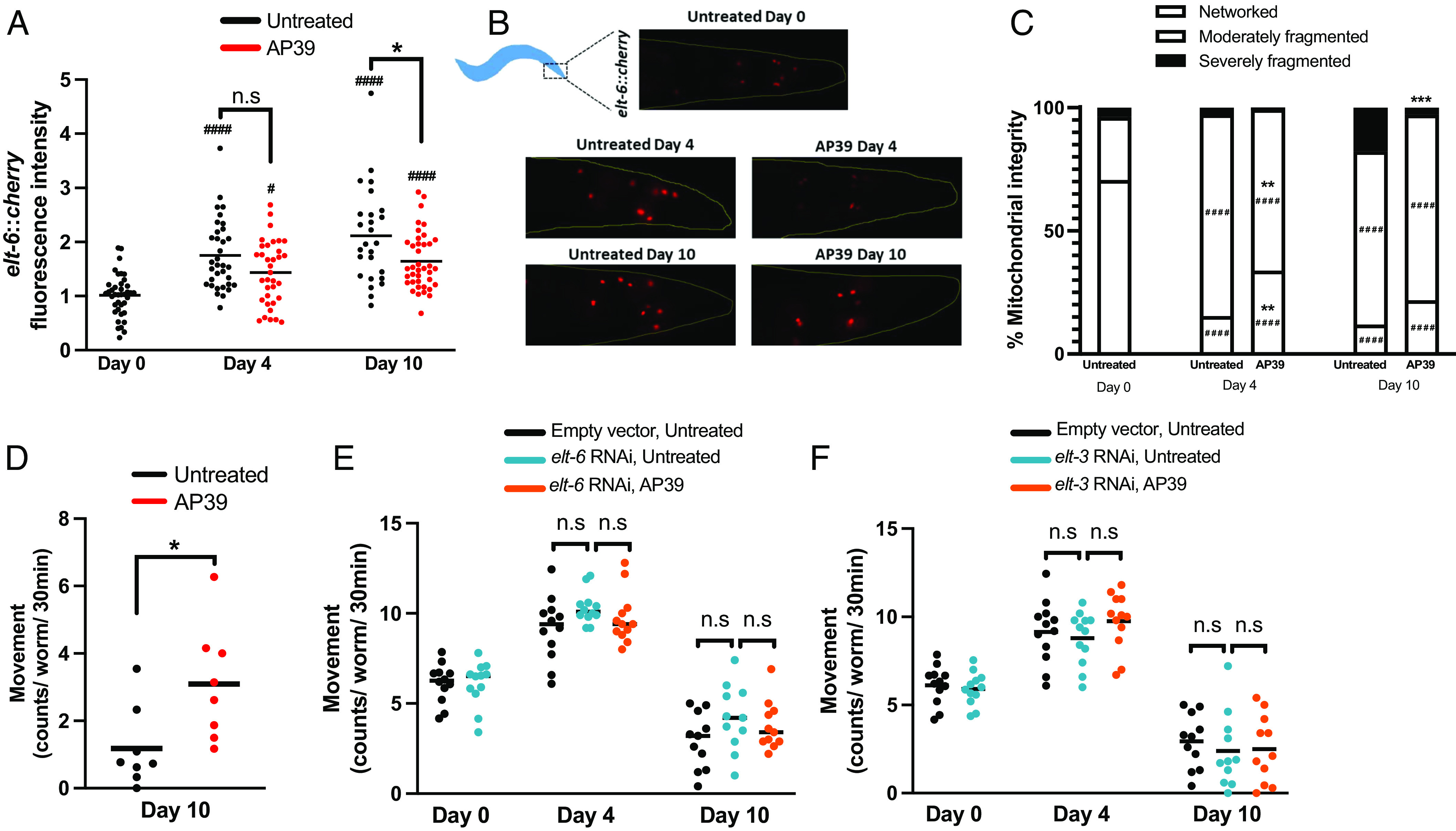
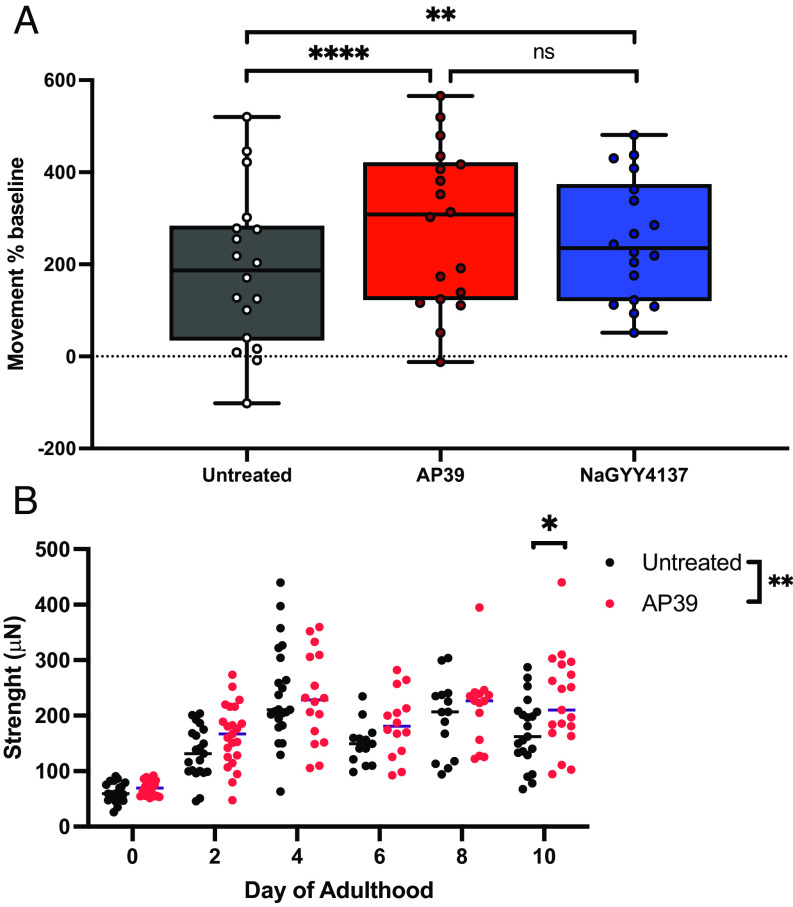
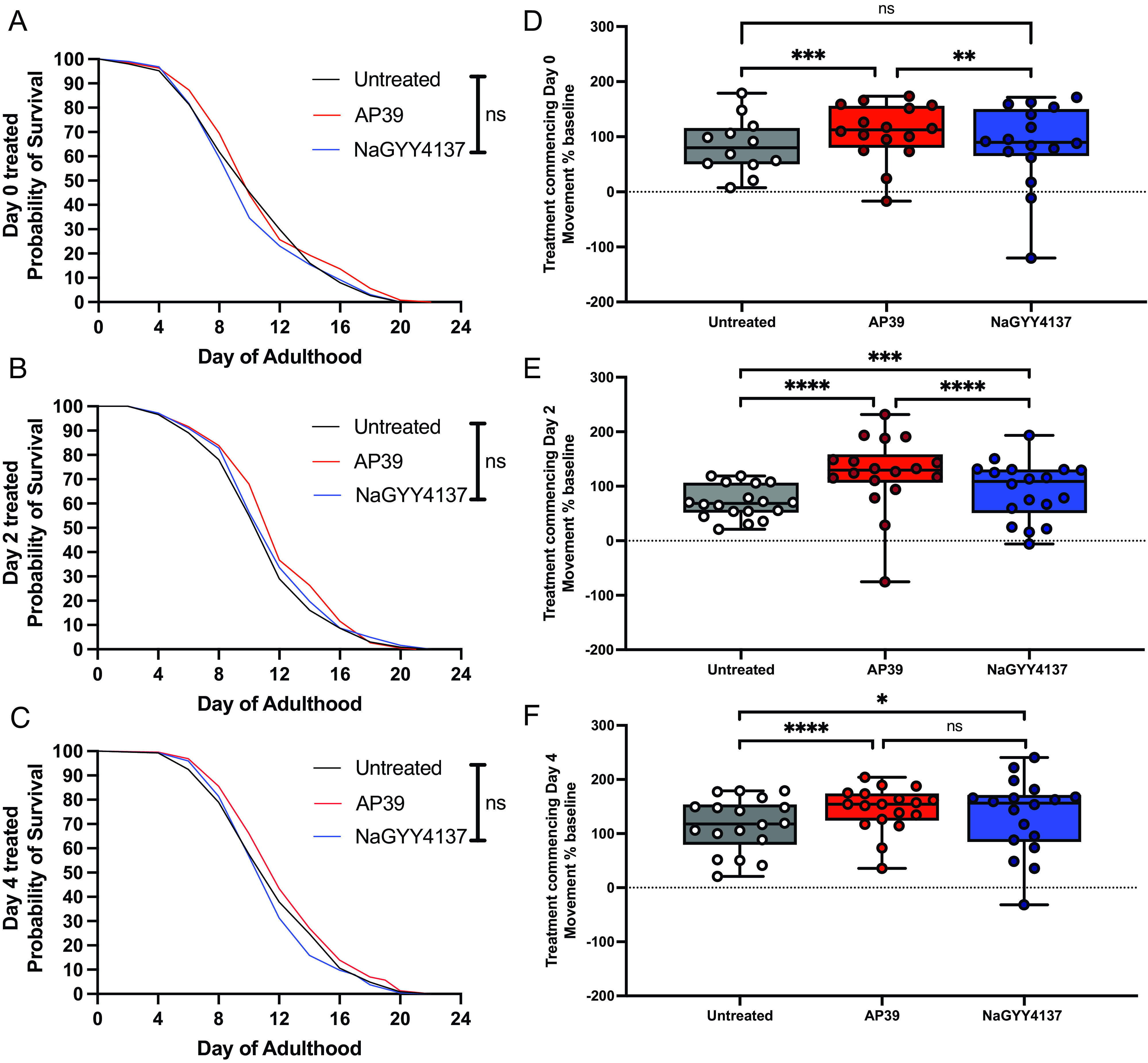
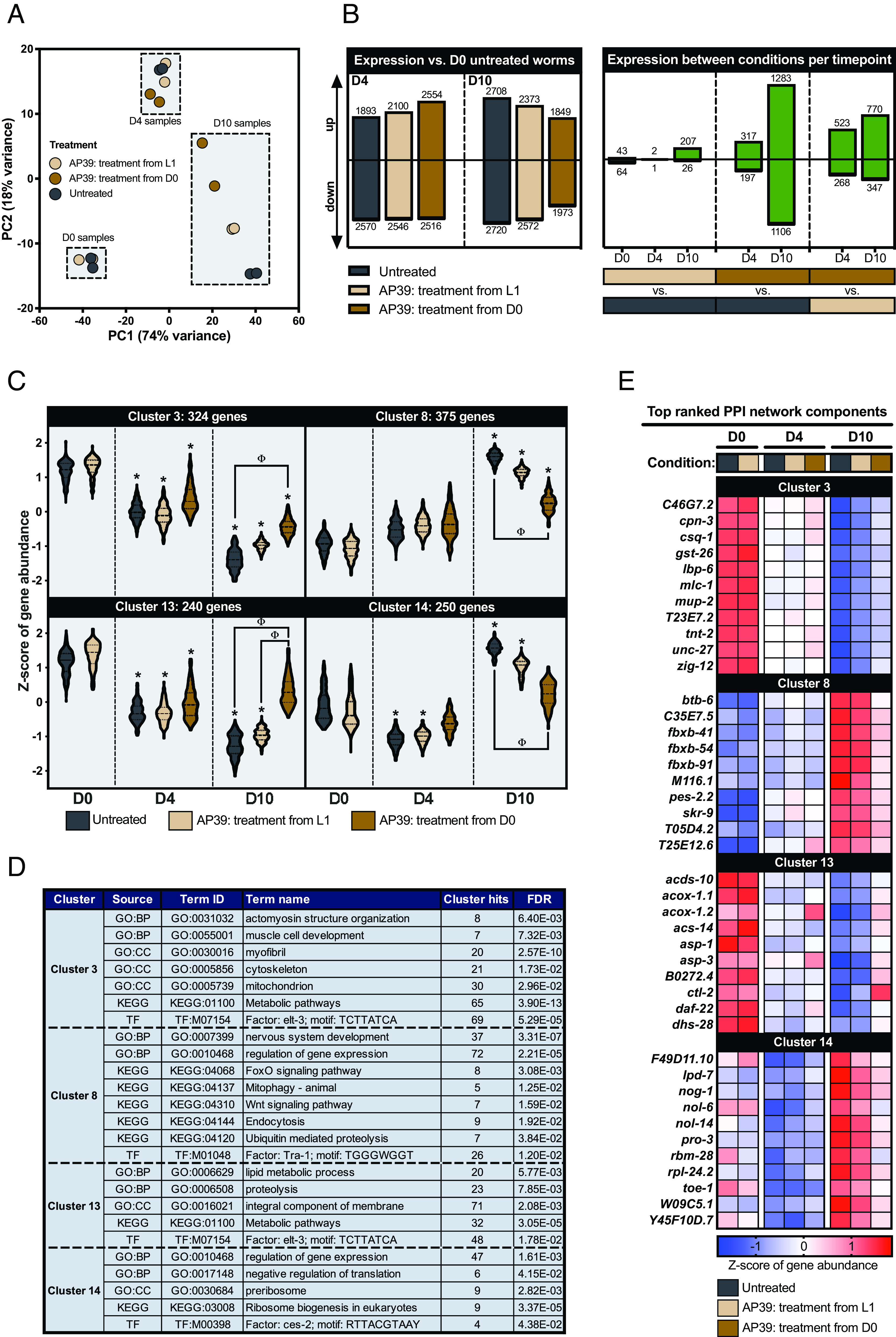
Living longer without simultaneously extending years spent in good health ("health span") is an increasing societal burden, demanding new therapeutic strategies. Hydrogen sulfide (HS) can correct disease-related mitochondrial metabolic deficiencies, and supraphysiological HS concentrations can pro health span. However, the efficacy and mechanisms of mitochondrion-targeted sulfide delivery molecules (mtHS) administered across the adult life course are unknown. Using a aging model, we compared untargeted HS (NaGYY4137, 100 µM and 100 nM) and mtHS (AP39, 100 nM) donor effects on life span, neuromuscular health span, and mitochondrial integrity. HS donors were administered from birth or in young/middle-aged animals (day 0, 2, or 4 postadulthood). RNAi pharmacogenetic interventions and transcriptomics/network analysis explored molecular events governing mtHS donor-mediated health span. Developmentally administered mtHS (100 nM) improved life/health span vs. equivalent untargeted HS doses. mtHS preserved aging mitochondrial structure, content (citrate synthase activity) and neuromuscular strength. Knockdown of HS metabolism enzymes and FoxO/ prevented the positive health span effects of mtHS, whereas DCAF11/ - Nrf2/ oxidative stress protection pathways were dispensable. Health span, but not life span, increased with all adult-onset mtHS treatments. Adult mtHS treatment also rejuvenated aging transcriptomes by minimizing expression declines of mitochondria and cytoskeletal components, and peroxisome metabolism hub components, under mechanistic control by the / transcription factor circuit. HS health span extension likely acts at the mitochondrial level, the mechanisms of which dissociate from life span across adult vs. developmental treatment timings. The small mtHS doses required for health span extension, combined with efficacy in adult animals, suggest mtHS is a potential healthy aging therapeutic.
活得更久而不延长健康寿命(“健康跨度”)是一个日益增加的社会负担,需要新的治疗策略。硫化氢(HS)可以纠正与疾病相关的线粒体代谢缺陷,而超生理 HS 浓度可以延长健康寿命。然而,跨成年期给予靶向线粒体的硫化合物输送分子(mtHS)的疗效和机制尚不清楚。使用衰老模型,我们比较了非靶向 HS(NaGYY4137,100µM 和 100nM)和 mtHS(AP39,100nM)供体对寿命、神经肌肉健康跨度和线粒体完整性的影响。HS 供体从出生或在幼/中年动物(成年后第 0、2 或 4 天)开始给予。RNAi 药物遗传学干预和转录组学/网络分析探索了控制 mtHS 供体介导的健康跨度的分子事件。发育性给予 mtHS(100nM)可改善寿命/健康跨度,优于等效的非靶向 HS 剂量。mtHS 可维持衰老线粒体的结构、含量(柠檬酸合酶活性)和神经肌肉力量。HS 代谢酶和 FoxO/的敲低阻止了 mtHS 的正向健康跨度效应,而 DCAF11/ - Nrf2/氧化应激保护途径则是可有可无的。健康跨度而不是寿命随着所有成年发病的 mtHS 治疗而增加。成年 mtHS 治疗还通过最小化线粒体和细胞骨架成分以及过氧化物酶体代谢枢纽成分的表达下降来恢复衰老转录组,这在 /转录因子电路的机制控制下。HS 健康跨度的延长可能作用于线粒体水平,其机制与成年与发育治疗时间的寿命分离。延长健康跨度所需的 mtHS 小剂量,加上在成年动物中的疗效,表明 mtHS 是一种有潜力的健康衰老治疗方法。