Unidade de Próstata, Centro Clínico Champalimaud, Champalimaud Foundation, Lisbon, Portugal.
Instituto de Ciências Biomédicas Abel Salazar, Universidade do Porto, Porto, Portugal.
J Robot Surg. 2023 Oct;17(5):2503-2511. doi: 10.1007/s11701-023-01687-8. Epub 2023 Aug 1.
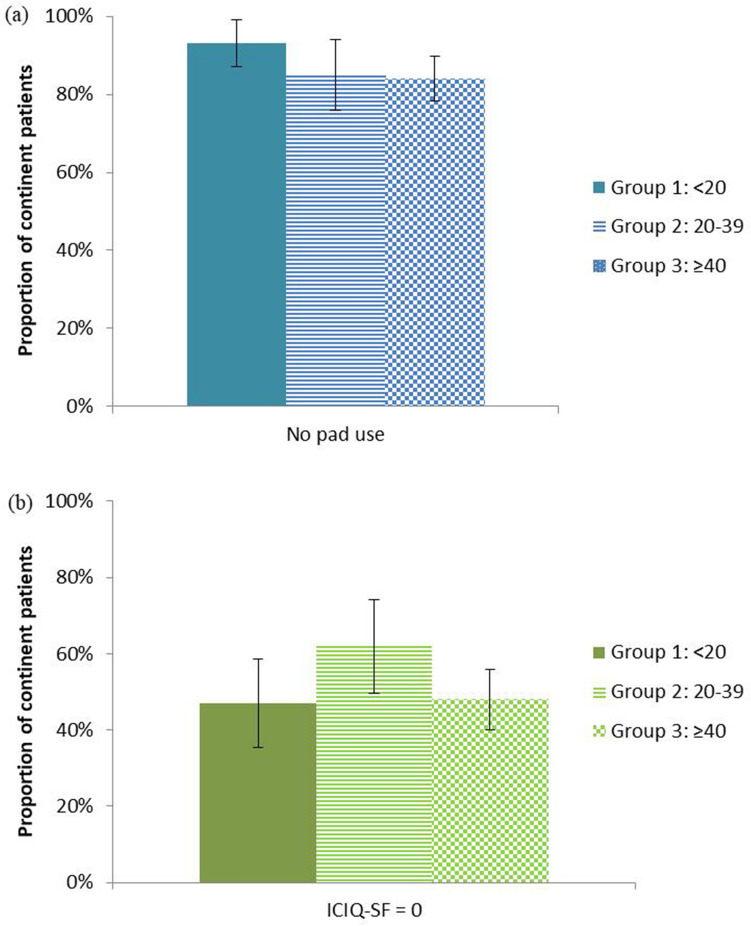
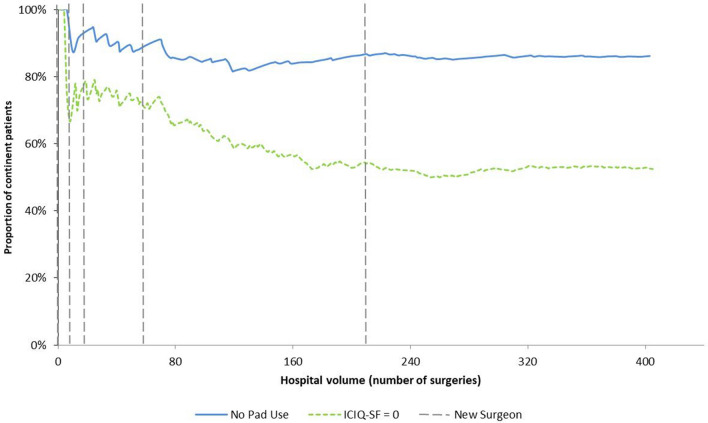
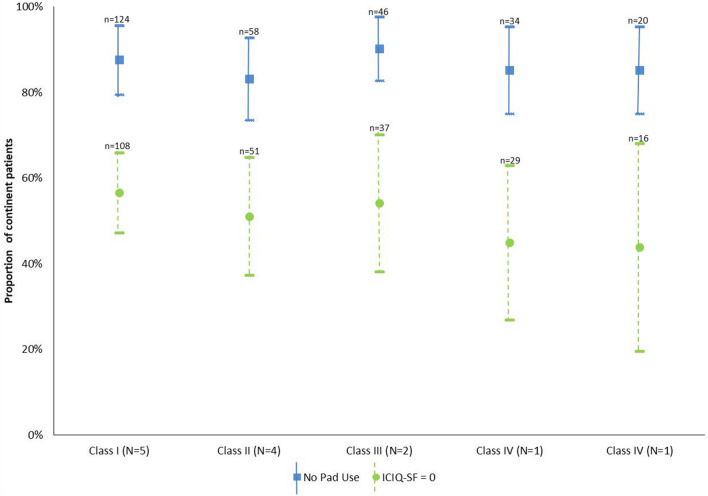
Urinary incontinence is one of the main concerns for patients after radical prostatectomy. Differences in surgical experience among surgeons could partly explain the wide range of frequencies observed. Our aim was to evaluate the association between the surgeons` experience and center caseload with relation to urinary continence recovery after Retzius-sparing robot-assisted radical prostatectomy (RS-RARP). Prospective observational single-center study. Five surgeons consecutively operated 405 patients between July 2017 and February 2022. Continence recovery was evaluated with pad count and by employing the short form of the International Consultation on Incontinence Questionnaire (ICIQ-SF), pre- and postoperatively at 1 year. Non-parametric tests were used. Median age was 63 years, 30% of patients presented with local advanced disease; the positive surgical margin rate (over 3 mm length) was 16%. Complication rate was 1% (Clavien-Dindo > II). One year after surgery, continence was assessed in 282 patients, of whom 87% were pad free and 51% never leaked (ICIQ-SF = 0). With respect to the mean annual number of procedures per surgeon, divided in < 20, 20-39 and ≥ 40, pad-free rates were achieved in 93%, 85%, and 84% and absence of urine leak rates in 47%, 62% and 48% of patients, respectively. Postoperative median ICIQ-SF was five. We acknowledge the limitation of a 12-month follow-up and the fact that we are a medium-volume center. There is no statistically significant association between continence recovery, surgeon's experience and center caseload. Continence recovery at 1 year after surgery is adequate and robust to surgeon's experience.
尿失禁是根治性前列腺切除术后患者主要关注的问题之一。外科医生手术经验的差异部分可以解释观察到的频率范围广泛。我们的目的是评估外科医生的经验和中心手术量与保留耻骨前列腺韧带的机器人辅助根治性前列腺切除术(RS-RARP)后尿控恢复之间的关系。前瞻性观察性单中心研究。2017 年 7 月至 2022 年 2 月,连续有 5 名外科医生对 405 例患者进行了手术。通过使用垫计数和国际尿失禁咨询问卷(ICIQ-SF)短表评估术前和术后 1 年的尿控恢复情况。使用非参数检验。中位年龄为 63 岁,30%的患者患有局部晚期疾病;阳性切缘率(长度超过 3mm)为 16%。并发症发生率为 1%(Clavien-Dindo > II)。术后 1 年,对 282 例患者进行了尿控评估,其中 87%无垫,51%无漏尿(ICIQ-SF=0)。按每位外科医生每年的手术量分为<20、20-39 和≥40 例,无垫率分别为 93%、85%和 84%,无尿漏率分别为 47%、62%和 48%。术后中位 ICIQ-SF 为 5。我们承认随访时间为 12 个月的局限性以及我们是一个中等手术量中心的事实。尿控恢复、外科医生的经验和中心手术量之间没有统计学上的显著关联。术后 1 年的尿控恢复是充足的,且与外科医生的经验无关。