Adekunle Tiwaladeoluwa B, Arreola Alyssa, Sembian Sathveka, Castro Raquel, Claure Layla, Balian Lara, Rodriguez Natalia M
Brian Lamb School of Communication, Purdue University, West Lafayette, IN, USA.
College of Science, Purdue University, West Lafayette, IN, USA.
J Clin Transl Sci. 2023 Jun 23;7(1):e157. doi: 10.1017/cts.2023.578. eCollection 2023.
BACKGROUND/OBJECTIVE: In light of calls to engage community health workers (CHWs) in the delivery of cervical cancer screening innovations, this study explores CHW perspectives on i) barriers to cervical cancer screening in a predominantly Hispanic community in Lake County, Indiana, the county with the highest cervical mortality in the state; and ii) the acceptability and feasibility of CHW-facilitated human papillomavirus (HPV) self-sampling as a means of reducing screening disparities.
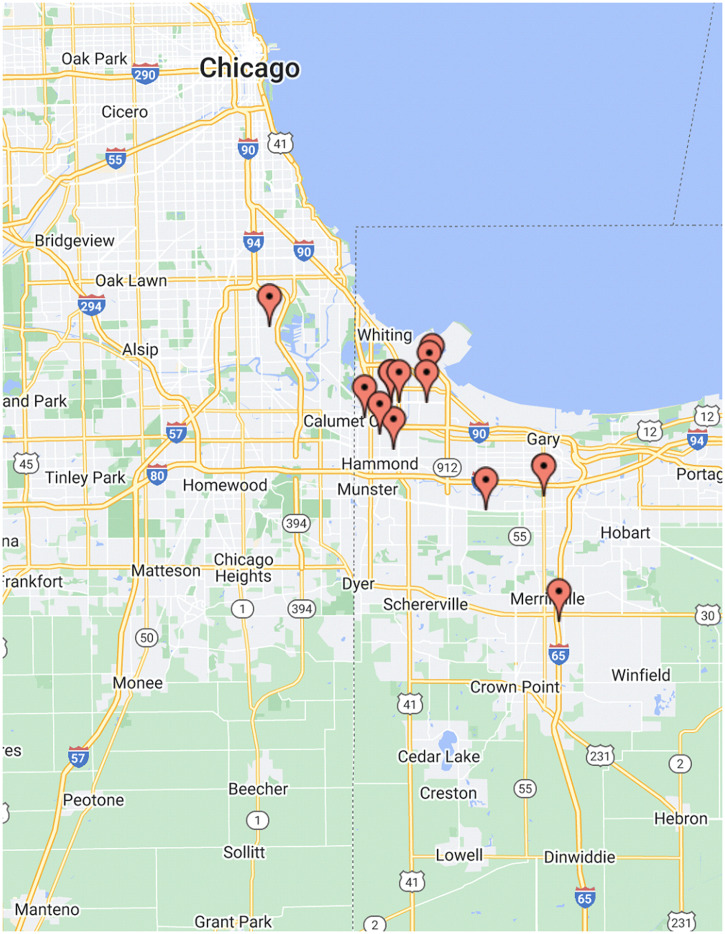
In 2021, in-depth interviews were conducted with 15 CHWs employed by Lake County community-based organizations including clinics, schools, and faith-based organizations.
Harnessing CHWs' voices as insiders with knowledge of their communities' health landscape, our analysis identified multilevel barriers to screening that spanned individual, interpersonal, and community levels of the socio-ecological model. CHW-facilitated HPV self-sampling shows promise of mitigating several barriers to cervical cancer screening. Privacy, time saved, and comfort were perceived to be facilitators for acceptability, with concerns about the novelty of this approach and trust in provider (as opposed to CHW) expertise emerging as key barriers. In terms of feasibility, synergies with existing CHW work, and some community members' prior experience with self-sampling were found to be facilitators, while CHW's time limitations and self-efficacy in providing adequate medical support were areas of concern. Considerations for adoption included CHW training, gender concordance, safety, and respect, among others.
This study provides critical insights from CHWs as key stakeholders on a screening model that directly engages them, which can inform implementation to increase screening in medically-underserved communities in the US.
背景/目的:鉴于呼吁社区卫生工作者(CHW)参与宫颈癌筛查创新服务的提供,本研究探讨了社区卫生工作者对以下方面的看法:i)在印第安纳州莱克县一个以西班牙裔为主的社区中,宫颈癌筛查的障碍,该县是该州宫颈癌死亡率最高的县;ii)由社区卫生工作者协助进行人乳头瘤病毒(HPV)自我采样作为减少筛查差距手段的可接受性和可行性。
2021年,对莱克县社区组织(包括诊所、学校和宗教组织)雇佣的15名社区卫生工作者进行了深入访谈。
我们利用社区卫生工作者作为了解其社区健康状况的内部人士的声音,分析确定了筛查的多层次障碍,这些障碍跨越了社会生态模型的个人、人际和社区层面。由社区卫生工作者协助进行的HPV自我采样显示出减轻宫颈癌筛查若干障碍的前景。隐私、节省时间和舒适度被认为是可接受性的促进因素,而对这种方法新颖性的担忧以及对医疗服务提供者(而非社区卫生工作者)专业知识的信任则成为关键障碍。在可行性方面,与社区卫生工作者现有工作的协同作用以及一些社区成员先前的自我采样经验被发现是促进因素,而社区卫生工作者的时间限制以及提供充分医疗支持的自我效能则是令人担忧的领域。采用该方法的考虑因素包括社区卫生工作者培训、性别一致性、安全性和尊重等。
本研究提供了作为关键利益相关者的社区卫生工作者对直接让他们参与的筛查模式的重要见解,可为在美国医疗服务不足社区增加筛查的实施提供参考。