Department of Pathology, Shanghai Chest Hospital, Shanghai Jiao Tong University School of Medicine, Shanghai, 200030, China.
Novogene Co., Ltd., Beijing, 100015, China.
Cell Death Dis. 2023 Aug 2;14(8):493. doi: 10.1038/s41419-023-06021-6.
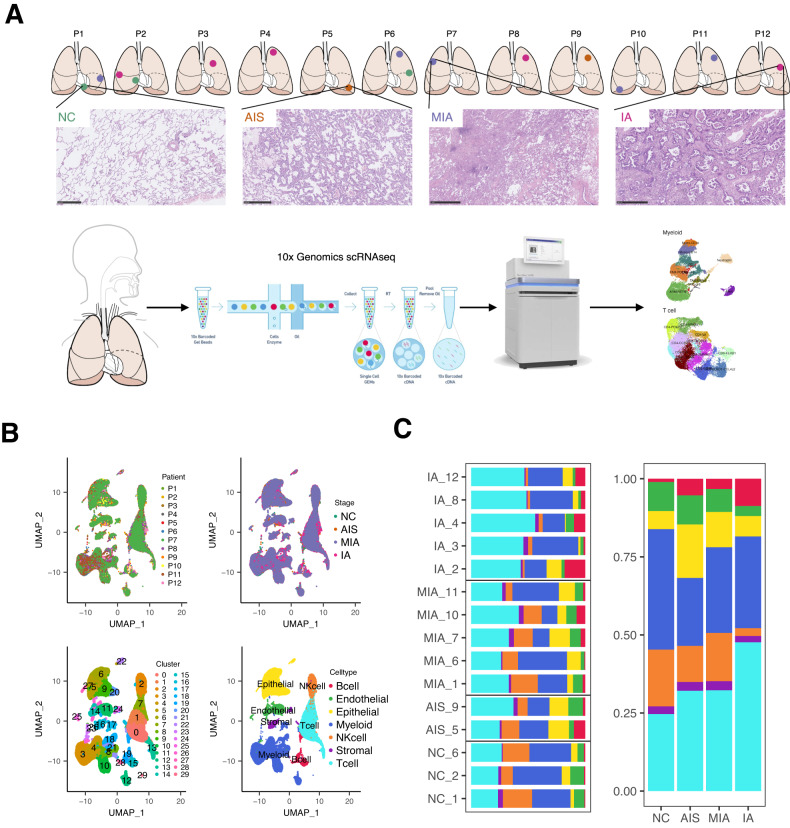
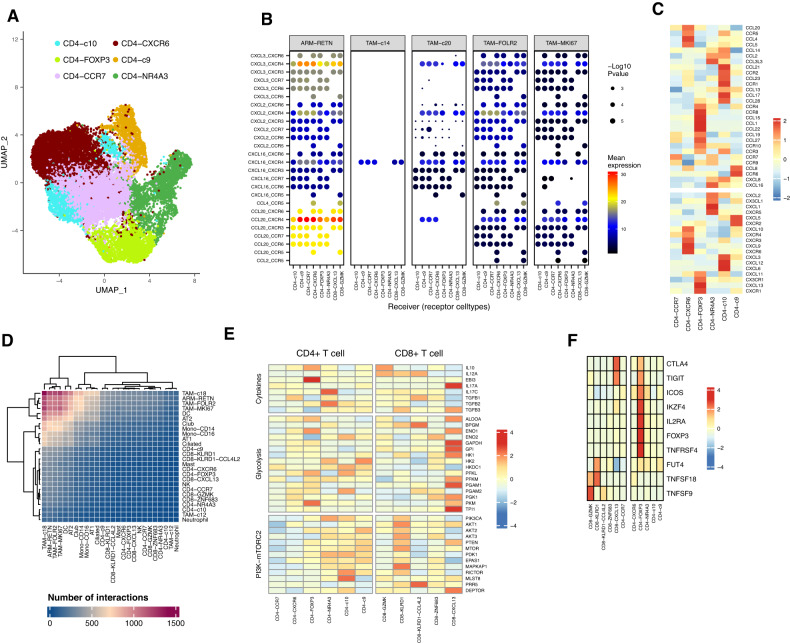
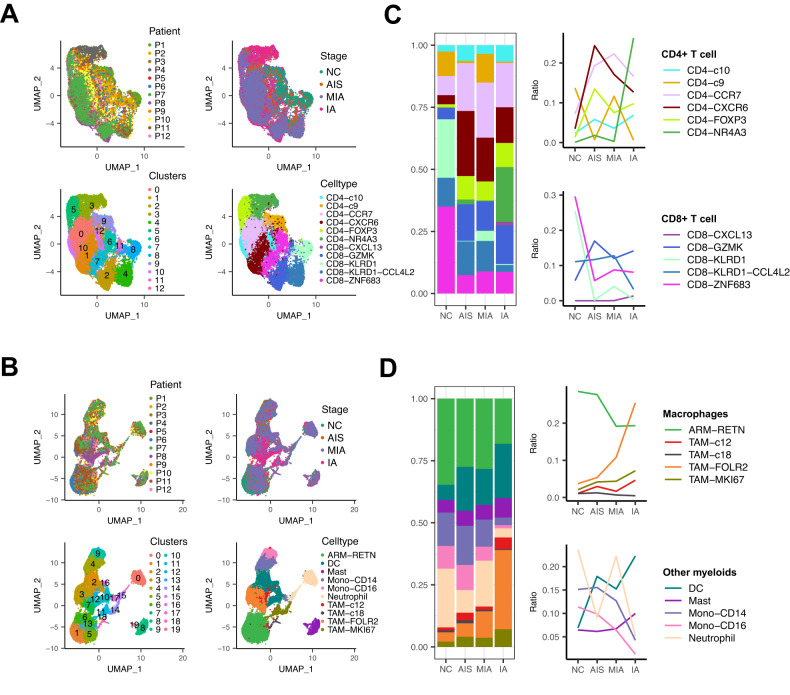
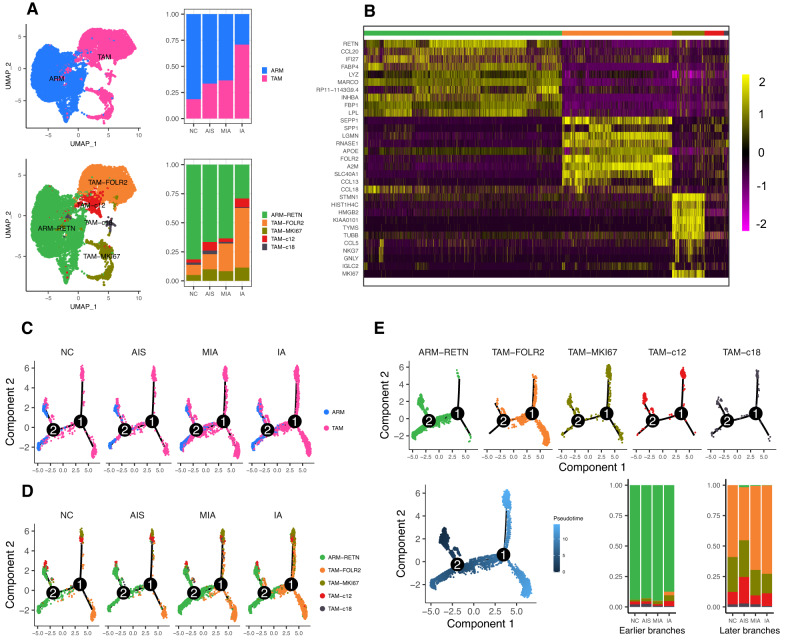
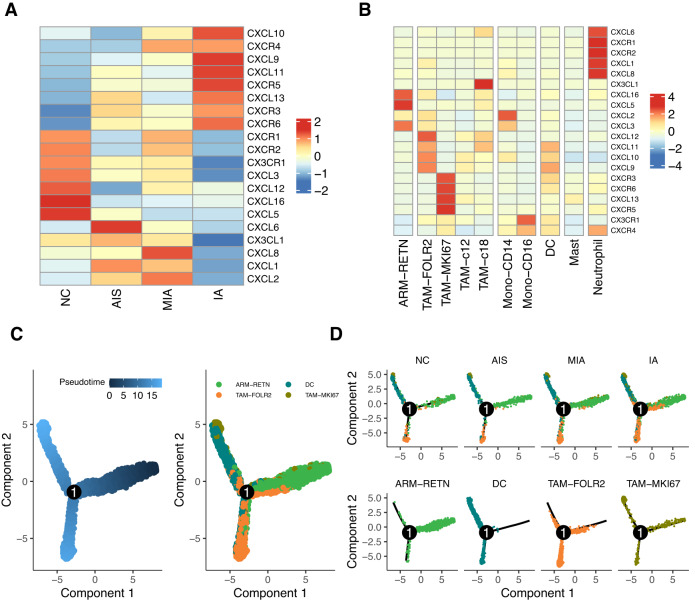
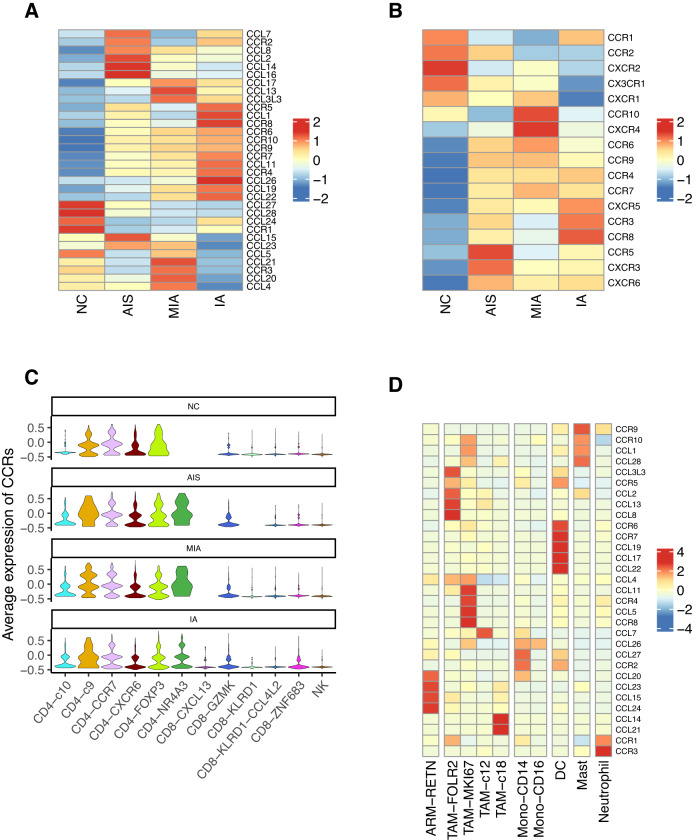
An immunosuppressive microenvironment enriched with regulatory CD4 T lymphocytes (Tregs) facilitates the progression of lung adenocarcinoma (LUAD). This study aims to investigate the cellular mechanism underlying the formation of the immunosuppressive microenvironment in LUAD. LUAD samples (n = 12) and normal lung samples (n = 3) were obtained from patients with different pathological stages of LUAD. Single-cell RNA sequencing was performed to classify cellular components and analyze the transcriptomes, including transcription factors/targets and chemokine ligands/receptors, followed by bioinformatics study such as pseudotime analysis. Myeloid cells and T cells were the most abundant cell types in tumors and normal lung tissues, while tumor-associated macrophage-folate receptor 2 (TAM-FOLR2) and CD4 nuclear receptor subfamily 4 group A member 3 (NR4A3) exhibited sharp increases in invasive adenocarcinoma (IA). The enrichment of TAM-FOLR2 in IA might result from alveolar resident macrophage-resistin (ARM-RETN) transformation and recruitment of dendritic cells (DCs) and other TAMs, as evidenced by temporal trajectories and differential expression profiles of chemokine ligands/receptors versus those in the early stages of tumors. High expression of CCL17/19/22 was observed in IA as well as in DCs, along with the strong interaction of TAM-FOLR2 with DCs. The results of pseudotime analysis suggested that CD4NR4A3 might potentially convert to CD4FOXP3, further supported by the high expression of NR4A3 target genes in CD4FOXP3 cells. This study provides a single-cell transcriptome atlas from preinvasive to invasive LUAD and reveals a potential ARM-RETN/TAM-FOLR2/DCs/CD4NR4A3/CD4FOXP3 trajectory in shaping the immune suppressive microenvironment along the pathogenesis of LUAD.
富含调节性 CD4 T 淋巴细胞 (Tregs) 的免疫抑制微环境促进肺腺癌 (LUAD) 的进展。本研究旨在探讨 LUAD 中免疫抑制微环境形成的细胞机制。从不同病理阶段 LUAD 患者中获得 LUAD 样本 (n=12) 和正常肺样本 (n=3)。进行单细胞 RNA 测序以对细胞成分进行分类,并分析转录组,包括转录因子/靶标和趋化因子配体/受体,然后进行生物信息学研究,如伪时间分析。髓样细胞和 T 细胞是肿瘤和正常肺组织中最丰富的细胞类型,而肿瘤相关巨噬细胞叶酸受体 2 (TAM-FOLR2) 和 CD4 核受体亚家族 4 组 A 成员 3 (NR4A3) 在浸润性腺癌 (IA) 中表现出明显增加。IA 中 TAM-FOLR2 的富集可能是由于肺泡常驻巨噬细胞抵抗素 (ARM-RETN) 转化和树突状细胞 (DC) 和其他 TAMs 的募集所致,这可以通过趋化因子配体/受体的时间轨迹和差异表达谱与肿瘤早期相比得到证明。在 IA 以及 DC 中观察到 CCL17/19/22 的高表达,并且 TAM-FOLR2 与 DC 之间存在强烈的相互作用。伪时间分析的结果表明,CD4NR4A3 可能潜在地转化为 CD4FOXP3,这进一步得到了 CD4FOXP3 细胞中 NR4A3 靶基因高表达的支持。本研究提供了从 Pre-IA 到 IA 的 LUAD 的单细胞转录组图谱,并揭示了在 LUAD 发病机制中塑造免疫抑制微环境的潜在 ARM-RETN/TAM-FOLR2/DCs/CD4NR4A3/CD4FOXP3 轨迹。