Center of Digital Dentistry, Faculty of Prosthodontics, Peking University School and Hospital of Stomatology & National Center for Stomatology & National Clinical Research Center for Oral Diseases & National Engineering Research Center of Oral Biomaterials and Digital Medical Devices & Beijing Key Laboratory of Digital Stomatology & Research Center of Engineering and Technology for Computerized Dentistry Ministry of Health & NMPA Key Laboratory for Dental Materials, Beijing, China.
The State Key Laboratory Breeding Base of Basic Science of Stomatology (Hubei- MOST) & Key Laboratory of Oral Biomedicine, Ministry of Education, School & Hospital of Stomatology, Wuhan University, Wuhan, China.
Int J Oral Sci. 2023 Aug 2;15(1):31. doi: 10.1038/s41368-023-00234-3.
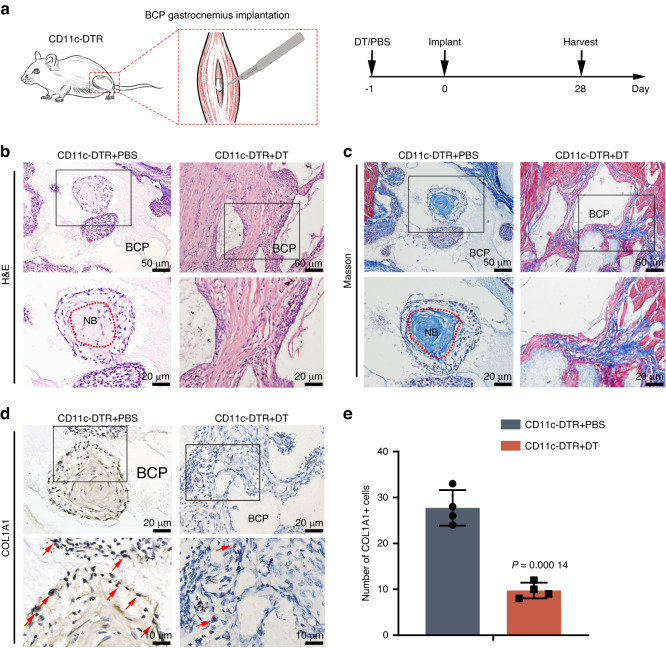
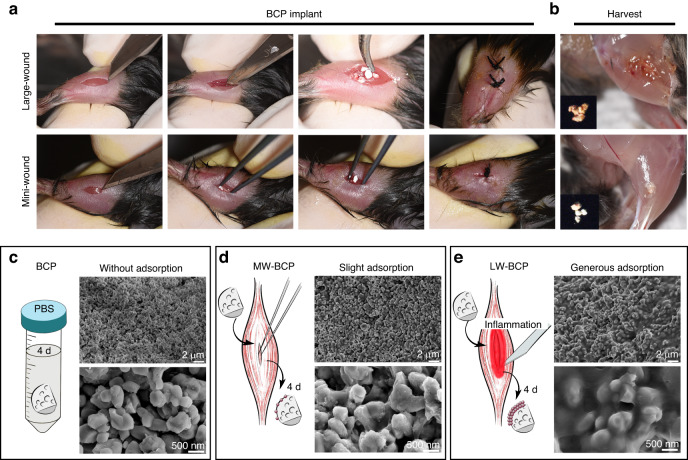
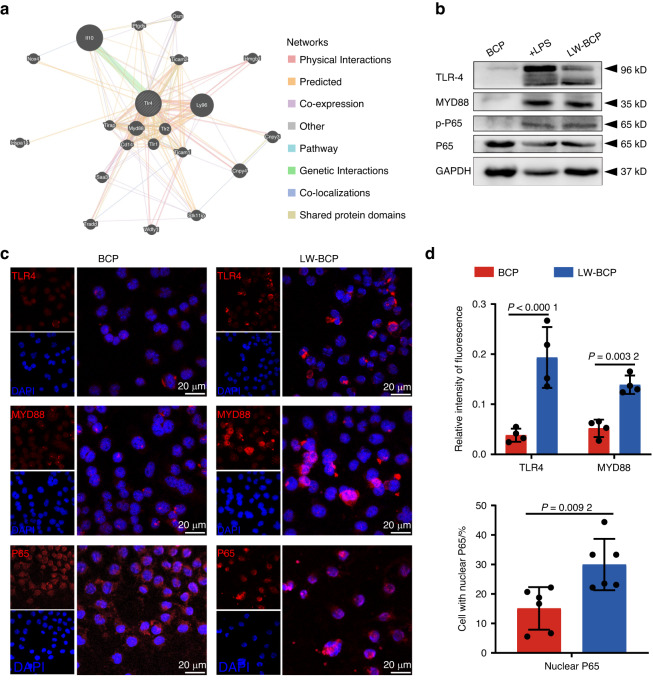
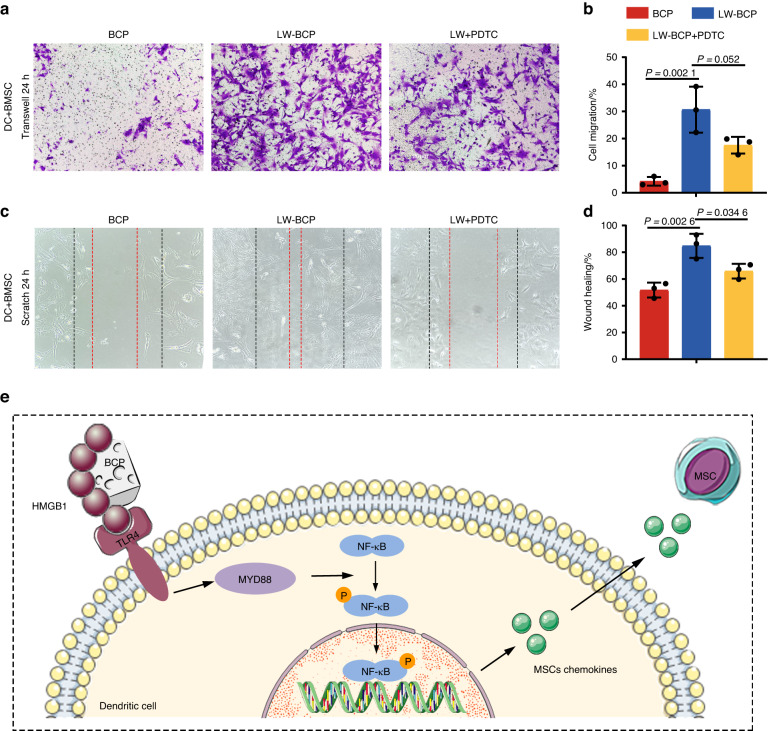
Bone substitute material implantation has become an important treatment strategy for the repair of oral and maxillofacial bone defects. Recent studies have shown that appropriate inflammatory and immune cells are essential factors in the process of osteoinduction of bone substitute materials. Previous studies have mainly focused on innate immune cells such as macrophages. In our previous work, we found that T lymphocytes, as adaptive immune cells, are also essential in the osteoinduction procedure. As the most important antigen-presenting cell, whether dendritic cells (DCs) can recognize non-antigen biomaterials and participate in osteoinduction was still unclear. In this study, we found that surgical trauma associated with materials implantation induces necrocytosis, and this causes the release of high mobility group protein-1 (HMGB1), which is adsorbed on the surface of bone substitute materials. Subsequently, HMGB1-adsorbed materials were recognized by the TLR4-MYD88-NFκB signal axis of dendritic cells, and the inflammatory response was activated. Finally, activated DCs release regeneration-related chemokines, recruit mesenchymal stem cells, and initiate the osteoinduction process. This study sheds light on the immune-regeneration process after bone substitute materials implantation, points out a potential direction for the development of bone substitute materials, and provides guidance for the development of clinical surgical methods.
骨替代材料的植入已成为口腔颌面骨缺损修复的重要治疗策略。最近的研究表明,适当的炎症和免疫细胞是骨替代材料成骨诱导过程中的重要因素。以前的研究主要集中在先天免疫细胞如巨噬细胞上。在我们之前的工作中,我们发现 T 淋巴细胞作为适应性免疫细胞,在成骨诱导过程中也是必不可少的。作为最重要的抗原提呈细胞,树突状细胞(DCs)是否能识别非抗原性生物材料并参与成骨诱导仍不清楚。在这项研究中,我们发现与材料植入相关的手术创伤会诱导坏死细胞死亡,从而导致高迁移率族蛋白 1(HMGB1)的释放,HMGB1 会吸附在骨替代材料的表面。随后,HMGB1 吸附的材料被树突状细胞的 TLR4-MYD88-NFκB 信号轴识别,激活炎症反应。最后,激活的 DCs 释放与再生相关的趋化因子,招募间充质干细胞,并启动成骨诱导过程。这项研究揭示了骨替代材料植入后的免疫再生过程,指出了骨替代材料发展的潜在方向,并为临床手术方法的发展提供了指导。