Division of Hematology, Department of Internal Medicine, Faculty of Medicine, Bursa Uludag University, 16059, Bursa, Turkey.
Sci Rep. 2023 Aug 2;13(1):12539. doi: 10.1038/s41598-023-39077-7.
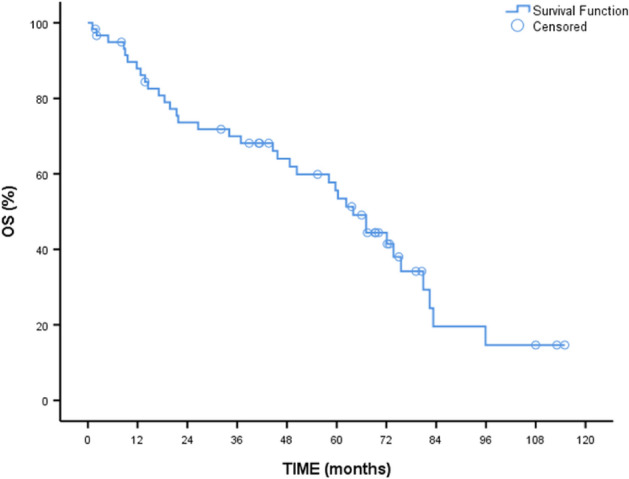
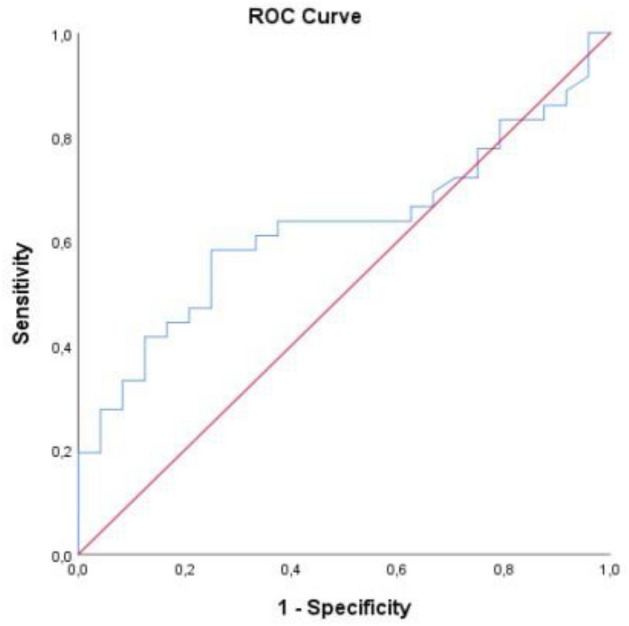
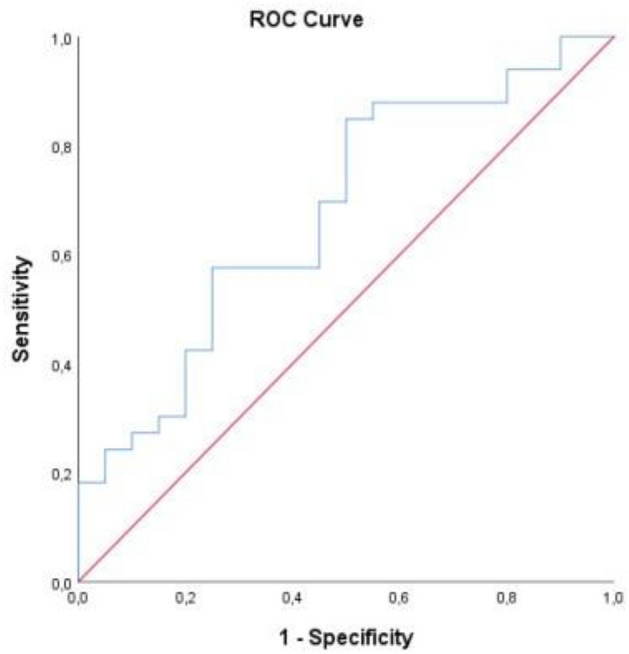
The impact of inflammatory markers such as systemic immune-inflammation (SII) index and systemic inflammation response index (SIRI) on myelofibrosis (MF) prognosis was evaluated for the first time in this study. Data from 60 patients diagnosed with MF between March 2011 and September 2022 were retrospectively analyzed. In addition to disease-related markers, the impact of SII and SIRI on prognosis was evaluated. In our study, the overall median survival (OS) was 64 months. OS was significantly shorter in patients older than 65 years, with high ferritin and lymphocyte levels, transfusion dependence at diagnosis, platelet count below 100 × 10/L, Hb level below 8 g/dl, and high risk according to the dynamic international prognostic scoring system (DIPSS)-Plus score. When these variables were included in the multivariate Cox regression model, it was found that being older than 65 years, having a high ferritin value, being at high risk according to the DIPSS-plus score and Hb values below 8 increased the risk of death. Platelet-to-lymphocyte ratio (PLR) and SII index were lower in patients with a fatal outcome. No statistically significant relationship was found between SIRI and mortality. The findings of this study showed that low PLR and high ferritin were associated with poor prognosis in MF. Elevated SII and SIRI, evaluated for the first time in patients with myelofibrosis, did not predict prognosis. Since non-inflammatory variables play a role in the pathogenesis of MF, bone marrow indicators and systemic inflammation indicators derived from hematologic parameters may not be accurate.
本研究首次评估了炎症标志物(如全身性免疫炎症(SII)指数和全身性炎症反应指数(SIRI))对骨髓纤维化(MF)预后的影响。回顾性分析了 2011 年 3 月至 2022 年 9 月期间诊断为 MF 的 60 例患者的数据。除疾病相关标志物外,还评估了 SII 和 SIRI 对预后的影响。在我们的研究中,总中位生存期(OS)为 64 个月。65 岁以上患者的 OS 明显缩短,铁蛋白和淋巴细胞水平较高,诊断时依赖输血,血小板计数低于 100×10/L,Hb 水平低于 8 g/dl,根据动态国际预后评分系统(DIPSS)-Plus 评分处于高危状态。当将这些变量纳入多变量 Cox 回归模型时,发现年龄大于 65 岁、铁蛋白值高、DIPSS-plus 评分高危以及 Hb 值低于 8 增加了死亡风险。死亡结局患者的血小板与淋巴细胞比值(PLR)和 SII 指数较低。SIRI 与死亡率之间无统计学显著相关性。本研究结果表明,低 PLR 和高铁蛋白与 MF 预后不良相关。SII 和 SIRI 升高,首次在骨髓纤维化患者中进行评估,不能预测预后。由于非炎症变量在 MF 的发病机制中起作用,因此源自血液学参数的骨髓指标和全身炎症指标可能不准确。