Department of Orthopaedic Surgery, Kangnam Sacred Heart Hospital, Hallym University College of Medicine, Seoul, Republic of Korea.
Department of Orthopaedic Surgery, Asan Medical Center, University of Ulsan College of Medicine, Seoul, Republic of Korea.
J Orthop Surg Res. 2023 Aug 2;18(1):559. doi: 10.1186/s13018-023-04040-9.
The purpose of this study was to find the factors influencing successful bone union for isolated subtalar arthrodesis in posttraumatic subtalar arthritis following calcaneal fracture.
We retrospectively analyzed the rate of successful bone union of 119 cases of isolated subtalar arthrodesis for posttraumatic subtalar arthritis performed at five university hospitals between January 2010 and December 2019. Multivariate logistic regression analysis was used to find the factors associated with successful bone union. Successful bone union was defined as resolution of hindfoot pain with the presence of osseous trabecular bridging involving more than 50% of the posterior facet within 6 months postoperatively.
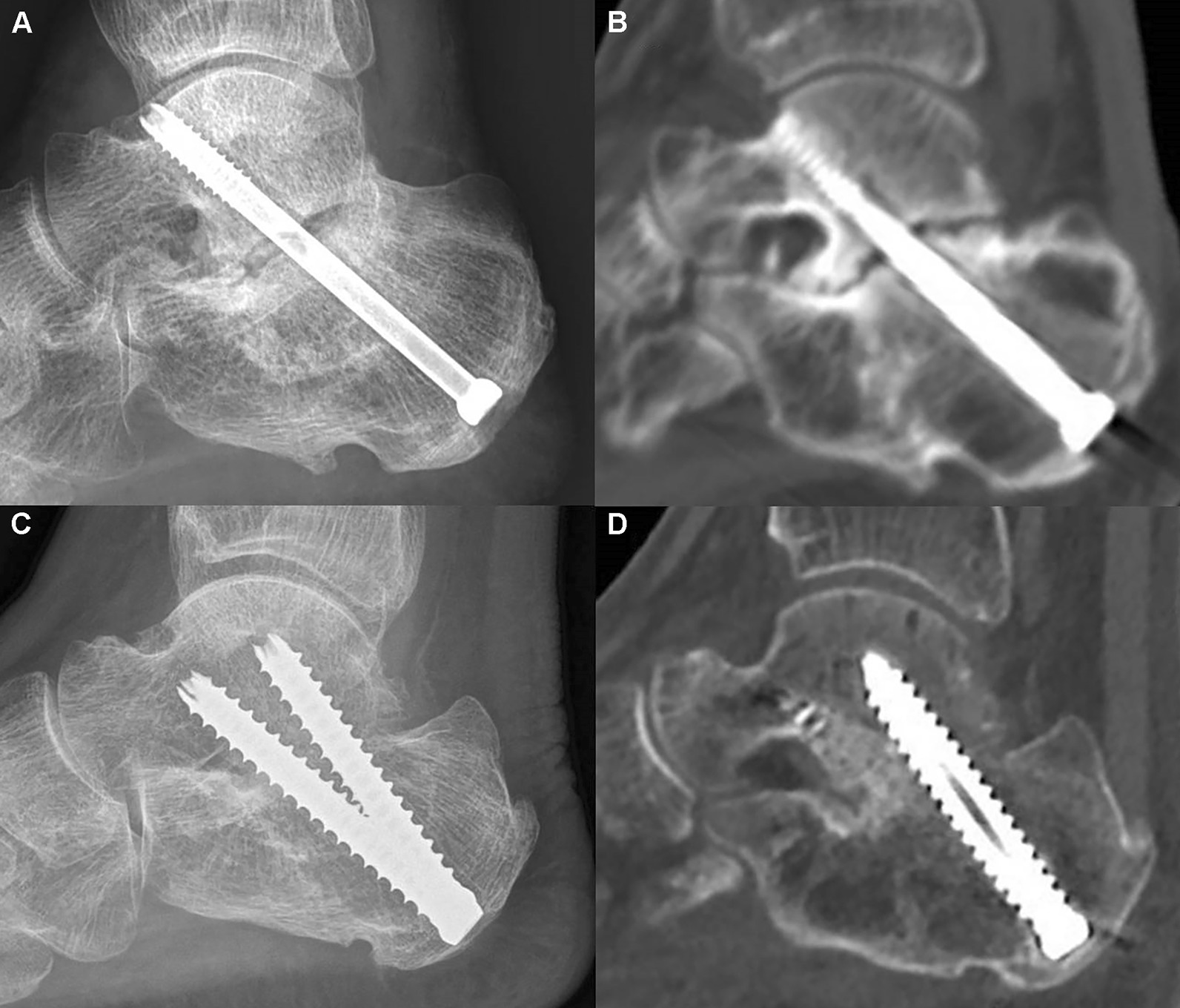
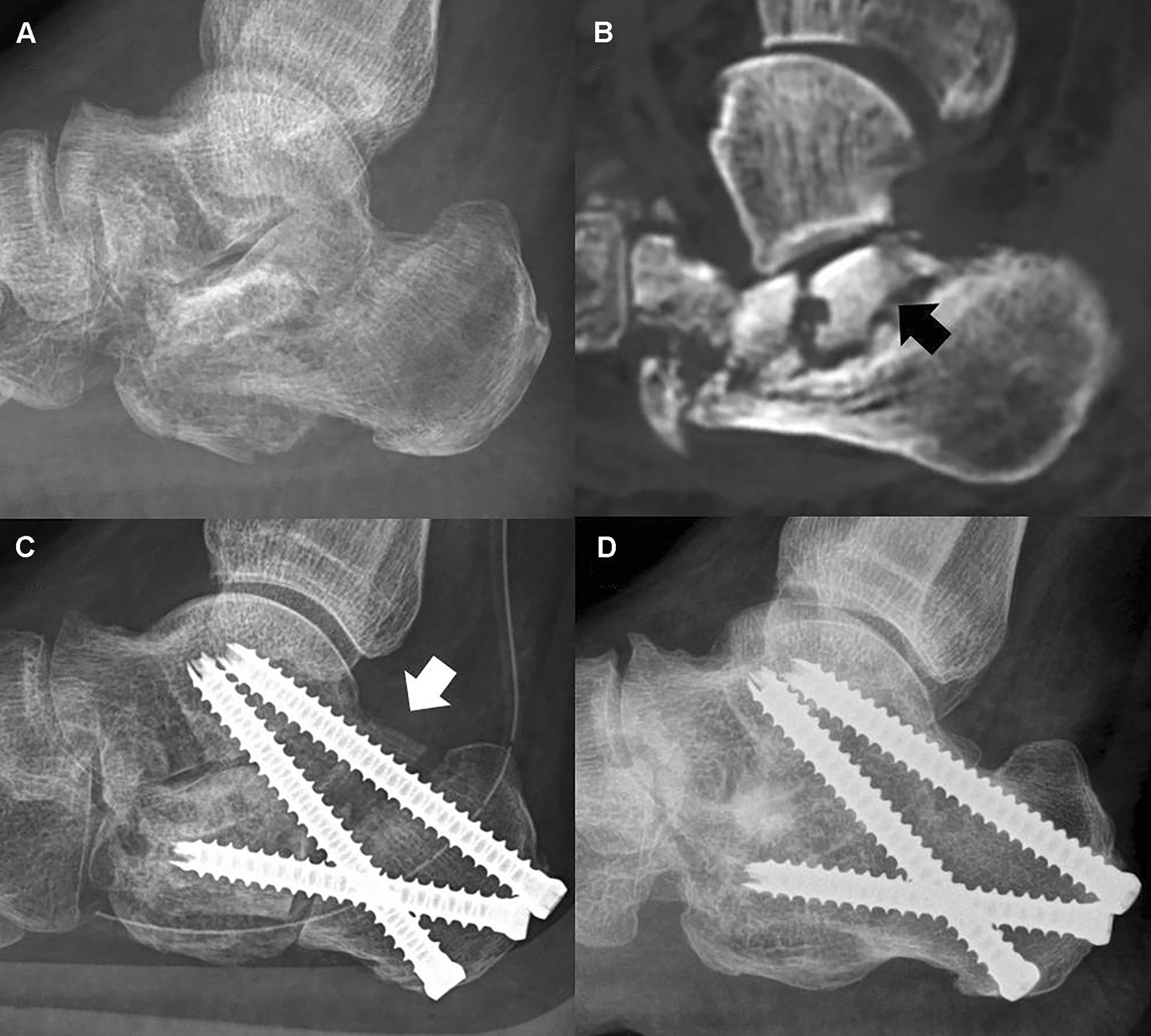
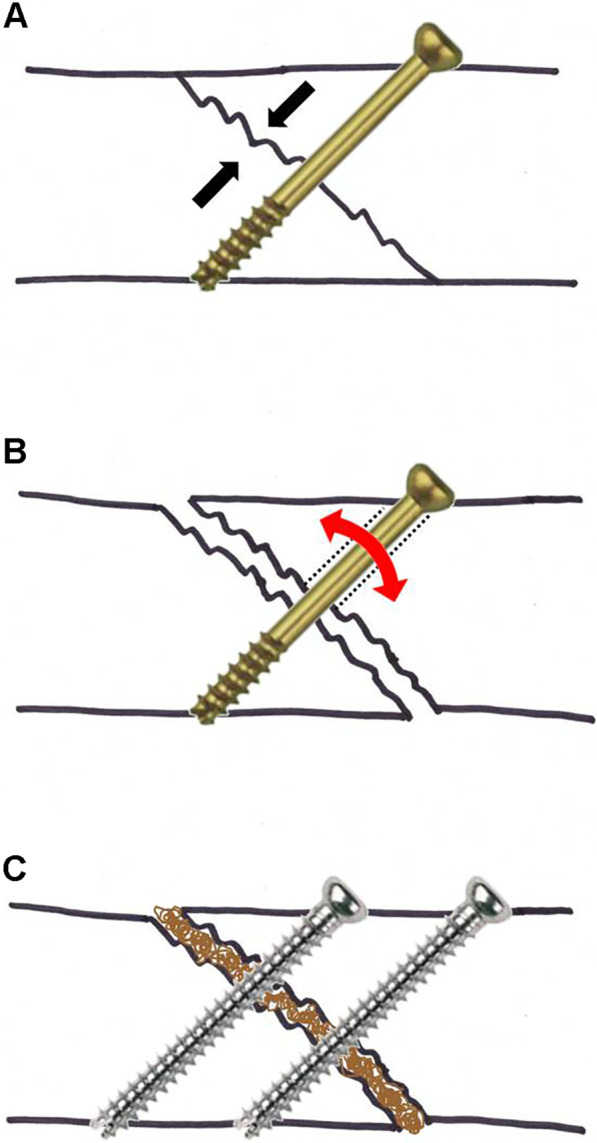
There were 77 (64.7%) cases of successful bone union, 11 (9.2%) cases of delayed union, 8 (6.7%) cases of questionable union, and 23 (19.3%) cases of nonunion. Use of fully threaded screws was 5.90 times [odds ratio (OR) = 5.90, 95% confidence interval (CI) = 1.42-24.49, p = 0.02] more likely to achieve successful bone union compared to the use of partially threaded screws. Use of two parallel screws or the two divergent screws were 3.71 times (OR = 3.71, 95% CI = 1.05-13.14, p = 0.04) and 4.65 times (OR = 4.65, 95% CI = 1.23-17.53, p = 0.02) more likely to achieve successful bone union compared to the use of a single screw. Use of cancellous autograft or structural autograft was 4.72 times (OR = 4.72, 95% CI = 1.17-19.06, p = 0.03) and 7.12 times (OR = 7.12, 95% CI = 1.46-34.68, p = 0.02) more likely to achieve successful bone union compared to no graft use.
Use of fully threaded screws, autograft, and two screws compared to a single screw were the factors associated with successful bone union within six postoperative months after subtalar arthrodesis for the posttraumatic arthritis.
本研究旨在探讨跟骨骨折后创伤性距下关节炎行单纯距下关节融合术影响骨融合成功的因素。
我们回顾性分析了 2010 年 1 月至 2019 年 12 月期间在 5 所大学医院行单纯距下关节融合术治疗创伤性距下关节炎的 119 例患者的骨融合成功率。采用多变量逻辑回归分析确定与骨融合成功相关的因素。骨融合成功定义为术后 6 个月内后足疼痛缓解,且后关节面有超过 50%的骨小梁桥形成。
77 例(64.7%)患者骨融合成功,11 例(9.2%)患者延迟愈合,8 例(6.7%)患者愈合可疑,23 例(19.3%)患者未愈合。与使用部分螺纹螺钉相比,使用全螺纹螺钉的患者更有可能实现骨融合[比值比(OR)=5.90,95%置信区间(CI)=1.42-24.49,p=0.02]。使用 2 枚平行螺钉或 2 枚发散螺钉的患者更有可能实现骨融合[OR=3.71,95%CI=1.05-13.14,p=0.04]和[OR=4.65,95%CI=1.23-17.53,p=0.02],与使用单枚螺钉相比。与不使用移植物相比,使用松质骨自体移植物或结构性自体移植物的患者更有可能实现骨融合[OR=4.72,95%CI=1.17-19.06,p=0.03]和[OR=7.12,95%CI=1.46-34.68,p=0.02]。
与使用单枚螺钉相比,术后 6 个月内使用全螺纹螺钉、自体移植物和 2 枚螺钉是距下关节融合术后创伤性关节炎骨融合成功的相关因素。