Centre for Paediatric Dentistry and Orthodontic Studies, Faculty of Dentistry, Universiti Teknologi MARA, Selangor Branch, Sungai Buloh Campus, Jalan Hospital, Sungai Buloh, Selangor, 47000, Malaysia.
Department of Paediatric Dentistry and Orthodontics, Faculty of Dentistry, Universiti Malaya, Kuala Lumpur, 50603, Malaysia.
BMC Oral Health. 2023 Aug 2;23(1):534. doi: 10.1186/s12903-023-03185-7.
The Bolton analysis is one of the commonly used tooth size analysis or diagnostic tools in deriving a treatment plan for orthodontic patients. Many studies have indicated and concluded that normal measurements for one group should not be considered normal for other ethnic groups. The aims and objectives of this study were to investigate the applicability of Bolton's ratios in the orthodontic population of Malaysian main ethnics, Malay, Chinese, and Indians. Comparisons were made in terms of size and distribution of tooth size discrepancy in the Malaysian orthodontic population and the findings were converted in terms of millimeters.
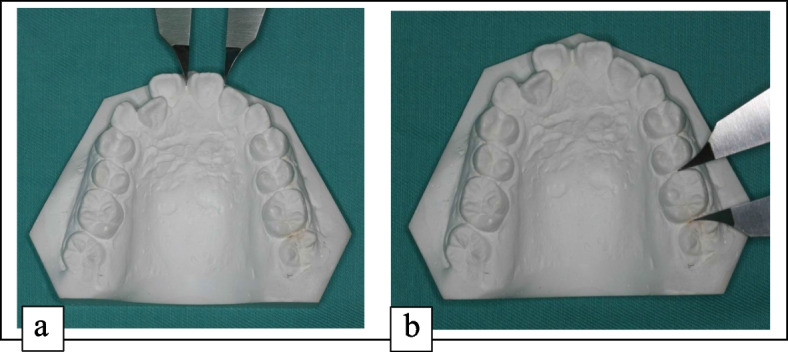
Hundred fifty pre-orthodontic study casts comprised of 52 Malay, 54 Chinese, and 44 Indian patients were selected. Digital calipers (Fowler Pro-Max) linked to Hamilton Tooth Arch Software were used to measure the tooth width and ratios. Statistical analysis was carried out to test for gender differences (independent t-test), to identify the effects of malocclusion and ethnic groups (Two-way ANOVA), and to compare the means of the current study with Bolton's standards (one sample t-test).
This study showed that there was no significant difference between the genders of the sample of each ethnicity. There was no correlation found between ethnic groups and malocclusion classes. There was a significant difference when comparing Bolton values with the Malay sample for both ratios. It was found that more Malay subjects presented with maxillary excess contrary to Chinese and Indians who presented more maxillary deficiency for the anterior and overall ratio.
There was a significant difference found between the TSD of the three major ethnicities in Malaysia. The Bolton standards can be applied to Malaysian Chinese and Indians but not to Malays orthodontic populations for both anterior and overall ratios. Subsequently, a specific standard should be used for the Malays orthodontic population. It was found that more Malay subjects presented with maxillary excess contrary to Chinese and Indians who presented more maxillary deficiency for the anterior and overall ratio.
博尔顿分析是用于制定正畸患者治疗计划的常用牙齿大小分析或诊断工具之一。许多研究表明并得出结论,一个群体的正常测量值不应被视为其他种族群体的正常标准。本研究的目的是研究博尔顿比率在马来西亚主要种族马来人、华人、印度人正畸人群中的适用性。比较了马来西亚正畸人群中牙齿大小差异的大小和分布,并将研究结果转换为毫米。
选择了 150 名正畸前研究模型,其中包括 52 名马来人、54 名华人、44 名印度人。使用数字卡尺(Fowler Pro-Max)连接 Hamilton Tooth Arch 软件来测量牙齿宽度和比率。进行了统计分析以检验性别差异(独立 t 检验),确定错畸形和种族群体的影响(双向方差分析),并将本研究的平均值与博尔顿标准进行比较(单样本 t 检验)。
本研究表明,每个种族的样本中男女之间没有显著差异。种族群体和错畸形类型之间没有相关性。比较博尔顿值与马来人样本时,两个比率都存在显著差异。结果发现,与华人、印度人相比,更多的马来人呈现上颌过度,而中国人和印度人则表现出上颌前牙和总体比率不足。
马来西亚三个主要种族的 TSD 存在显著差异。博尔顿标准适用于马来西亚的华人、印度人,但不适用于马来人正畸人群的前牙和总体比率。因此,应该为马来人正畸人群制定特定的标准。结果发现,与华人、印度人相比,更多的马来人呈现上颌过度,而中国人和印度人则表现出上颌前牙和总体比率不足。