Coupé Stéphane, Giantsis Ioannis A, Vázquez Luis Maite, Scarpa Fabio, Foulquié Mathieu, Prévot Jean-Marc, Casu Marco, Lattos Athanasios, Michaelidis Basile, Sanna Daria, García-March José Rafa, Tena-Medialdea José, Vicente Nardo, Bunet Robert
Université de Toulon, Aix Marseille Univ, CNRS, IRD, MIO Marseille France.
Faculty of Agricultural Sciences University of Western Macedonia Kozani Greece.
Ecol Evol. 2023 Aug 4;13(8):e10383. doi: 10.1002/ece3.10383. eCollection 2023 Aug.
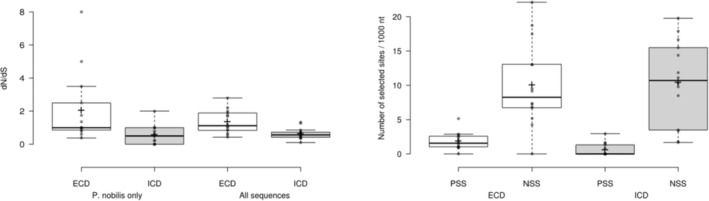
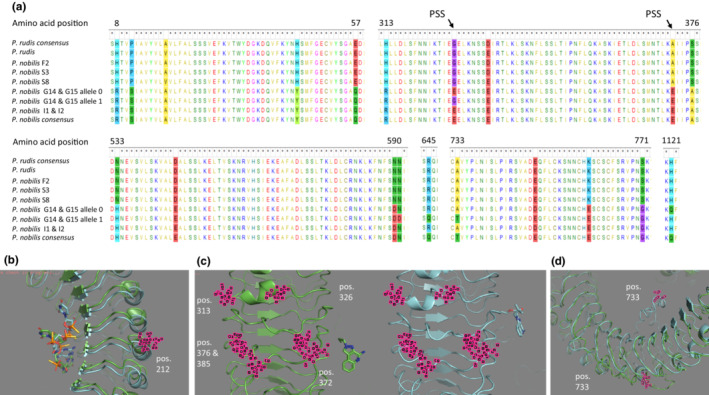
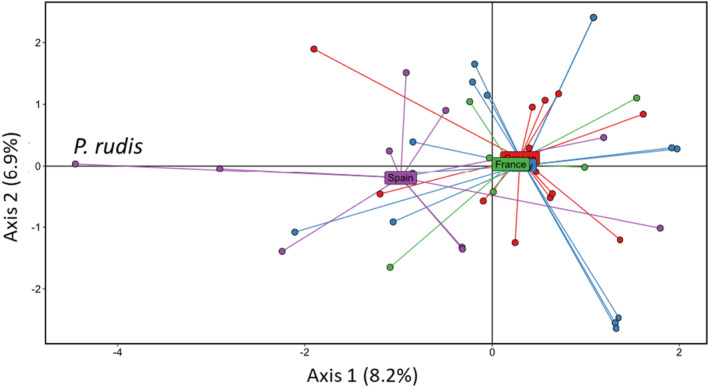
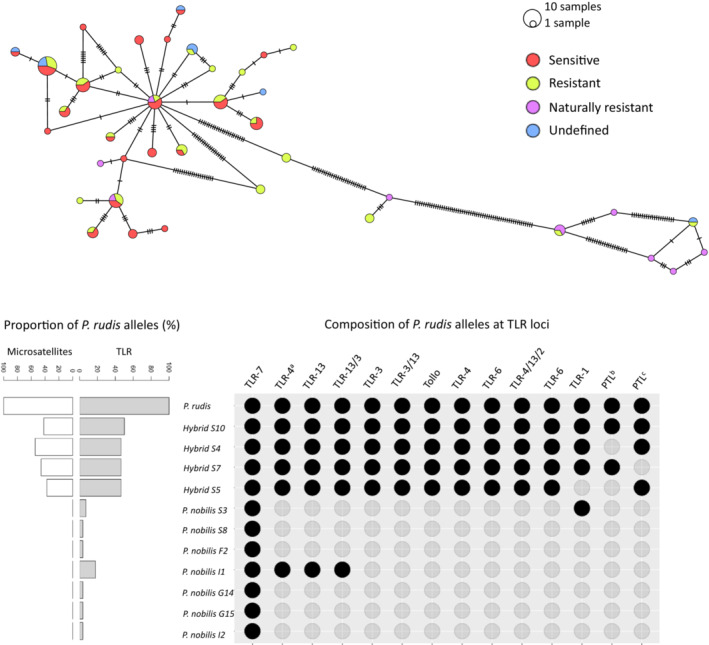
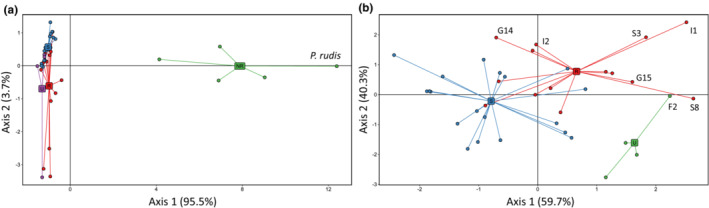
The fan mussel is currently on the brink of extinction due to a multifactorial disease mainly caused to the highly pathogenic parasite , meaning that the selection pressure outweighs the adaptive potential of the species. Hopefully, rare individuals have been observed somehow resistant to the parasite, stretching the need to identify the traits underlying this better fitness. Among the candidate to explore at first intention are fast-evolving immune genes, of which toll-like receptor (TLR). In this study, we examined the genetic diversity at 14 TLR loci across , and × hybrid genomes, collected at four physically distant regions, that were found to be either resistant or sensitive to the parasite . We report a high genetic diversity, mainly observed at cell surface TLRs compared with that of endosomal TLRs. However, the endosomal TLR-7 exhibited unexpected level of diversity and haplotype phylogeny. The lack of population structure, associated with a high genetic diversity and elevated dN/dS ratio, was interpreted as balancing selection, though both directional and purifying selection were detected. Interestingly, roughly 40% of the identified as resistant to were introgressed with TLR. Specifically, they all carried a TLR-7 of origin, whereas sensitive were not introgressed, at least at TLR loci. Small contributions of TLR-6 and TLR-4 single-nucleotide polymorphisms to the clustering of resistant and susceptible individuals could be detected, but their specific role in resistance remains highly speculative. This study provides new information on the diversity of TLR genes within the species after MME and additional insights into adaptation to that should contribute to the conservation of this Mediterranean endemic species.
由于主要由高致病性寄生虫引起的多因素疾病,扇贝多毛虫目前正处于灭绝边缘,这意味着选择压力超过了该物种的适应潜力。幸运的是,已经观察到一些罕见个体对这种寄生虫具有抗性,这凸显了识别这种更好适应性背后特征的必要性。首先要探索的候选基因是快速进化的免疫基因,其中包括Toll样受体(TLR)。在本研究中,我们检测了在四个物理距离较远的区域收集的、对寄生虫敏感或抗性的、、和×杂交基因组中14个TLR基因座的遗传多样性。我们报告了较高的遗传多样性,与内体TLR相比,主要在细胞表面TLR中观察到。然而,内体TLR-7表现出意想不到的多样性水平和单倍型系统发育。缺乏种群结构,与高遗传多样性和升高的dN/dS比率相关,被解释为平衡选择,尽管也检测到了定向选择和纯化选择。有趣的是,被鉴定为对具有抗性的个体中约40%与TLR发生了基因渗入。具体而言,它们都携带起源的TLR-7,而敏感个体则没有发生基因渗入,至少在TLR基因座上是这样。可以检测到TLR-6和TLR-4单核苷酸多态性对抗性和易感个体聚类的微小贡献,但其在抗性中的具体作用仍极具推测性。本研究提供了关于MME后扇贝多毛虫物种内TLR基因多样性的新信息,以及对适应的更多见解,这应该有助于保护这种地中海特有物种。