Institute of Translational Medicine, Medical College, Yangzhou University, Yangzhou, China.
Jiangsu Key Laboratory of Experimental and Translational Non-Coding RNA Research, Yangzhou, China.
Oncol Res. 2023 Jul 21;31(5):677-688. doi: 10.32604/or.2023.029718. eCollection 2023.
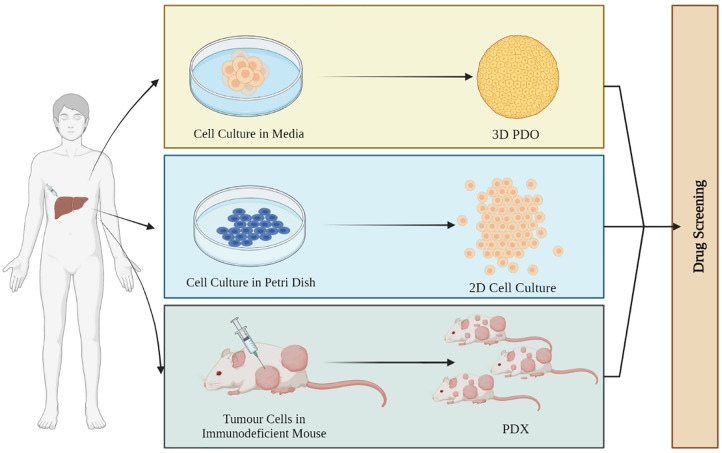
Hepatocellular carcinoma, the most common primary liver cancer and a leading cause of death, is a difficult disease to treat due to its heterogeneous nature. Traditional models, such as 2D culture and patient-derived xenografts, have not proven effective. However, the development of 3D culture techniques, such as organoids, which can mimic the tumor microenvironment (TME) and preserve heterogeneity and pathophysiological properties of tumor cells, offers new opportunities for treatment and research. Organoids also have the potential for biomarker detection and personalized medication, as well as genome editing using CRISPR/Cas9 to study the behavior of certain genes and therapeutic interventions. This review explores to-the-date development of organoids with a focus on TME modeling in 3D organoid cultures. Further, it discusses gene editing using CRISPR/Cas9 in organoids, the challenges faced, and the prospects in the field of organoids.
肝细胞癌是最常见的原发性肝癌,也是死亡的主要原因之一,由于其异质性,治疗难度很大。传统模型,如 2D 培养和患者来源的异种移植物,已被证明效果不佳。然而,3D 培养技术的发展,如类器官,可以模拟肿瘤微环境(TME)并保留肿瘤细胞的异质性和病理生理特性,为治疗和研究提供了新的机会。类器官还具有检测生物标志物和个性化药物的潜力,以及使用 CRISPR/Cas9 进行基因组编辑,以研究某些基因的行为和治疗干预。这篇综述探讨了类器官的最新发展,重点是 3D 类器官培养中的 TME 建模。此外,还讨论了 CRISPR/Cas9 在类器官中的基因编辑、面临的挑战以及类器官领域的前景。