
用于无异种和经济高效的类器官建模的血浆衍生细胞外基质用于肝细胞癌。
Plasma-derived extracellular matrix for xenofree and cost-effective organoid modeling for hepatocellular carcinoma.
机构信息
Center of Excellence for Stem Cells and Regenerative Medicine (CESC), Zewail City of Science and Technology, October Gardens, 6th of October City, Giza, 12582, Egypt.
Urology and Nephrology Center, Mansoura University, Mansoura, Egypt.
出版信息
J Transl Med. 2024 May 21;22(1):487. doi: 10.1186/s12967-024-05230-7.
BACKGROUND
Hepatocellular carcinoma (HCC) causes significant cancer mortality worldwide. Cancer organoids can serve as useful disease models by high costs, complexity, and contamination risks from animal-derived products and extracellular matrix (ECM) that limit its applications. On the other hand, synthetic ECM alternatives also have limitations in mimicking native biocomplexity. This study explores the development of a physiologically relevant HCC organoid model using plasma-derived extracellular matrix as a scaffold and nutritive biomatrix with different cellularity components to better mimic the heterogenous HCC microenvironment. Plasma-rich platelet is recognized for its elevated levels of growth factors, which can promote cell proliferation. By employing it as a biomatrix for organoid culture there is a potential to enhance the quality and functionality of organoid models for diverse applications in biomedical research and regenerative medicine and to better replicate the heterogeneous microenvironment of HCC.
METHOD
To generate the liver cancer organoids, HUH-7 hepatoma cells were cultured alone (homogenous model) or with human bone marrow-derived mesenchymal stromal cells and human umbilical vein endothelial cells (heterogeneous model) in plasma-rich platelet extracellular matrix (ECM). The organoids were grown for 14 days and analyzed for cancer properties including cell viability, invasion, stemness, and drug resistance.
RESULTS
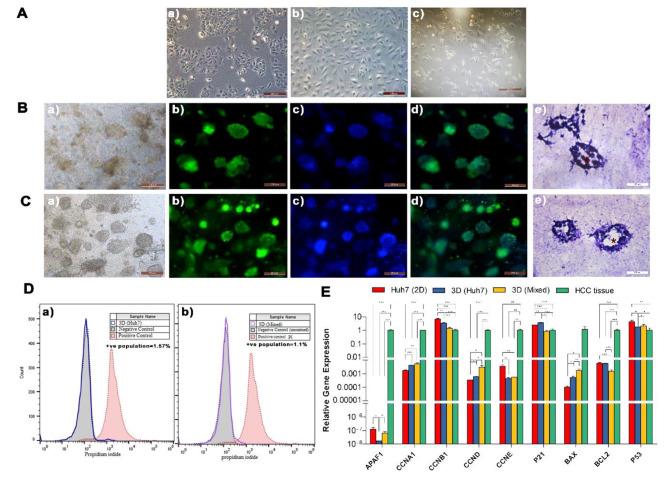
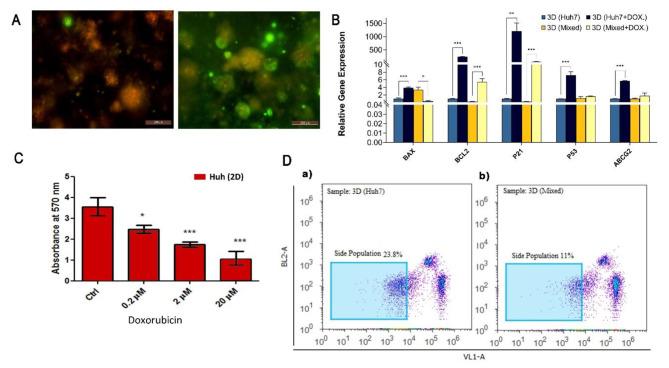
HCC organoids were developed comprising HUH-7 hepatoma cells with or without human mesenchymal stromal and endothelial cells in plasma ECM scaffolds. Both homogeneous (HUH-7 only) and heterogeneous (mixed cellularity) organoids displayed viability, cancer hallmarks, and chemoresistance. The heterogeneous organoids showed enhanced invasion potential, cancer stem cell populations, and late-stage HCC genetic signatures versus homogeneous counterparts.
CONCLUSION
The engineered HCC organoids system offers a clinically relevant and cost-effective model to study liver cancer pathogenesis, stromal interactions, and drug resistance. The plasma ECM-based culture technique could enable standardized and reproducible HCC modeling. It could also provide a promising option for organoid culture and scaling up.
背景
肝细胞癌(HCC)在全球范围内导致了大量的癌症死亡。癌症类器官可以作为有用的疾病模型,但由于动物源性产品和细胞外基质(ECM)带来的高成本、复杂性和污染风险,限制了其应用。另一方面,合成 ECM 替代品在模拟天然生物复杂性方面也存在局限性。本研究探索了使用等离子体衍生细胞外基质作为支架和营养生物基质,并结合不同细胞成分,开发一种更能模拟异质性 HCC 微环境的生理相关 HCC 类器官模型。富含血小板的血浆因其高水平的生长因子而被认可,这些生长因子可以促进细胞增殖。将其用作类器官培养的生物基质,有可能提高类器官模型的质量和功能,使其在生物医学研究和再生医学的各种应用中得到更好的应用,并更好地复制 HCC 的异质性微环境。
方法
为了生成肝癌类器官,将 HUH-7 肝癌细胞单独培养(同质模型)或与人骨髓间充质基质细胞和人脐静脉内皮细胞(异质模型)共培养于富含血小板的血浆细胞外基质(ECM)中。类器官培养 14 天,分析其癌症特性,包括细胞活力、侵袭、干性和耐药性。
结果
在富含血小板的 ECM 支架中培养了包含 HUH-7 肝癌细胞的 HCC 类器官,无论是否有人类间充质基质和内皮细胞。同质(仅 HUH-7)和异质(混合细胞)类器官均显示出活力、癌症特征和化学耐药性。与同质对照相比,异质类器官显示出增强的侵袭潜力、癌症干细胞群体和晚期 HCC 遗传特征。
结论
该工程 HCC 类器官系统提供了一种具有临床相关性和成本效益的模型,可用于研究肝癌发病机制、基质相互作用和耐药性。基于血浆 ECM 的培养技术可以实现 HCC 建模的标准化和可重复性。它也为类器官培养和扩大提供了一种有前途的选择。




 Zotero 插件