The Roslin Institute, University of Edinburgh, Easter Bush, Midlothian EH25 9RG, UK.
The Queen's Medical Research Institute, Centre for Inflammation Research, University of Edinburgh, Edinburgh BioQuarter, Edinburgh EH16 4TJ, UK.
G3 (Bethesda). 2023 Sep 30;13(10). doi: 10.1093/g3journal/jkad178.
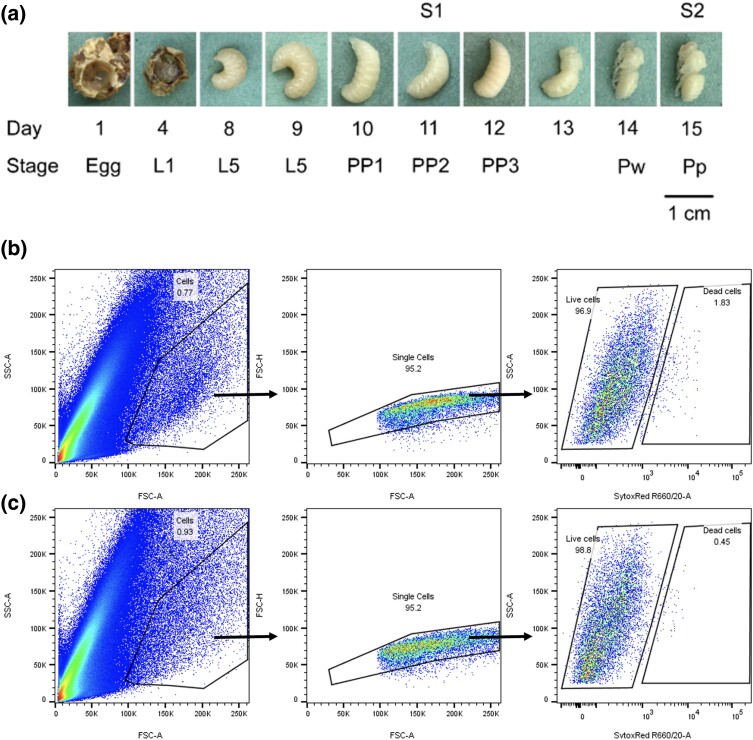
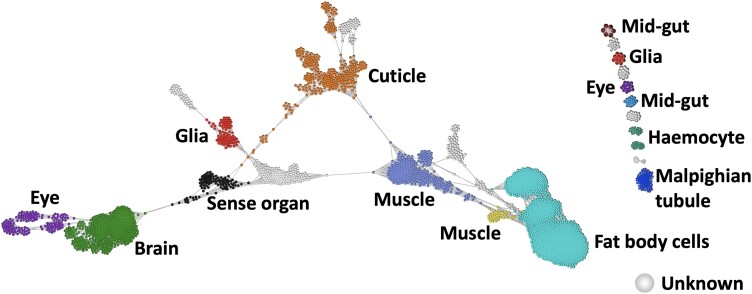
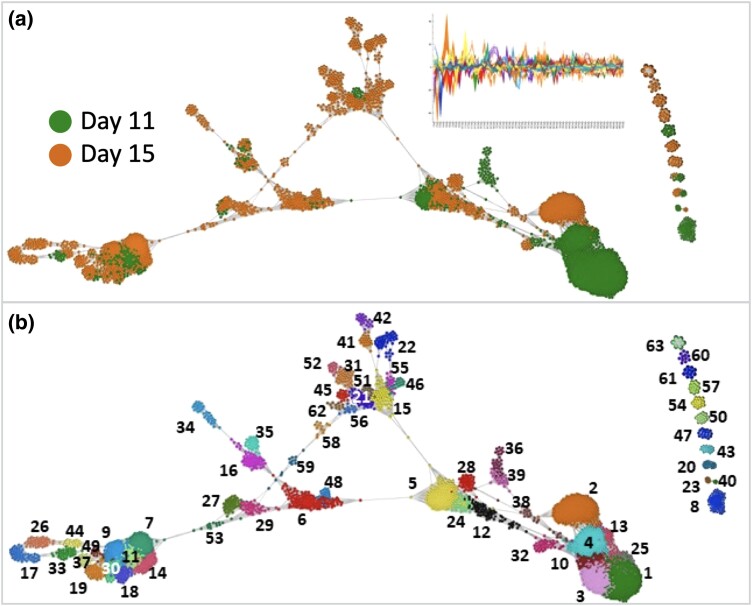
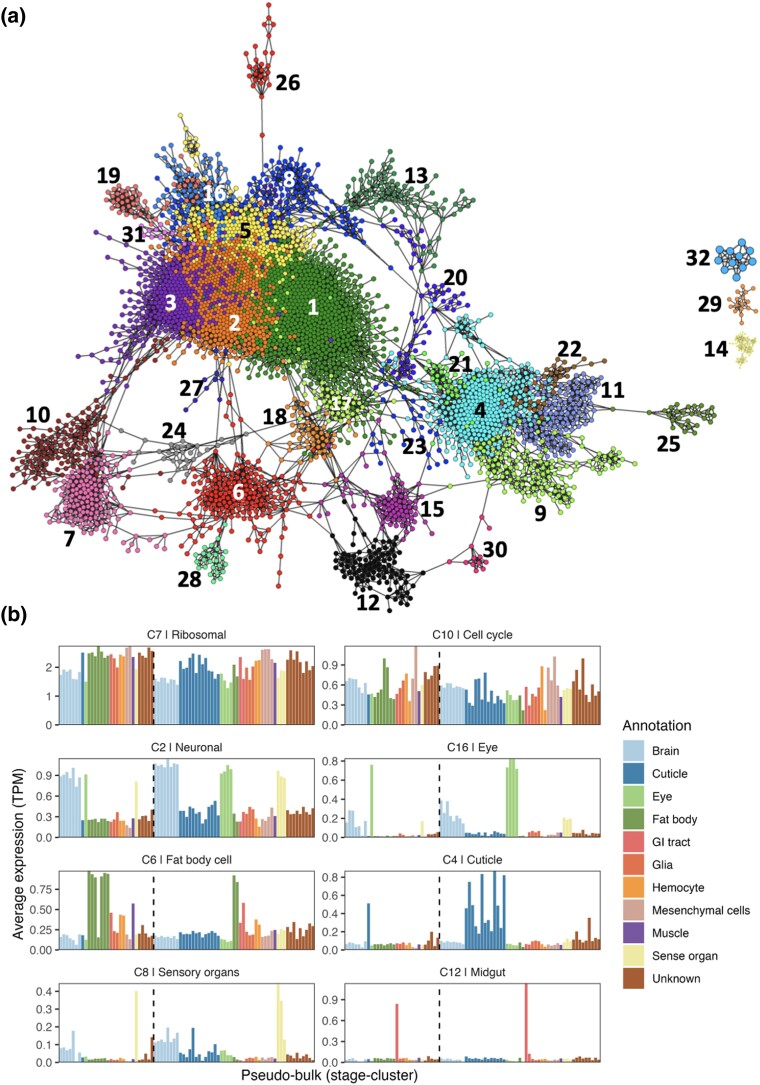
It is estimated that animals pollinate 87.5% of flowering plants worldwide and that managed honey bees (Apis mellifera) account for 30-50% of this ecosystem service to agriculture. In addition to their important role as pollinators, honey bees are well-established insect models for studying learning and memory, behavior, caste differentiation, epigenetic mechanisms, olfactory biology, sex determination, and eusociality. Despite their importance to agriculture, knowledge of honey bee biology lags behind many other livestock species. In this study, we have used scRNA-Seq to map cell types to different developmental stages of the worker honey bee (prepupa at day 11 and pupa at day 15) and sought to determine their gene expression signatures. To identify cell-type populations, we examined the cell-to-cell network based on the similarity of the single-cells transcriptomic profiles. Grouping similar cells together we identified 63 different cell clusters of which 17 clusters were identifiable at both stages. To determine genes associated with specific cell populations or with a particular biological process involved in honey bee development, we used gene coexpression analysis. We combined this analysis with literature mining, the honey bee protein atlas, and gene ontology analysis to determine cell cluster identity. Of the cell clusters identified, 17 were related to the nervous system and sensory organs, 7 to the fat body, 19 to the cuticle, 5 to muscle, 4 to compound eye, 2 to midgut, 2 to hemocytes, and 1 to malpighian tubule/pericardial nephrocyte. To our knowledge, this is the first whole single-cell atlas of honey bees at any stage of development and demonstrates the potential for further work to investigate their biology at the cellular level.
据估计,动物在全球范围内为 87.5%的开花植物授粉,而管理下的蜜蜂(Apis mellifera)对农业生态系统中这一服务的贡献率为 30-50%。除了作为授粉媒介的重要作用外,蜜蜂还是研究学习和记忆、行为、 caste 分化、表观遗传机制、嗅觉生物学、性别决定和真社会性的成熟昆虫模型。尽管它们对农业很重要,但对蜜蜂生物学的了解落后于许多其他牲畜物种。在这项研究中,我们使用 scRNA-Seq 将细胞类型映射到工蜂(第 11 天的预蛹和第 15 天的蛹)的不同发育阶段,并试图确定它们的基因表达特征。为了鉴定细胞类型群体,我们根据单细胞转录组谱的相似性研究了细胞间网络。通过将相似的细胞分组在一起,我们鉴定出了 63 个不同的细胞簇,其中 17 个细胞簇在两个阶段都可识别。为了确定与特定细胞群体或参与蜜蜂发育的特定生物学过程相关的基因,我们使用了基因共表达分析。我们将这种分析与文献挖掘、蜜蜂蛋白质图谱和基因本体分析相结合,以确定细胞簇的身份。在鉴定的细胞簇中,17 个与神经系统和感觉器官有关,7 个与脂肪体有关,19 个与外骨骼有关,5 个与肌肉有关,4 个与复眼有关,2 个与中肠有关,2 个与血细胞有关,1 个与马氏管/心包肾细胞有关。据我们所知,这是第一个在任何发育阶段的蜜蜂全单细胞图谱,展示了进一步在细胞水平上研究其生物学的潜力。