Department of Radiology, Korea University Guro Hospital, Seoul, Republic of Korea.
Department of Radiology and Research Institute of Radiology, Asan Medical Center, University of Ulsan College of Medicine, Seoul, Republic of Korea.
PLoS One. 2023 Aug 7;18(8):e0289638. doi: 10.1371/journal.pone.0289638. eCollection 2023.
The number of brain MRI with contrast media performed in patients with cognitive impairment has increased without universal agreement. We aimed to evaluate the detection rate of contrast-enhanced brain MRI in patients with cognitive impairment.
This single-institution, retrospective study included 4,838 patients who attended outpatient clinics for cognitive impairment evaluation and underwent brain MRI with or without contrast enhancement from December 2015 to February 2020. Patients who tested positive for cognitive impairment were followed-up to confirm whether the result was true-positive and provide follow-up management. Detection rate was defined as the proportion of patients with true-positive results and was compared between groups with and without contrast enhancement. Individual matching in a 1:2 ratio according to age, sex, and year of test was performed.
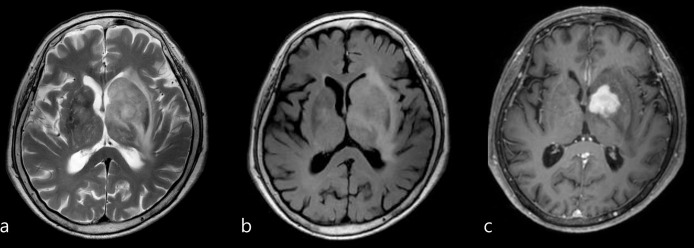
The overall detection rates of brain MRI with and without contrast media were 4.7% (57/1,203; 95% CI: 3.6%-6.1%) and 1.8% (65/3,635; 95% CI: 1.4%-2.3%), respectively (P<0.001); individual matching demonstrated similar results (4.7% and 1.9%). Among 1,203 patients with contrast media, 3.6% was only detectable with the aid of contrast media. The proportion of patients who underwent follow-up imaging or treatment for the detected lesions were significantly higher in the group with contrast media (2.0% and 0.6%, P < .001).
Detection rate of brain MRI for lesions only detectable with contrast media in patients with cognitive impairment was not high enough and further study is needed to identify whom would truly benefit with contrast media.
在认知障碍患者中进行增强对比剂脑 MRI 的数量有所增加,但尚未达成普遍共识。我们旨在评估认知障碍患者增强对比剂脑 MRI 的检出率。
这是一项单中心、回顾性研究,纳入了 2015 年 12 月至 2020 年 2 月在门诊就诊评估认知障碍并接受 MRI 检查(有无增强对比剂)的 4838 例患者。对认知障碍检测结果阳性的患者进行随访,以确认结果是否为真阳性,并提供随访管理。检出率定义为真阳性结果患者的比例,并比较有无增强对比剂的两组间的检出率。按照年龄、性别和检查年份进行 1:2 个体匹配。
有和无增强对比剂的脑 MRI 的总体检出率分别为 4.7%(57/1203;95%CI:3.6%-6.1%)和 1.8%(65/3635;95%CI:1.4%-2.3%)(P<0.001);个体匹配也得到了相似的结果(4.7%和 1.9%)。在 1203 例使用增强对比剂的患者中,仅 3.6%的病灶可通过增强对比剂检出。在有增强对比剂组中,接受检出病灶的随访影像学或治疗的患者比例显著更高(2.0%和 0.6%,P<.001)。
认知障碍患者中仅能通过增强对比剂检出的病灶的脑 MRI 检出率不高,需要进一步研究以确定哪些患者真正受益于增强对比剂。