Graduate Institute of Biomedical Sciences, China Medical University, Taichung 404333, Taiwan.
Graduate Institute of Biomedical Sciences, China Medical University, Taichung 404333, Taiwan
eNeuro. 2023 Aug 7;10(8). doi: 10.1523/ENEURO.0189-23.2023. Print 2023 Aug.
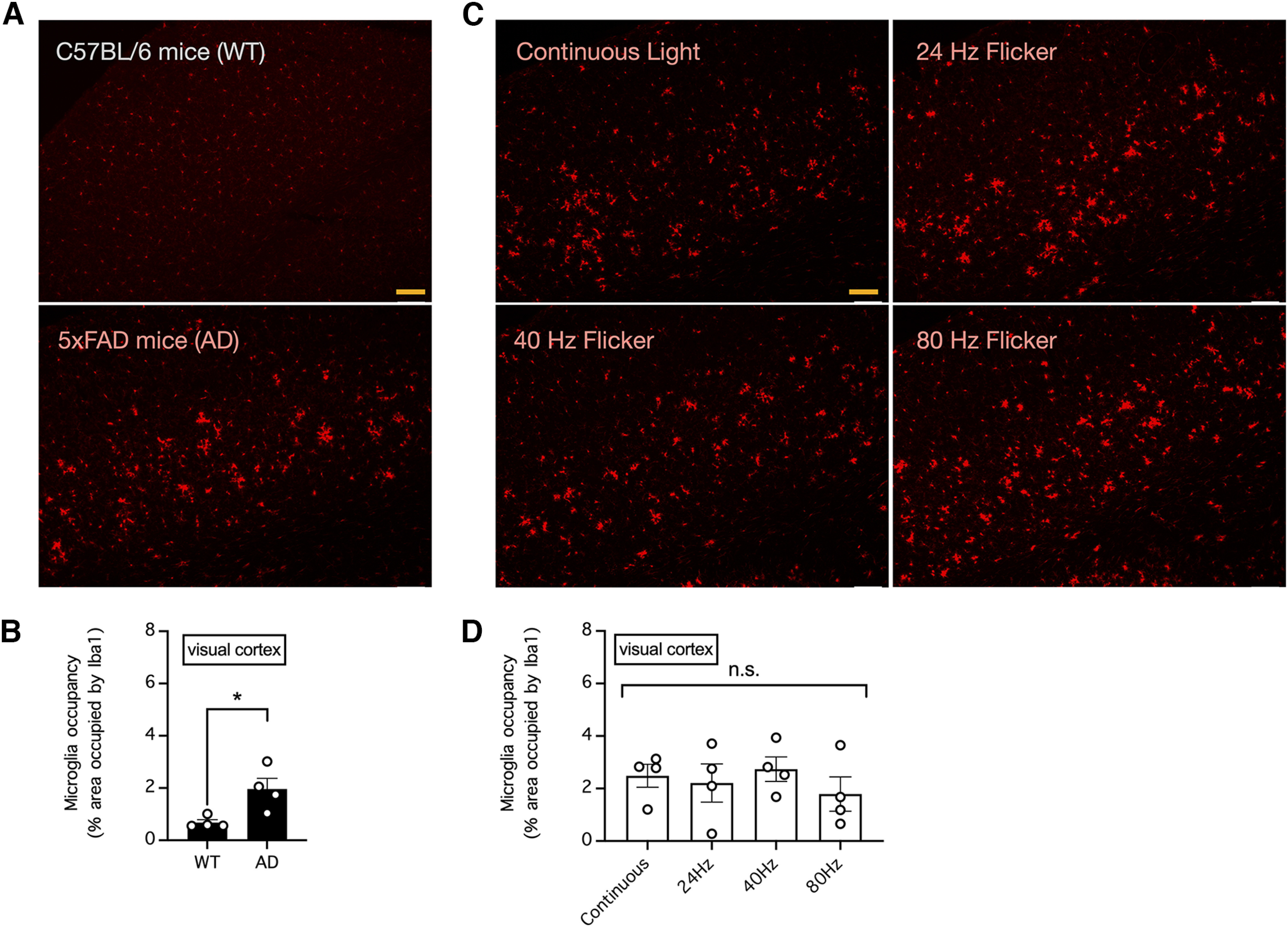
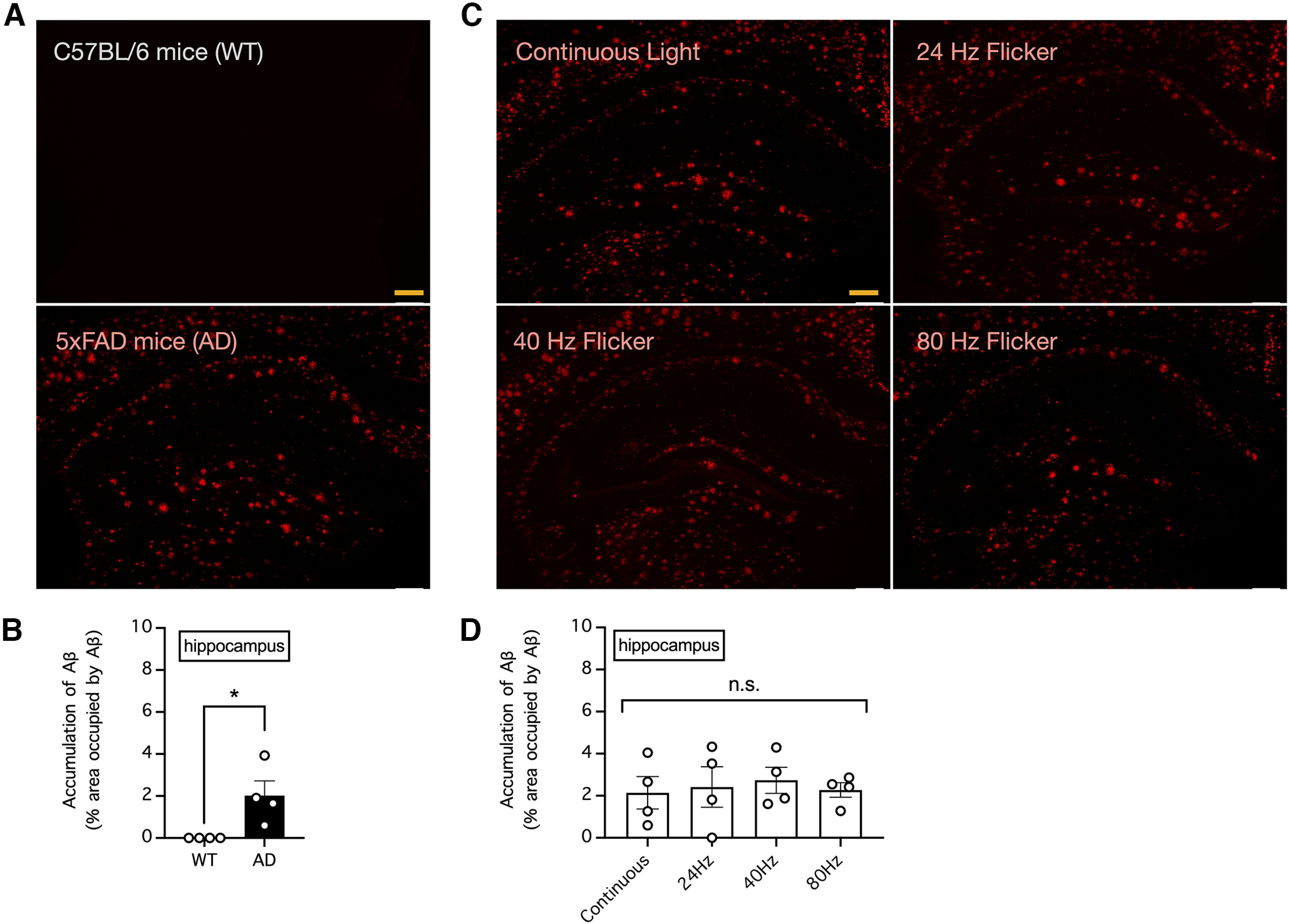
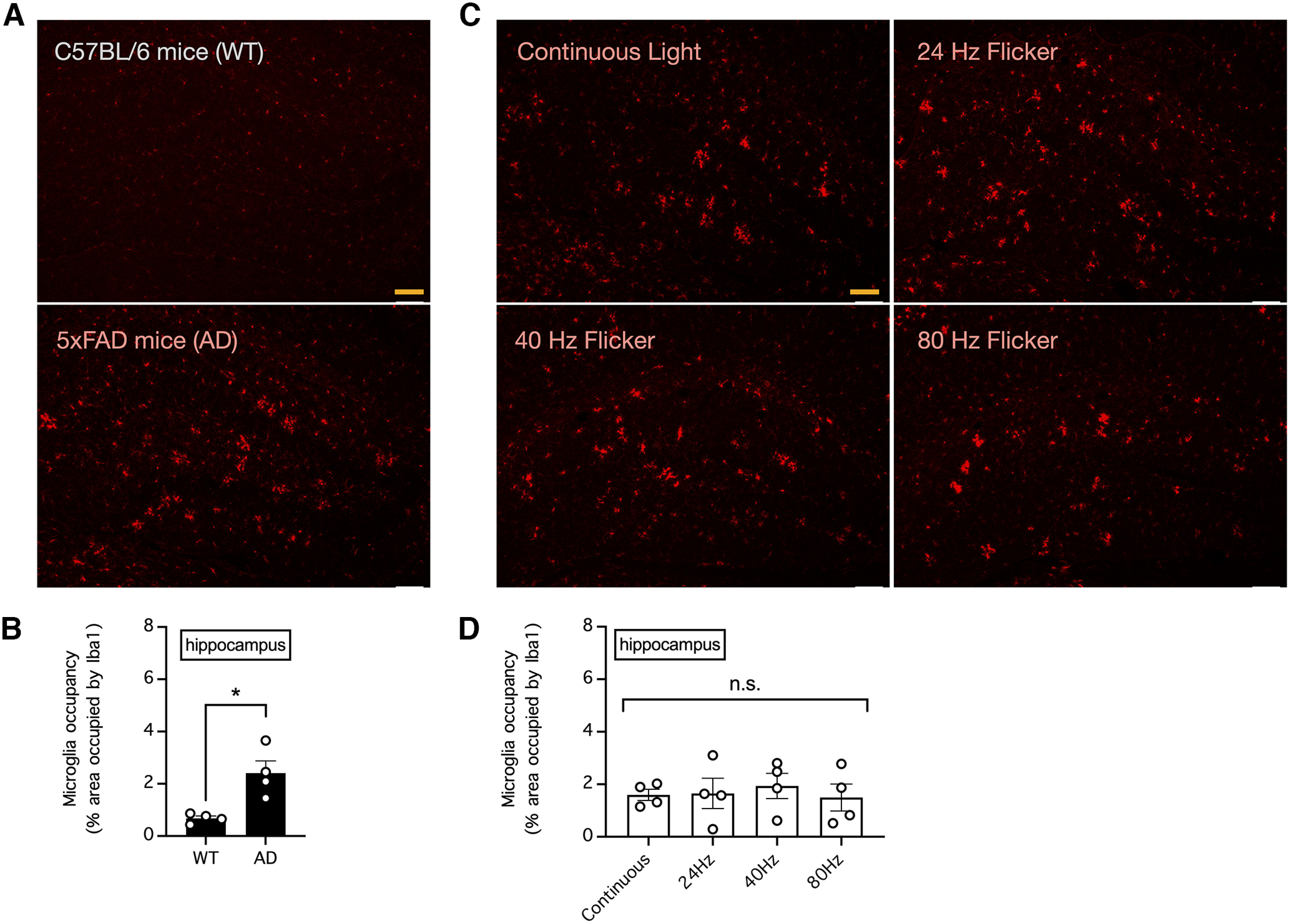
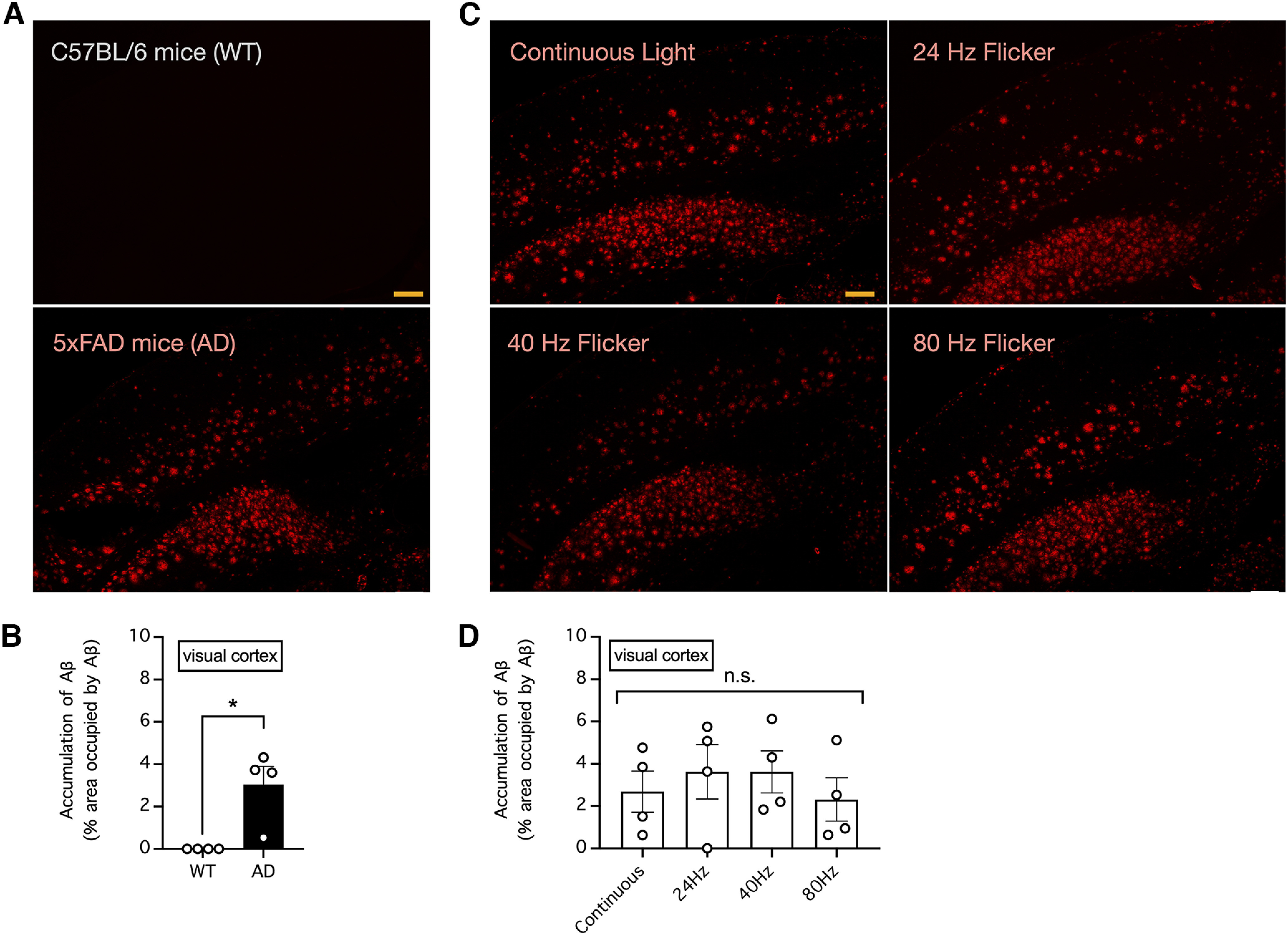
A single 1-h session (or 7 d of daily 1-h sessions) of noninvasive visual stimulation with LED light flickering at 40 Hz, but not at 20 or 80 Hz, was reported to increase microglial size and decrease amyloid β (Aβ) load in the 5xFAD mouse model of Alzheimer's disease. To achieve better therapeutic benefits, we explored the effects of daily 1-h sessions of visual stimulation with continuous light or LED light flickering at 24, 40, or 80 Hz for a period of five weeks in 5xFAD mice. As expected, 33-week-old 5xFAD mice but not control wild-type mice of the same age exhibited an abundance of swollen microglia and Aβ plaques in the visual cortex and hippocampus. Unexpectedly, however, compared with similar session of stimulation with continuous light or a light flickering at 24 or 80 Hz, daily sessions of stimulation with LED light flickering at 40 Hz for five weeks failed to further increase the microglial size and could not noticeably decrease the Aβ load in the visual cortex and hippocampus of the 5xFAD mice. In conclusion, contrary to previous findings based on shorter treatment periods, our data showed that daily noninvasive exposure to a light flickering at 40 Hz for a period of five weeks is not effective in reducing Aβ load in the 5xFAD mouse model of Alzheimer's disease.
一项研究报告称,单次 1 小时的非侵入性视觉刺激(使用闪烁频率为 40 Hz 的 LED 光,而非 20 Hz 或 80 Hz 的光)可使阿尔茨海默病 5xFAD 小鼠模型中的小胶质细胞体积增大,淀粉样蛋白 β(Aβ)负荷减少。为了获得更好的治疗效果,我们探索了每日进行 1 小时视觉刺激,使用连续光或闪烁频率为 24、40 或 80 Hz 的 LED 光,持续五周对 5xFAD 小鼠的影响。正如预期的那样,33 周龄的 5xFAD 小鼠(而非同龄的野生型对照小鼠)的视觉皮层和海马体中出现了大量肿胀的小胶质细胞和 Aβ斑块。然而,出乎意料的是,与类似的连续光或闪烁频率为 24 或 80 Hz 的光刺激相比,每日进行 5 周的闪烁频率为 40 Hz 的 LED 光刺激未能进一步增大小胶质细胞的体积,也未能明显减少 5xFAD 小鼠视觉皮层和海马体中的 Aβ负荷。总之,与基于较短治疗期的先前发现相反,我们的数据表明,每日非侵入性暴露于频率为 40 Hz 的光持续五周对减少阿尔茨海默病 5xFAD 小鼠模型中的 Aβ负荷无效。