Department of Neurosurgery, University of Pennsylvania, Philadelphia, PA, 19104, USA.
Surgical Neurology Branch, NINDS, National Institutes of Health, Bethesda, MD, 20892, USA.
Nat Commun. 2023 Aug 7;14(1):4723. doi: 10.1038/s41467-023-40440-5.
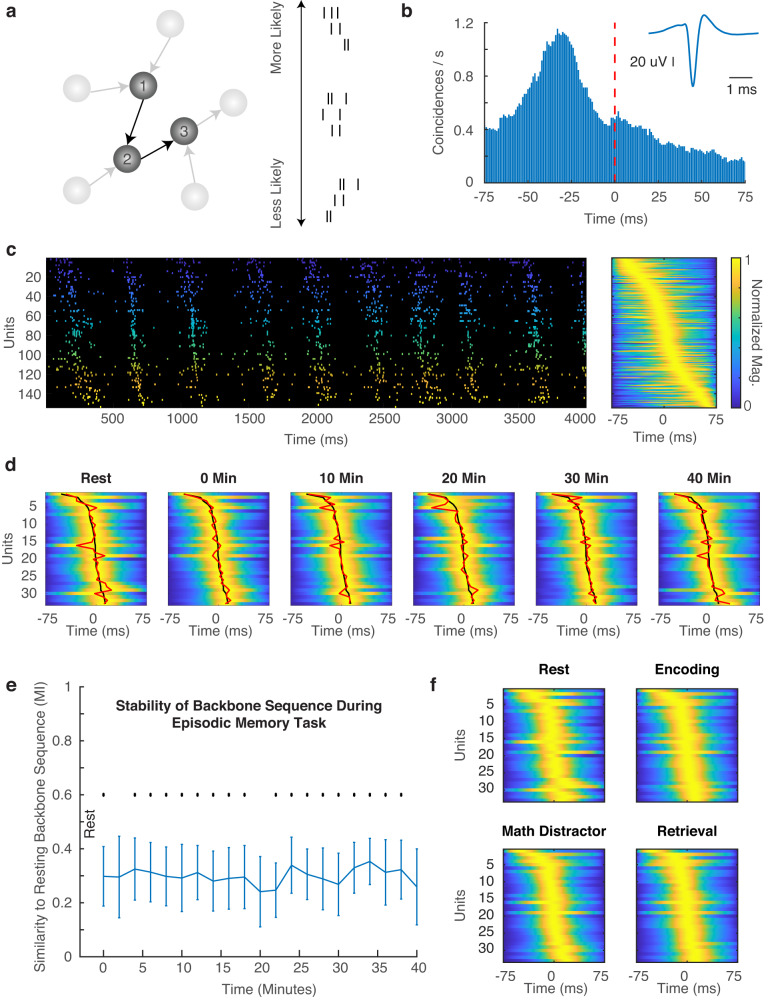
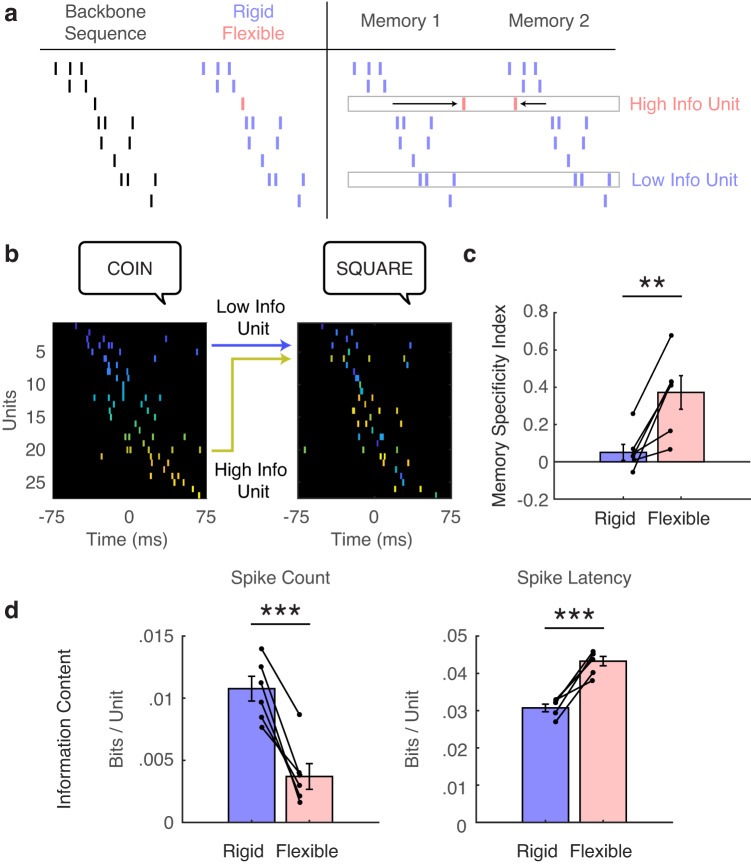
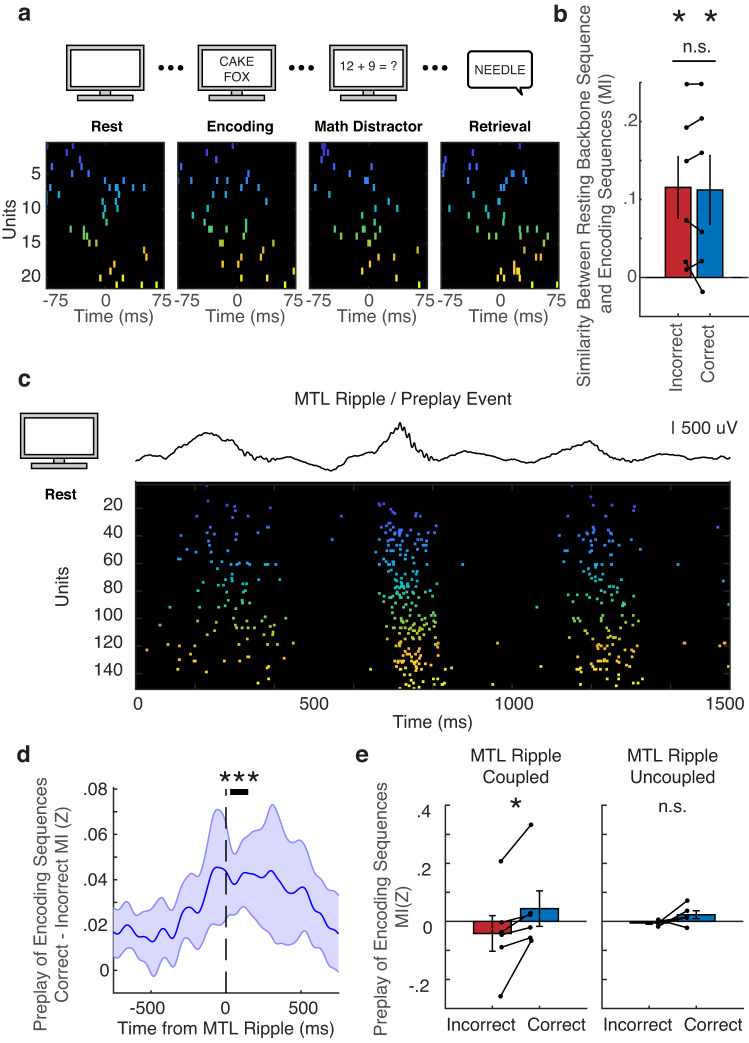
Sequences of spiking activity have been heavily implicated as potential substrates of memory formation and retrieval across many species. A parallel line of recent evidence also asserts that sequential activity may arise from and be constrained by pre-existing network structure. Here we reconcile these two lines of research in the human brain by measuring single unit spiking sequences in the temporal lobe cortex as participants perform an episodic memory task. We find the presence of an average backbone spiking sequence identified during pre-task rest that is stable over time and different cognitive states. We further demonstrate that these backbone sequences are composed of both rigid and flexible sequence elements, and that flexible elements within these sequences serve to promote memory specificity when forming and retrieving new memories. These results support the hypothesis that pre-existing network dynamics serve as a scaffold for ongoing neural activity in the human cortex.
在许多物种中,尖峰活动的序列被强烈认为是记忆形成和提取的潜在基质。最近的另一条平行证据也断言,序列活动可能源于预先存在的网络结构,并受到其限制。在这里,我们通过在参与者执行情节记忆任务时测量颞叶皮层中的单个单元尖峰序列,将这两条研究路线在人类大脑中统一起来。我们发现,在任务前休息期间识别出的平均骨干尖峰序列存在于时间和不同认知状态中是稳定的。我们进一步证明,这些骨干序列由刚性和柔性序列元素组成,并且这些序列中的柔性元素在形成和检索新记忆时有助于促进记忆特异性。这些结果支持这样一种假设,即预先存在的网络动态作为人类大脑中持续神经活动的支架。