Núñez-Gómez Dámaris, Melgarejo Pablo, Martínez-Nicolás Juan José, Hernández Francisca, Martínez-Font Rafael, Lidón Vicente, Legua Pilar
Centro de Investigación e Innovación Agroalimentaria y Agroambiental (CIAGRO-UMH), Miguel Hernandez University, Ctra. Beniel, km 3.2, Orihuela, Alicante, 03312, Spain.
Environ Microbiome. 2023 Aug 7;18(1):69. doi: 10.1186/s40793-023-00519-4.
The soil microbiota has a direct impact on plant development and other metabolic systems, such as the degradation of organic matter and the availability of microelements and metabolites. In the context of agricultural soils, microbial activity is crucial for maintaining soil health and productivity. Thus, the present study aimed to identify, characterize, and quantify the microbial communities of four types of substrates with varying proportions of marine port sediment used for cultivating lemons. By investigating microbial diversity and relative abundance, the work aimed to highlight the importance of soil microbial communities in agriculture when alternative culture media was used.
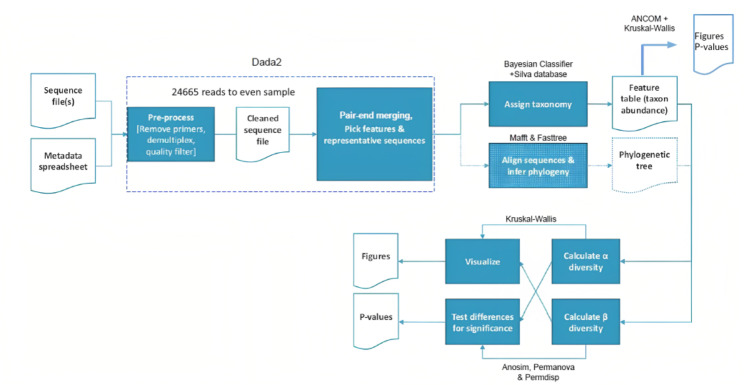
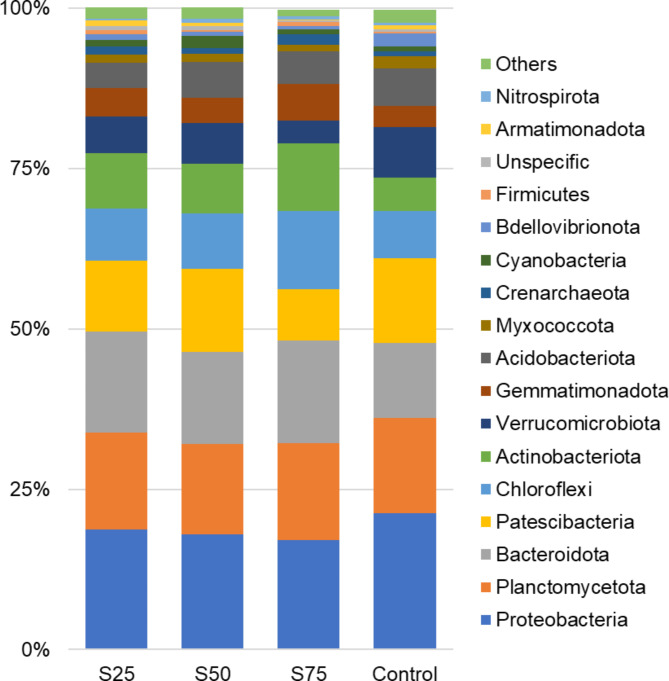
The composition and structure of the sampled microbial communities were assessed through the amplification and sequencing of the V3-V4 variable regions of the 16 S rRNA gene The results revealed a diverse microbial community composition in all substrate samples, with a total of 41 phyla, 113 classes, 266 orders, 405 families, 715 genera, and 1513 species identified. Among these, Proteobacteria, Bacteroidota, Planctomycetota, Patescibacteria, Chloroflexi, Actinobacteriota, Acidobacteriota, Verrucomicrobiota, and Gemmatimonadota accounted for over 90% of the bacterial reads, indicating their dominance in the substrates.
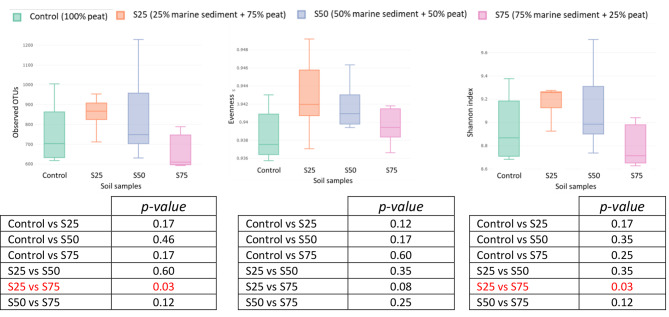
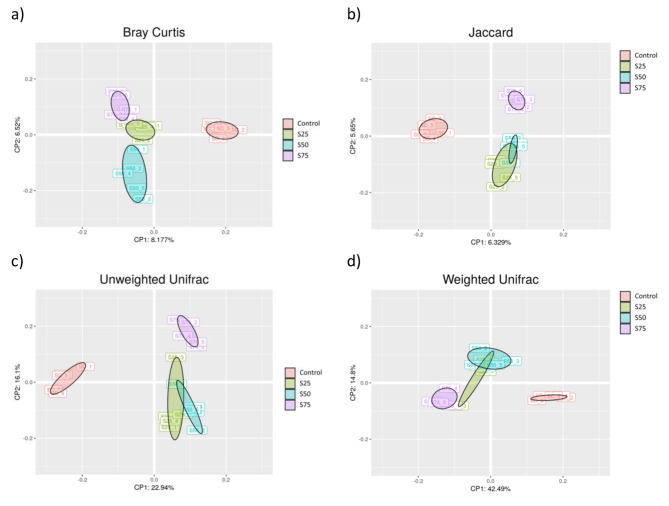
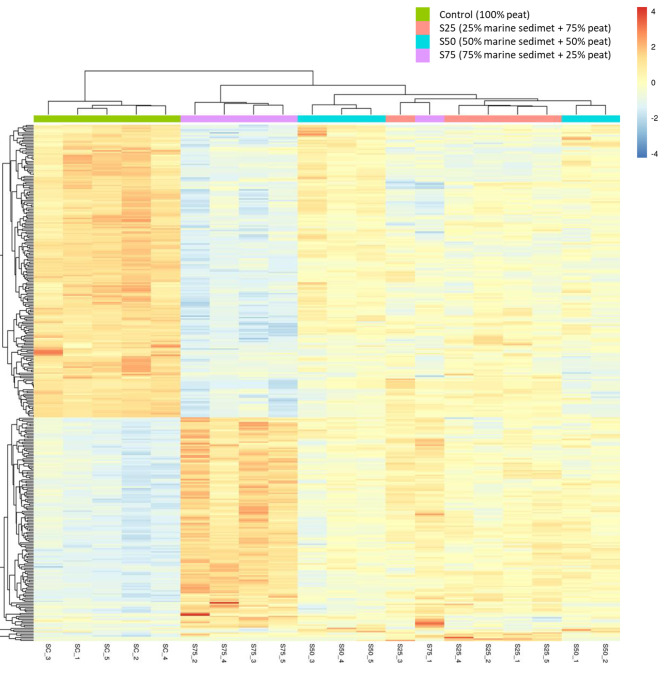
The impact of the substrate origin on the diversity and relative abundace of the microbiota was confirmed. The higher content of beneficial bacterial communities for plant development identified in peat could explain why is considered an ideal agricultural substrate. Development of "beneficial for plants" bacterial communities in alternative agricultural substrates, regardless of the edaphic characteristics, opens the possibility of studying the forced and specific inoculation of these culture media aiming to be agriculturally ideals.
土壤微生物群对植物发育和其他代谢系统有直接影响,如有机物降解、微量元素和代谢物的有效性。在农业土壤背景下,微生物活动对于维持土壤健康和生产力至关重要。因此,本研究旨在鉴定、表征和量化用于种植柠檬的四种不同比例海港沉积物底物的微生物群落。通过调查微生物多样性和相对丰度,这项工作旨在突出在使用替代培养基时土壤微生物群落在农业中的重要性。
通过对16S rRNA基因V3 - V4可变区进行扩增和测序,评估了采样微生物群落的组成和结构。结果显示,所有底物样品中的微生物群落组成多样,共鉴定出41个门、113个纲、266个目、405个科、715个属和1513个种。其中,变形菌门、拟杆菌门、浮霉菌门、Patescibacteria、绿弯菌门、放线菌门、酸杆菌门、疣微菌门和芽单胞菌门占细菌读数的90%以上,表明它们在底物中占主导地位。
证实了底物来源对微生物群多样性和相对丰度的影响。泥炭中鉴定出的对植物发育有益的细菌群落含量较高,可以解释为什么泥炭被认为是理想的农业底物。在替代农业底物中发展“对植物有益”的细菌群落,无论土壤性质如何,都为研究这些培养基的强制和特定接种以使其成为农业理想底物开辟了可能性。