Department of Oncology, The Fifth Medical Center, Chinese PLA General Hospital, Beijing, China.
Medical School of Chinese PLA, Beijing, China.
BMC Med Genomics. 2023 Aug 8;16(1):184. doi: 10.1186/s12920-023-01604-w.
Although immunotherapy has been considered as a potent strategy for lung adenocarcinoma (LUAD), only a small part of patients was served as potentially clinical benefiters. Immunogenic cell death (ICD), a type of regulated cell death (RCD), which enable to reshape the tumor immune microenvironment and contribute to the immunotherapy efficiency. Developing a novel ICD-based signature may be a potential strategy to differentiate prognosis of patients with LUAD and predict efficacy of immunotherapy.
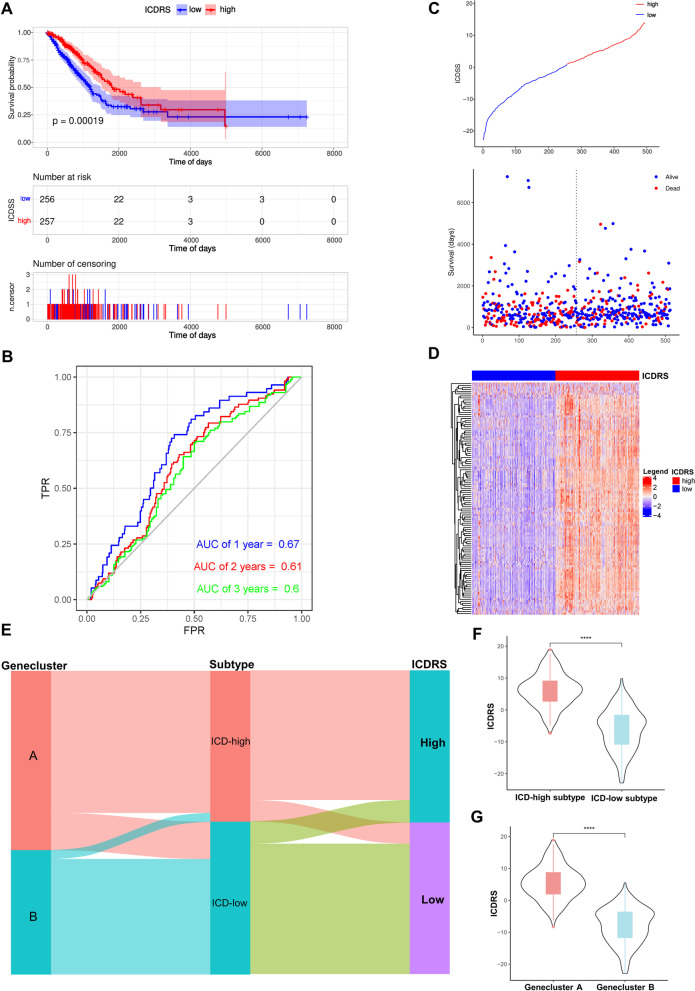
In this study, 34 ICD-related genes (ICDRGs) were identified and analyzed in LUAD samples from the Cancer Genome Atlas (TCGA). 572 patients with LUAD were divided into two distinct clusters according to ICDRGs expression levels. Patients were subsequently classified into two distinct gene subtypes based on differentially expressed genes (DEGs) analyzed between two ICD-related clusters. We further developed and validated a novel ICD-related score (ICDRS) followed by comprehensive investigation about the landscape of the prognosis, immune-based features, immunotherapautic responses and sensitivity of target drugs in patients with LUAD.
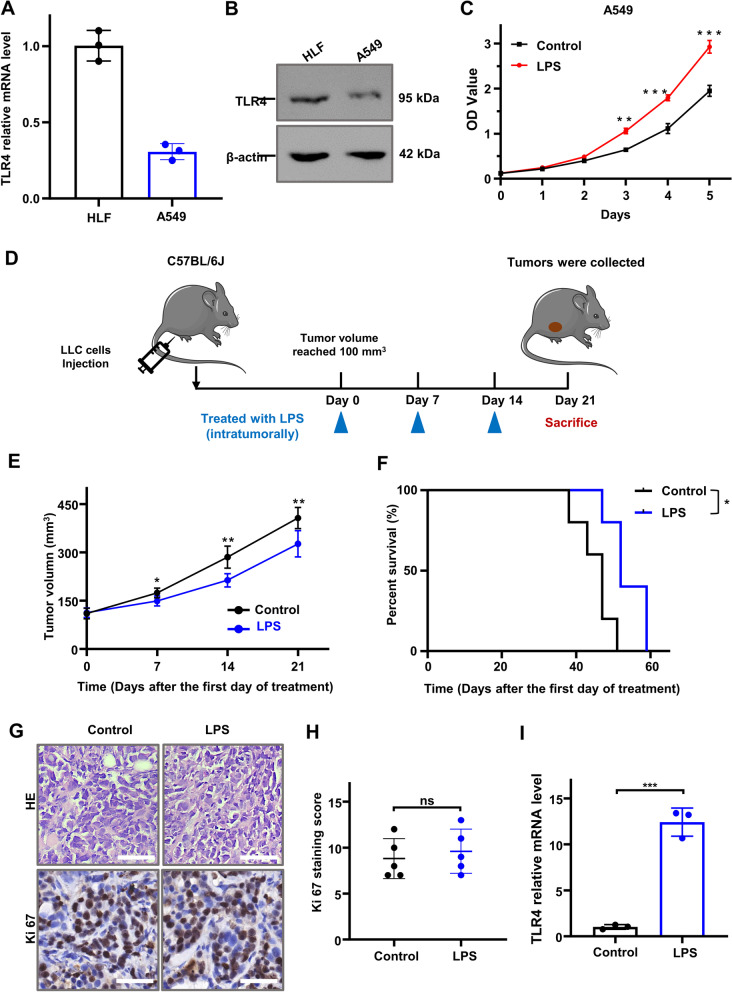
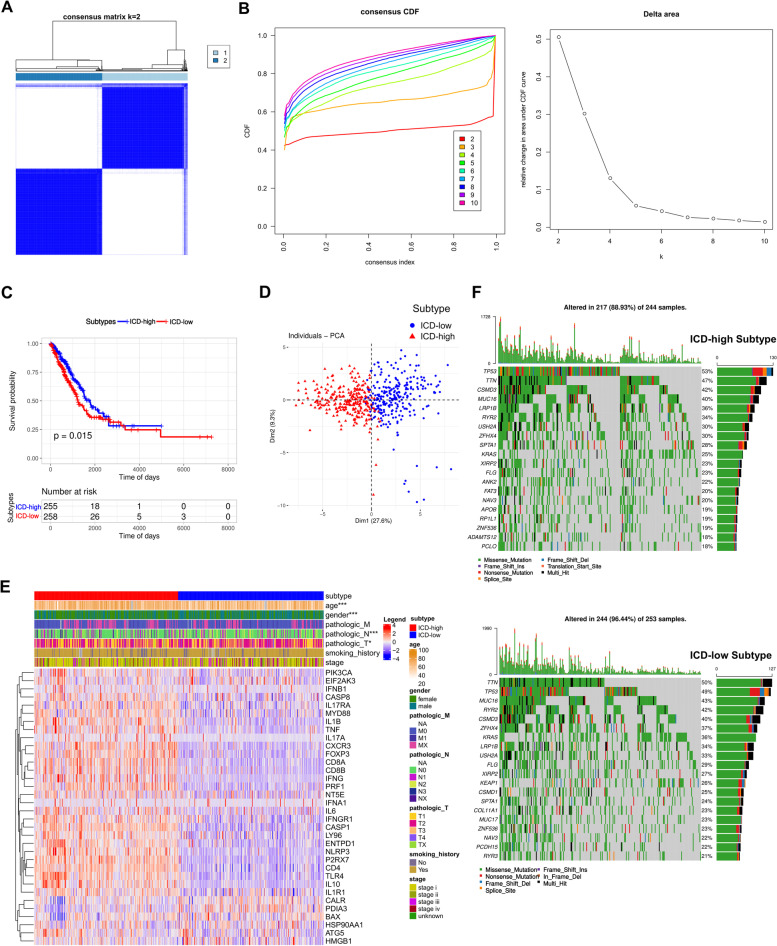
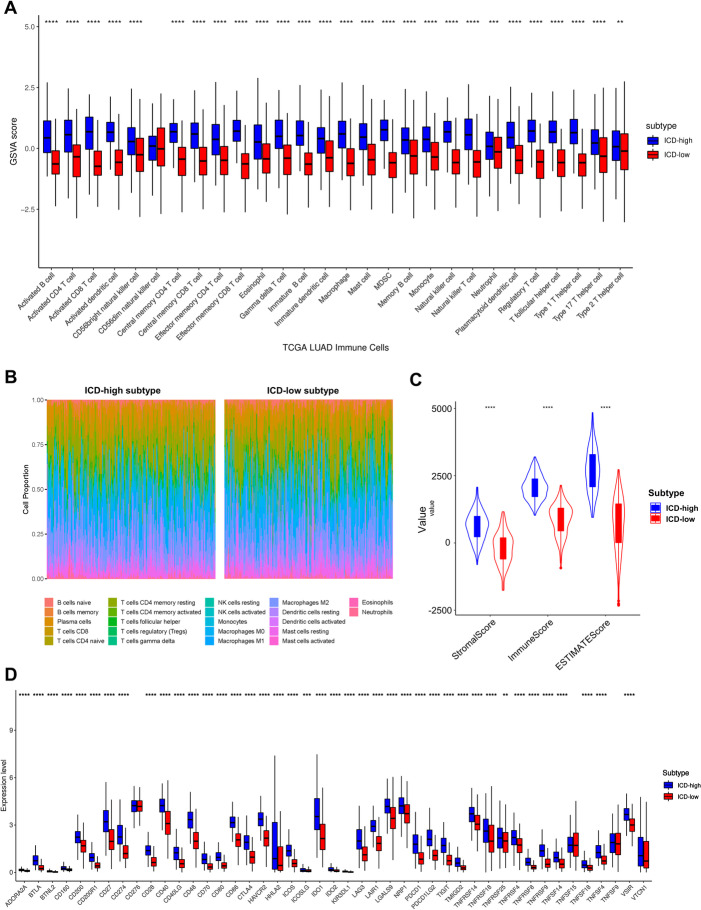
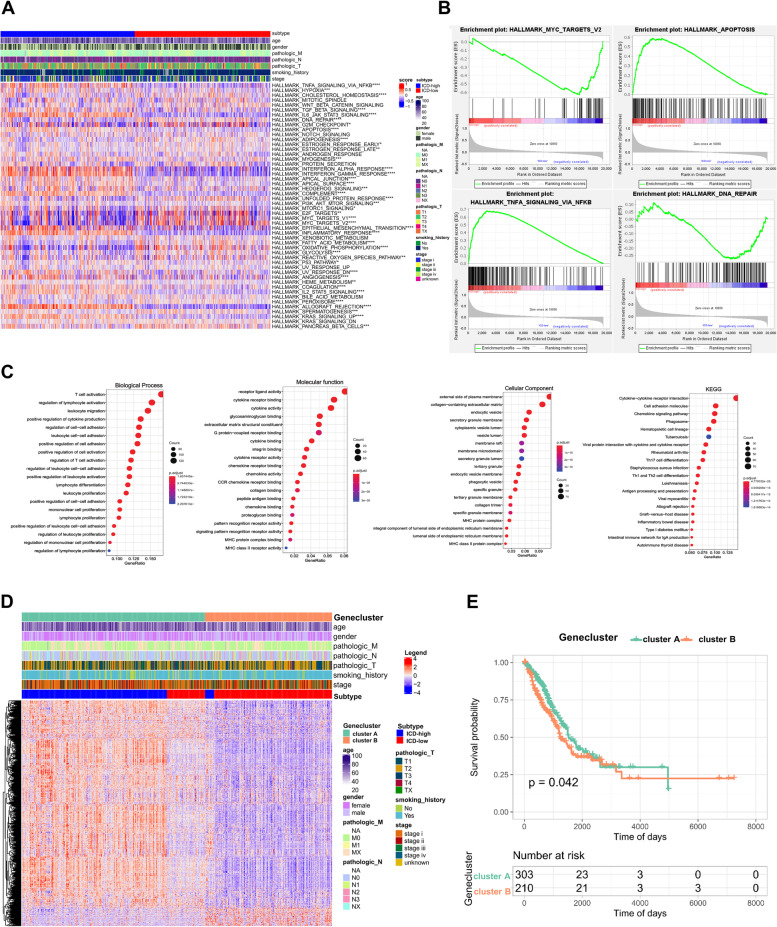
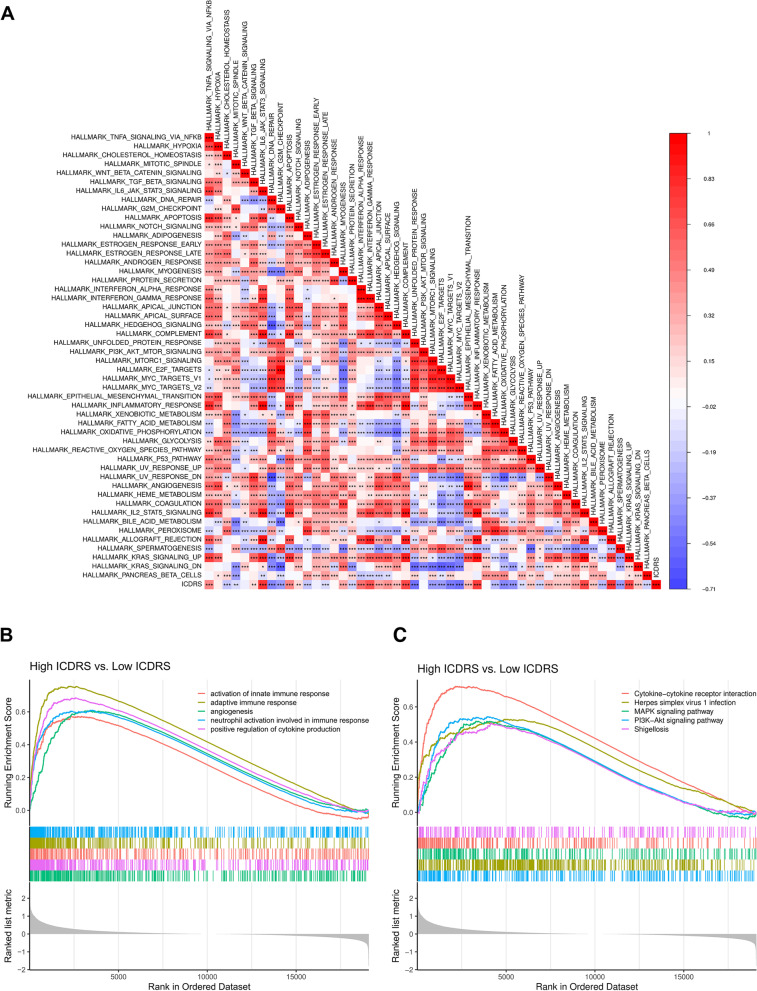
After confirming transcriptomic aberrations and appraising prognostic value of ICDRGs, two ICD-associated subtypes were initially determined by consensus clustering in accordance with differentially expressional levels of ICDRGs. It was shown that patients in the ICD high-subtype possessed the superior clinical prognosis, abundant immune cell infiltration and higher involvement in immune-related signaling compared with the ICD low-subtype. A signature of ICD-related score (ICDRS) was further established and validated, which was served as an independent prognostic indicator for LUAD patients. These comprehensive results revealed that the high-score patients represented better clinical prognosis, higher immune infiltration-related characteristics, stronger expression of immune checkpoints, and better response to immune checkpoint inhibitor therapy and multiple targeted drugs. To further verify our analysis, we selected TLR4 as the representative of ICDRGs and evaluated its expression on the lung normal cells and cancer cells in vitro. Then, relative animal experiments were performed in vivo, with results of that the stimulation of TLR4 suppressed the growth of lung cancer.
In conclusion, our comprehensive analysis of ICDRGs in LUAD demonstrated their function in serving as a biomarker of predicting prognosis and clinical effects of immunotherapy and targeted drugs, which is meaningful to improve our understanding of ICDRGs and brought inspirations about evaluating prognosis and developing effective therapeutic strategies to patients with LUAD.
尽管免疫疗法已被认为是治疗肺腺癌(LUAD)的有效策略,但只有一小部分患者从中受益。免疫原性细胞死亡(ICD)是一种调控性细胞死亡(RCD),能够重塑肿瘤免疫微环境,提高免疫治疗的效果。开发基于 ICD 的新标志物可能是一种区分 LUAD 患者预后和预测免疫治疗效果的潜在策略。
本研究从癌症基因组图谱(TCGA)中鉴定并分析了 34 个与免疫原性细胞死亡相关的基因(ICDRGs)。根据 ICDRGs 的表达水平,将 572 例 LUAD 患者分为两个不同的聚类。基于两个 ICD 相关聚类之间差异表达基因(DEGs)的分析,将患者进一步分为两个不同的基因亚型。我们进一步开发并验证了一种新的与免疫原性细胞死亡相关的评分(ICDRS),并对 LUAD 患者的预后、免疫特征、免疫治疗反应和靶向药物敏感性的全貌进行了综合研究。
在证实了 ICDRGs 的转录组异常和评估了其预后价值后,根据 ICDRGs 的差异表达水平,通过共识聚类初步确定了两个与 ICD 相关的亚型。结果表明,ICD 高亚型患者的临床预后较好,免疫细胞浸润丰富,免疫相关信号通路参与度较高。进一步建立并验证了 ICD 相关评分(ICDRS),作为 LUAD 患者的独立预后指标。这些综合结果表明,高分患者的临床预后更好,免疫浸润相关特征更强,免疫检查点表达更高,对免疫检查点抑制剂治疗和多种靶向药物的反应更好。为了进一步验证我们的分析,我们选择 TLR4 作为 ICDRGs 的代表,在体外评估其在肺正常细胞和癌细胞中的表达。然后,进行了体内相对动物实验,结果表明 TLR4 的刺激抑制了肺癌的生长。
总之,我们对 LUAD 中 ICDRGs 的综合分析表明,它们可作为预测预后和免疫治疗及靶向药物临床效果的生物标志物,这对于提高我们对 ICDRGs 的认识,以及评估预后和制定 LUAD 患者有效治疗策略具有重要意义。