Department of Microbiology, Immunology and Biochemistry, University of Tennessee Health Science Center , Memphis, Tennessee, USA.
Regional Biocontainment Laboratory, University of Tennessee Health Science Center , Memphis, Tennessee, USA.
J Virol. 2023 Aug 31;97(8):e0082723. doi: 10.1128/jvi.00827-23. Epub 2023 Aug 10.
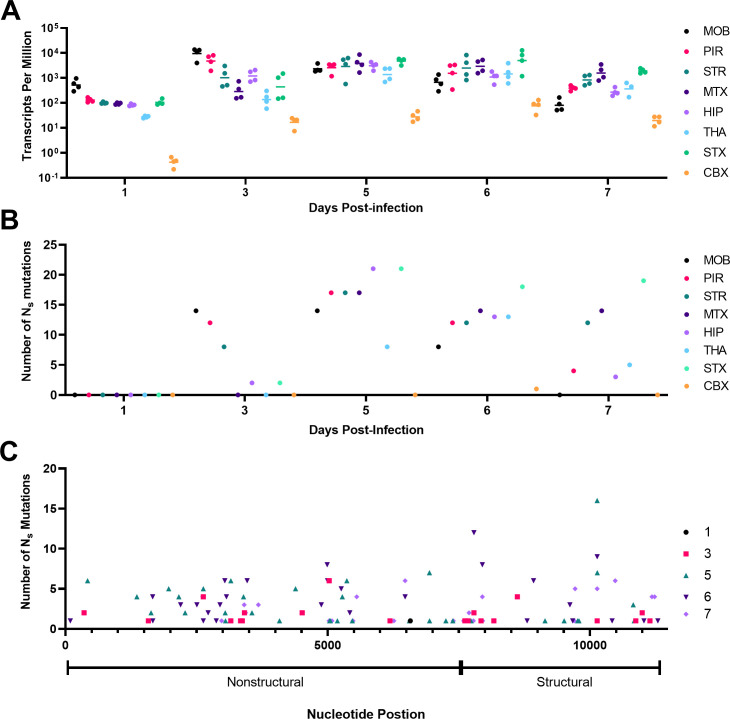
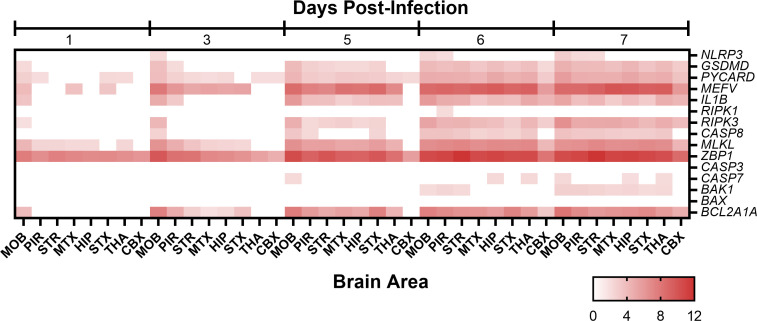
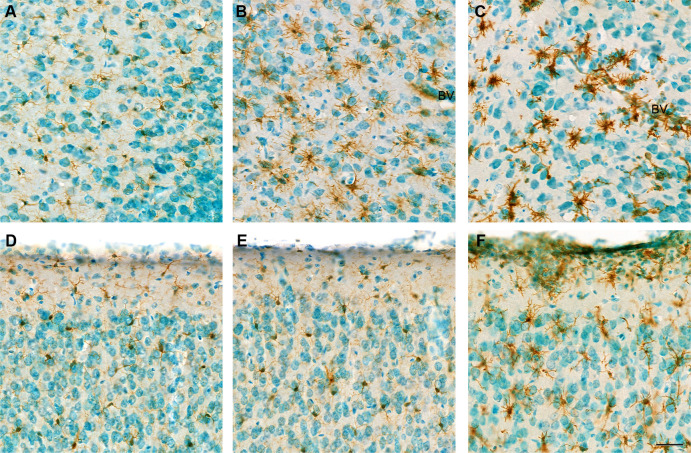
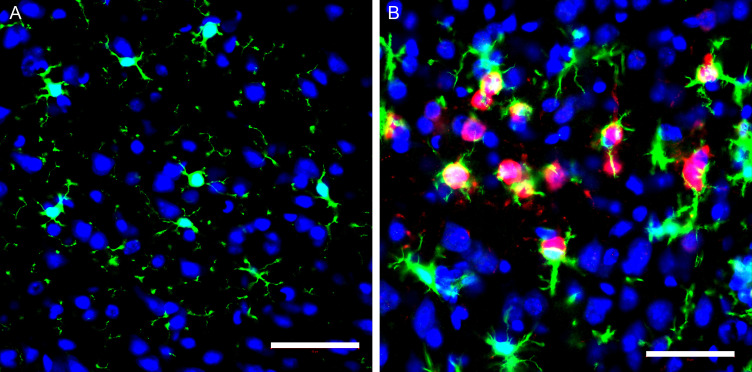
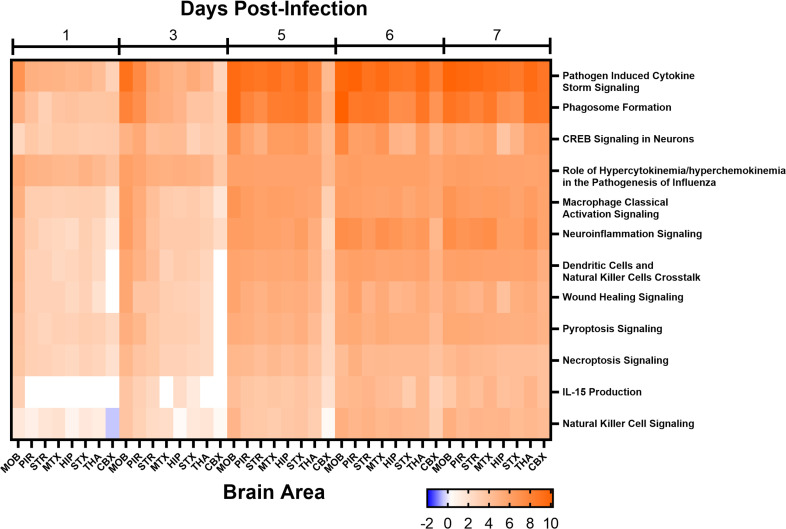
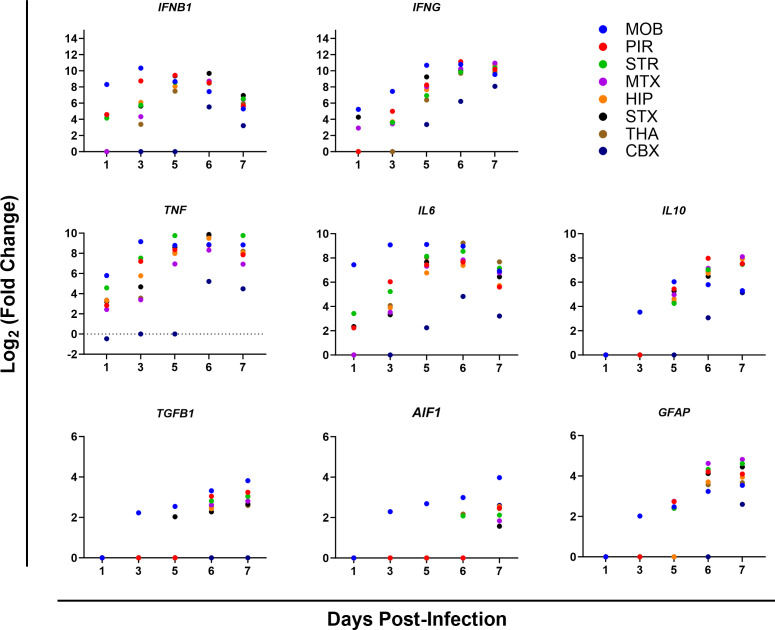
Venezuelan equine encephalitis virus (VEEV) causes a febrile illness that can progress to neurological disease with the possibility of death in human cases. The evaluation and optimization of therapeutics that target brain infections demands knowledge of the host's response to VEEV, the dynamics of infection, and the potential for within-host evolution of the virus. We hypothesized that selective pressures during infection of the brain may differ temporally and spatially and so we investigated the dynamics of the host response, viral transcript levels, and genetic variation of VEEV TC-83 in eight areas of the brain in mice over 7 days post-infection (dpi). Viral replication increased throughout the brain until 5-6 dpi and decreased thereafter with neurons as the main site of viral replication. Low levels of genetic diversity were noted on 1 dpi and were followed by an expansion in the genetic diversity of VEEV and nonsynonymous (Ns) mutations that peaked by 5 dpi. The pro-inflammatory response and the influx of immune cells mirrored the levels of virus and correlated with substantial damage to neurons by 5 dpi and increased activation of microglial cells and astrocytes. The prevalence and dynamics of Ns mutations suggest that the VEEV is under selection within the brain and that progressive neuroinflammation may play a role in acting as a selective pressure. IMPORTANCE Treatment of encephalitis in humans caused by Venezuelan equine encephalitis virus (VEEV) from natural or aerosol exposure is not available, and hence, there is a great interest to address this gap. In contrast to natural infections, therapeutic treatment of infections from aerosol exposure will require fast-acting drugs that rapidly penetrate the blood-brain barrier, engage sites of infection in the brain and mitigate the emergence of drug resistance. Therefore, it is important to understand not only VEEV pathogenesis, but the trafficking of the viral population within the brain, the potential for within-host evolution of the virus, and how VEEV might evolve resistance.
委内瑞拉马脑炎病毒(VEEV)可引起发热性疾病,在人类病例中可进展为神经系统疾病,并有死亡的可能。评估和优化针对脑部感染的治疗方法需要了解宿主对 VEEV 的反应、感染的动态以及病毒在体内进化的潜力。我们假设,感染大脑期间的选择压力可能会随时间和空间而变化,因此我们研究了宿主反应、病毒转录本水平和 VEEV TC-83 在感染后 7 天(dpi)的小鼠 8 个脑区的遗传变异的动态。病毒复制在整个大脑中增加,直到 5-6dpi,此后减少,神经元是病毒复制的主要部位。在 1dpi 时观察到遗传多样性水平较低,随后 VEEV 的遗传多样性和非同义(Ns)突变扩大,在 5dpi 时达到峰值。促炎反应和免疫细胞的涌入与病毒水平相吻合,并与 5dpi 时神经元的大量损伤以及小胶质细胞和星形胶质细胞的激活增加相关。Ns 突变的流行和动态表明,VEEV 在大脑内受到选择,并且进行性神经炎症可能在作为选择压力方面发挥作用。重要性 由委内瑞拉马脑炎病毒(VEEV)引起的人类脑炎的治疗(无论是自然感染还是气溶胶暴露引起)都不可用,因此,解决这一差距的兴趣很大。与自然感染相反,气溶胶暴露感染的治疗需要快速作用的药物,这些药物能够迅速穿透血脑屏障,作用于大脑中的感染部位,并减轻耐药性的出现。因此,了解 VEEV 的发病机制以及病毒在大脑中的传播、病毒在体内进化的潜力以及 VEEV 如何产生耐药性都很重要。