State Key Laboratory of Systems Medicine for Cancer, Renji Hospital, Shanghai Jiao Tong University School of Medicine, Shanghai 200032, China.
Department of Oncology, Shanghai General Hospital, Shanghai Jiaotong University School of Medicine, Shanghai 200080, China.
Int J Biol Sci. 2023 Jul 31;19(12):3892-3907. doi: 10.7150/ijbs.86636. eCollection 2023.
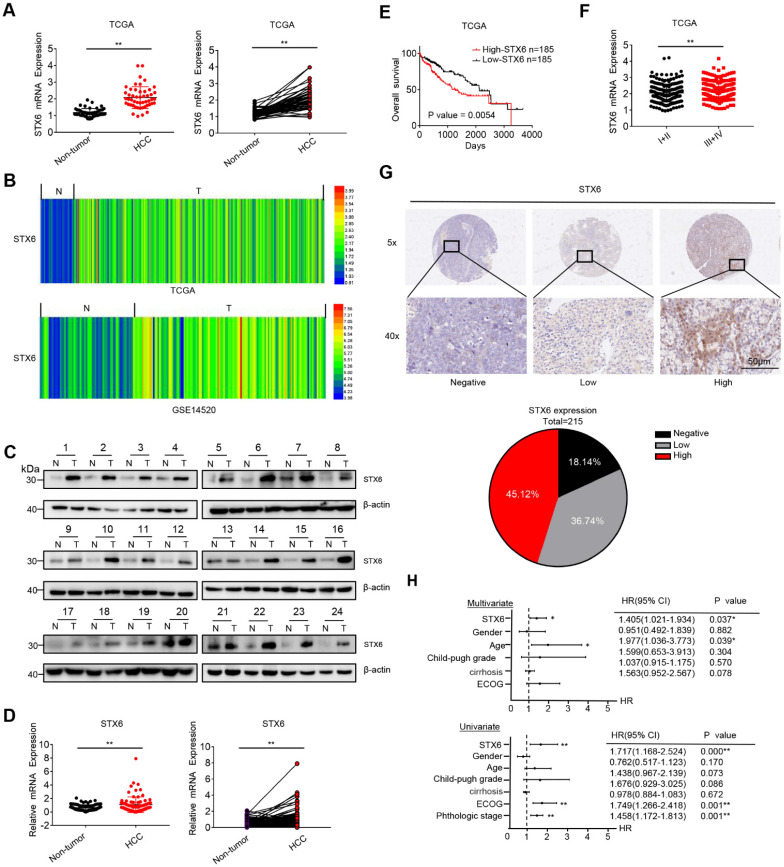
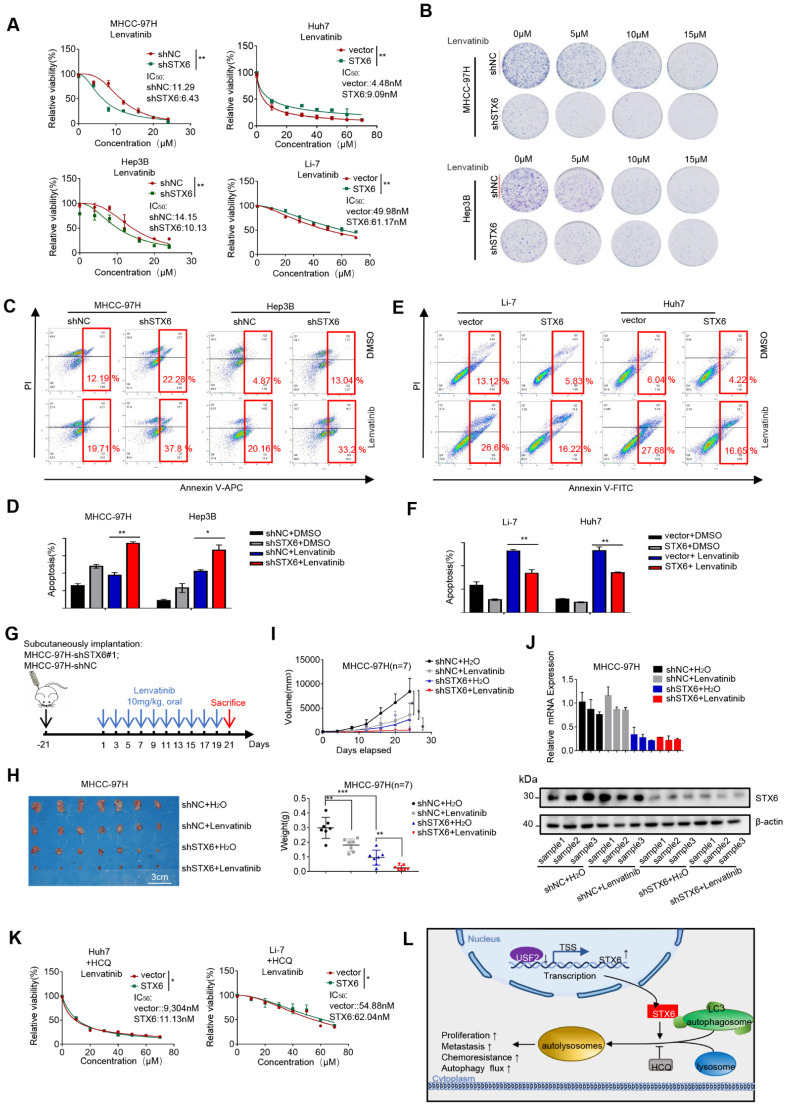
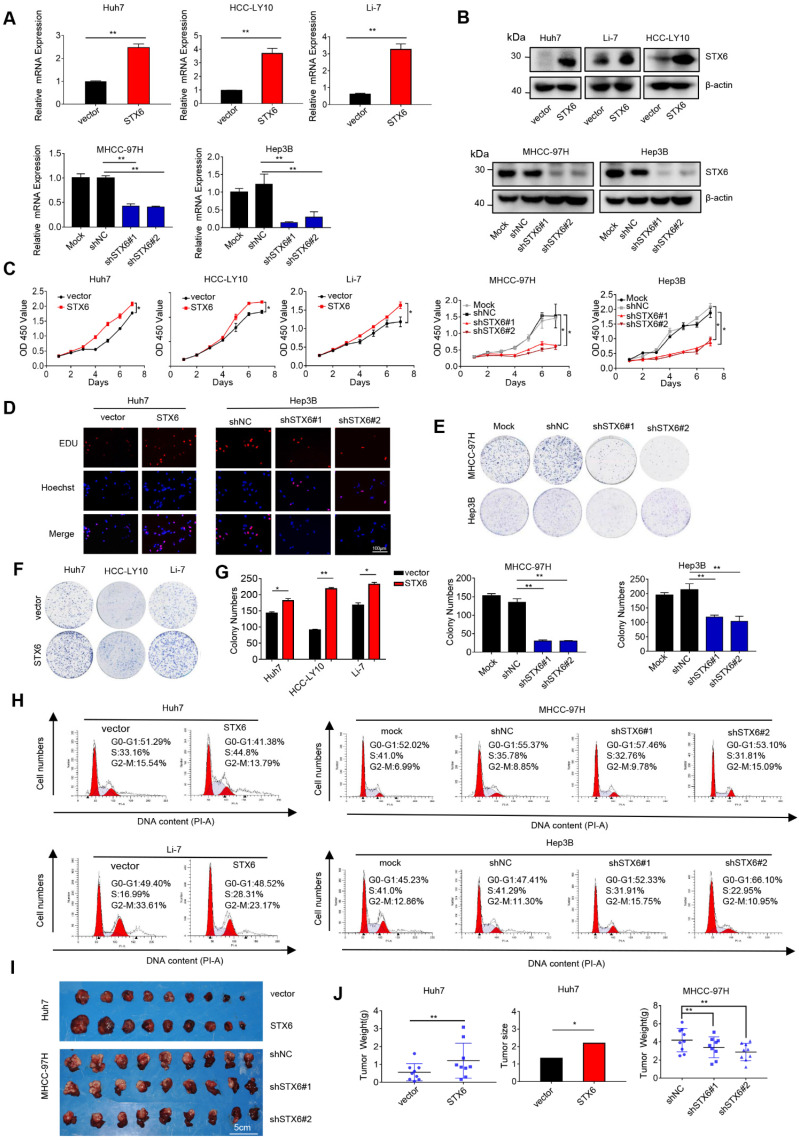
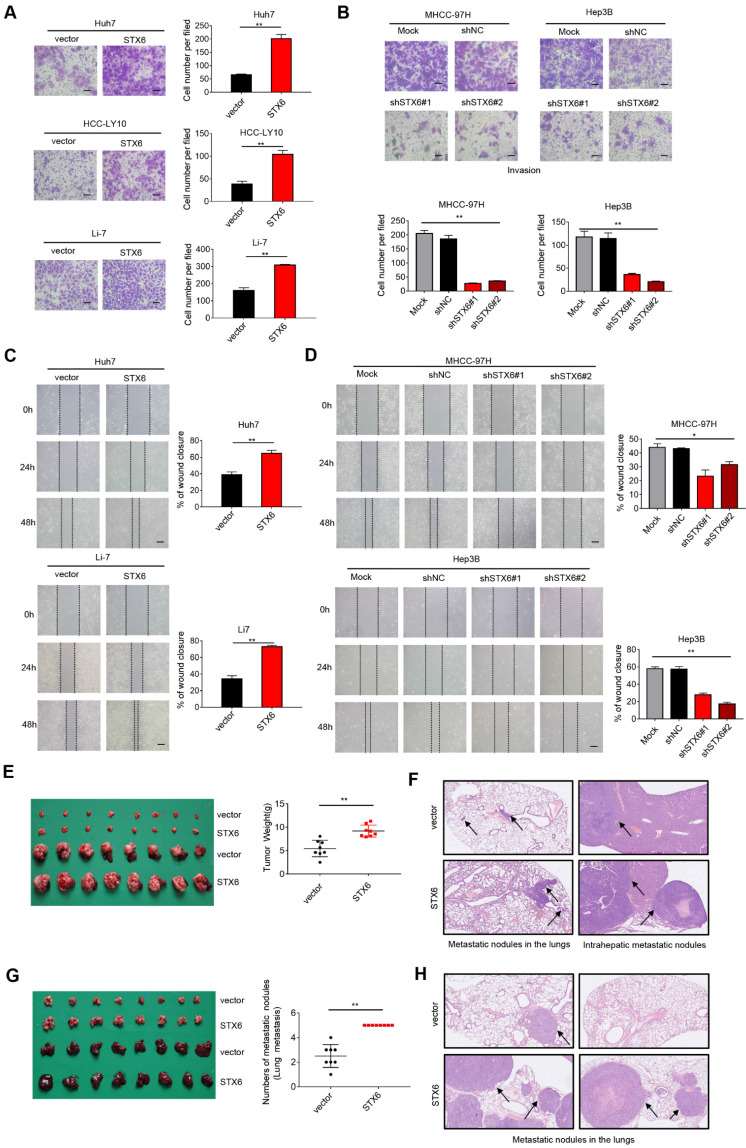
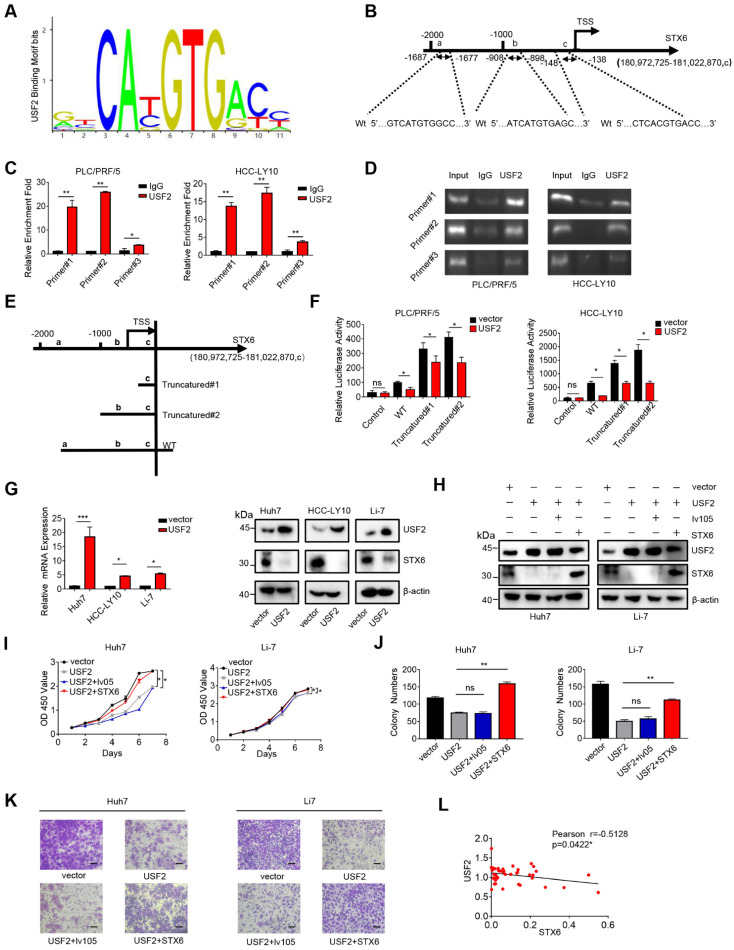
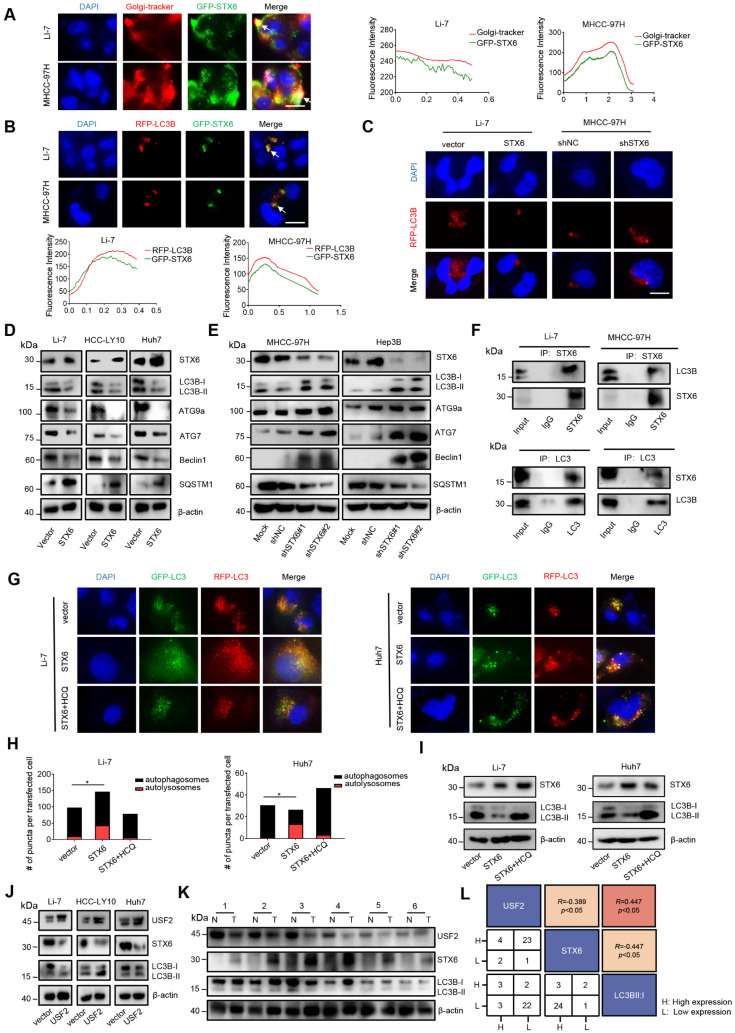
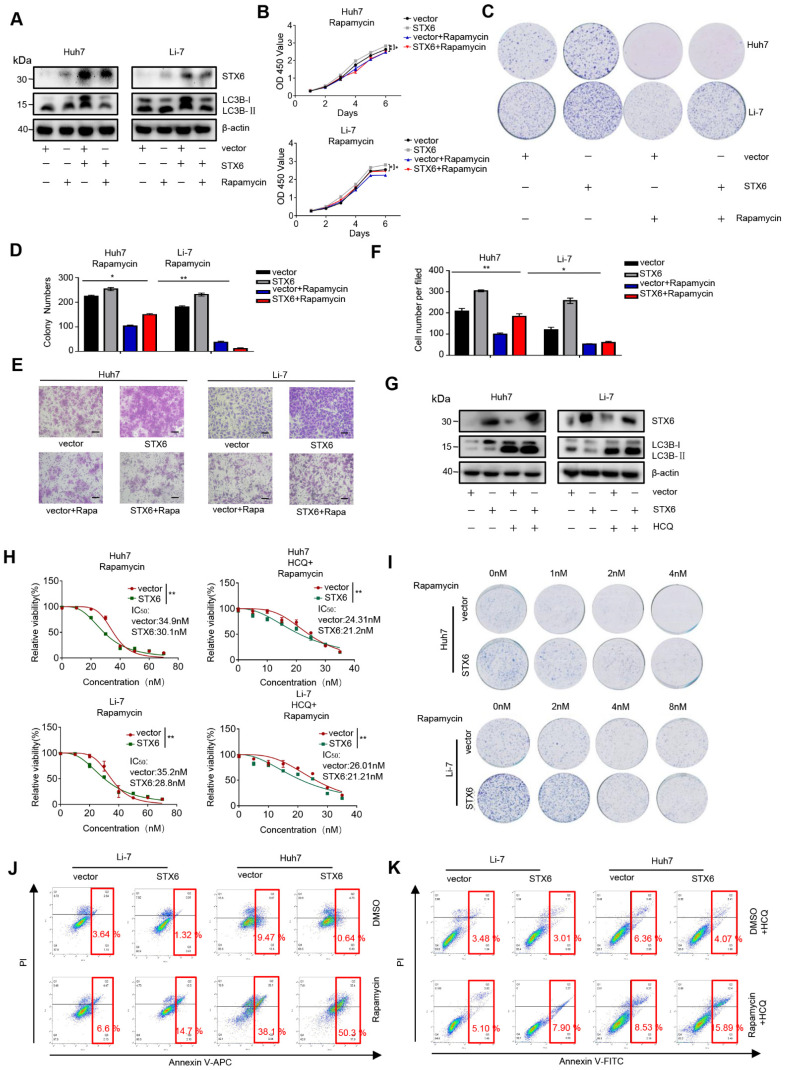
Syntaxin-6 (STX6), a protein of the syntaxin family, is located in the trans-Golgi network and is involved in a variety of intracellular membrane transport events. STX6 is overexpressed in different human malignant tumors. However, little is known about its exact function and molecular mechanism in hepatocellular carcinoma (HCC). In this study, we found that the expression of STX6 was significantly increased in HCC tissues and was associated with poor survival. Gain- and loss-of-function experiments showed that STX6 promotes cell proliferation and metastasis of HCC cells both in vitro and in vivo. Mechanistically, STX6 was negatively regulated by the upstream stimulatory factor 2 (USF2). In addition, STX6 facilitates the association of autophagosomes with lysosomes. Importantly, we demonstrated that STX6 overexpression, despite enhanced resistance to lenvatinib, sensitizes HCC cells to the autophagy activator rapamycin. This study revealed that, under the control of USF2, STX6 accelerates the degradation of microtubule-associated protein 1 light chain 3 beta (LC3) by promoting autophagic flux, ultimately promoting HCC progression. Collectively, we suggest that the USF2-STX6-LC3B axis is a potential therapeutic target in liver cancer.
突触结合蛋白 6(STX6)是突触蛋白家族的一种蛋白,位于反式高尔基体网络中,参与多种细胞内膜运输事件。STX6 在不同的人类恶性肿瘤中过度表达。然而,其在肝细胞癌(HCC)中的确切功能和分子机制知之甚少。在本研究中,我们发现 STX6 在 HCC 组织中的表达显著增加,并且与不良预后相关。功能获得和功能丧失实验表明,STX6 在体外和体内均促进 HCC 细胞的增殖和转移。在机制上,STX6 受上游刺激因子 2(USF2)的负调控。此外,STX6 促进自噬体与溶酶体的结合。重要的是,我们证明尽管 STX6 过表达增强了对仑伐替尼的耐药性,但使 HCC 细胞对自噬激活剂雷帕霉素敏感。这项研究表明,在 USF2 的控制下,STX6 通过促进自噬流加速微管相关蛋白 1 轻链 3 beta(LC3)的降解,最终促进 HCC 的进展。总之,我们提出 USF2-STX6-LC3B 轴可能是肝癌的潜在治疗靶点。