Das Jonali, Kalita Pranjal, Dey Biswajit, Raphael Vandana, Mishra Jaya, Khonglah Yookarin, Marbaniang Evarisalin, Handique Gauranga, Saurabh Animesh
Department of Pathology, North Eastern Indira Gandhi Regional Institute of Health & Medical Sciences, Shillong, India.
J Lab Physicians. 2023 Apr 18;15(3):361-364. doi: 10.1055/s-0043-1768168. eCollection 2023 Sep.
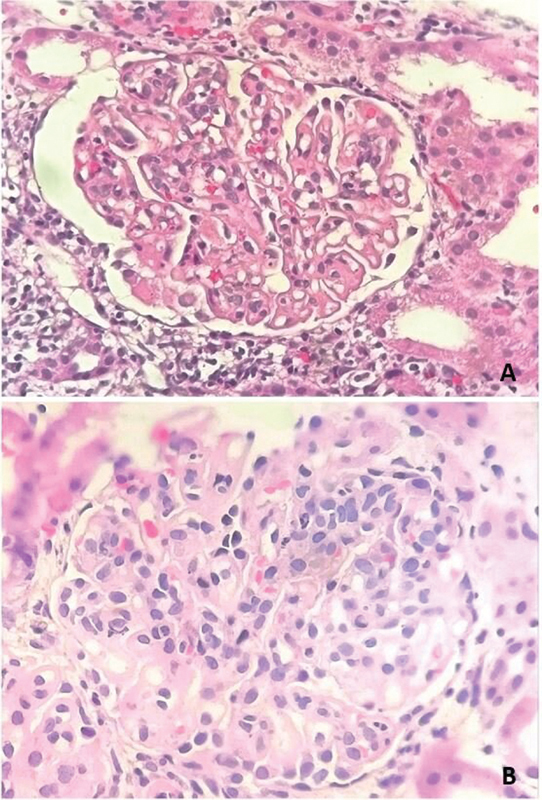
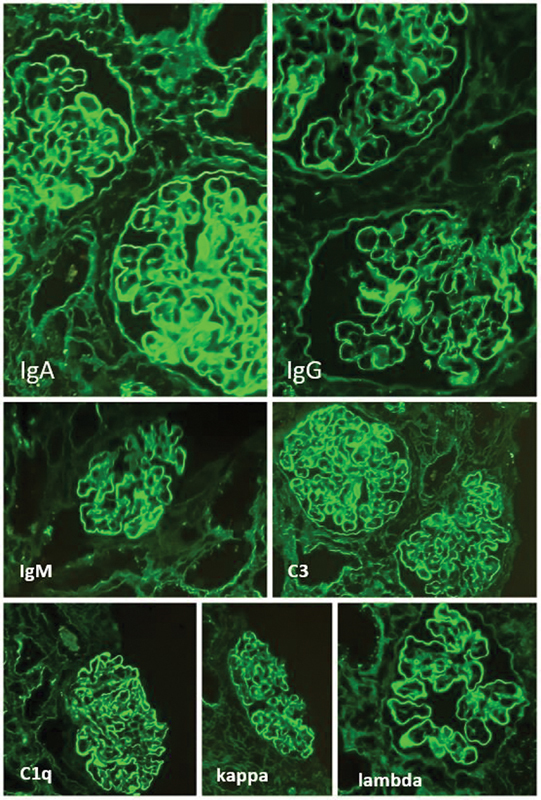
Lupus nephrtis in children is associated with high morbidity and mortality. The incidence of childhood systemic lupus erythematosus (SLE) ranges from 3.3 to 8.8/100000 children with a higher Asian preponderance. The predominance of SLE in female pediatric patients increases gradually with age to the values observed in adults. To assess the clinical, immunological, and histopathological spectrum of childhood lupus nephritis in northeast India and explore the relationship between clinical, biochemical, serological, and histopathological findings. A retrospective descriptive study was performed over 8 years. Histopathology slides were reviewed by two pathologists, whereas other details were collected from patients' records. Statistical analysis was based on the chi-square test and a -value < 0.05 was considered statistically significant. Fifty-three cases of lupus nephritis were included in the study. The patients' age ranged from 5 to 18 years with a mean age of 14.5 years and a female: male ratio of 6.5:1. Edema and hypertension were the commonest clinical presentations, whereas proteinuria was the commonest presenting laboratory parameter. Amongst all the immunological markers, dsDNA was the commonest. Histopathologically, predominantly study population belonged to class IV lupus nephritis. The patients with class IV showed a statistically significant correlation with proteinuria and hematuria at the time of diagnosis. Immunological markers, namely, ANA and anti-ds-DNA positivity were significantly associated with advanced renal histopathology. cSLE in northeast India presents mostly as Class IV LN presenting mostly with deranged laboratory parameters and preponderance of various immunological markers and clinical presentations.
儿童狼疮性肾炎与高发病率和死亡率相关。儿童系统性红斑狼疮(SLE)的发病率为每10万名儿童中3.3至8.8例,在亚洲更为常见。女性儿科患者中SLE的优势随着年龄逐渐增加,达到成人中观察到的值。
为了评估印度东北部儿童狼疮性肾炎的临床、免疫和组织病理学谱,并探讨临床、生化、血清学和组织病理学发现之间的关系。
进行了一项为期8年的回顾性描述性研究。组织病理学切片由两名病理学家审查,而其他细节则从患者记录中收集。
统计分析基于卡方检验,P值<0.05被认为具有统计学意义。
该研究纳入了53例狼疮性肾炎病例。患者年龄在5至18岁之间,平均年龄为14.5岁,女性与男性比例为6.5:1。水肿和高血压是最常见的临床表现,而蛋白尿是最常见的实验室检查指标。在所有免疫标志物中,双链DNA最为常见。组织病理学上,主要研究人群属于IV级狼疮性肾炎。IV级患者在诊断时蛋白尿和血尿具有统计学显著相关性。免疫标志物,即抗核抗体(ANA)和抗双链DNA阳性与晚期肾脏组织病理学显著相关。
印度东北部的儿童系统性红斑狼疮大多表现为IV级狼疮性肾炎,主要表现为实验室指标紊乱以及各种免疫标志物和临床表现占优势。