Zhang Lu, Ma Yan
Institute of Computer and Information Science, Chongqing Normal University, Chongqing, China.
Institute of Smart Education, Chongqing Normal University, Chongqing, China.
Front Psychol. 2023 Jul 17;14:1202728. doi: 10.3389/fpsyg.2023.1202728. eCollection 2023.
With the educational reform for skills in the 21st century, a large number of scholars have explored project-based learning. However, whether project-based learning can effectively improve the learning effect of students has not yet reached a unified conclusion.
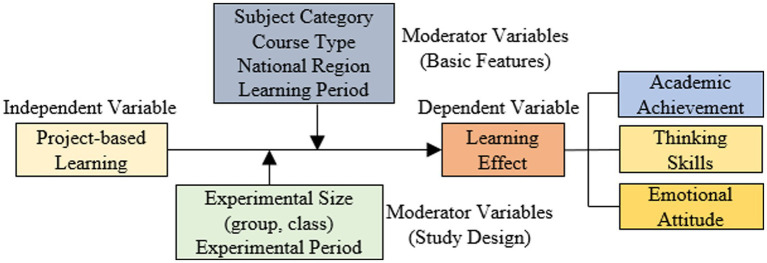
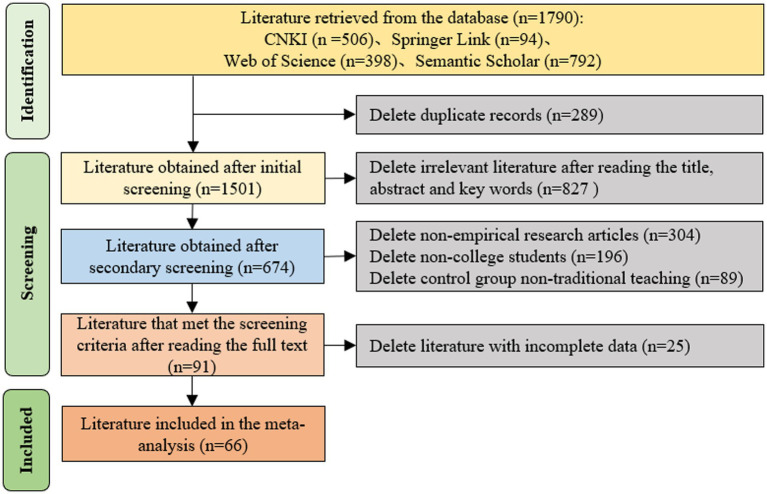
This study uses a meta-analysis method to transform 66 experimental or quasi-experimental research papers based on project-based learning over the past 20 years into 190 effect values from the sample size, mean, and standard deviation of experimental data during their experiments, and to conduct in-depth quantitative analysis.
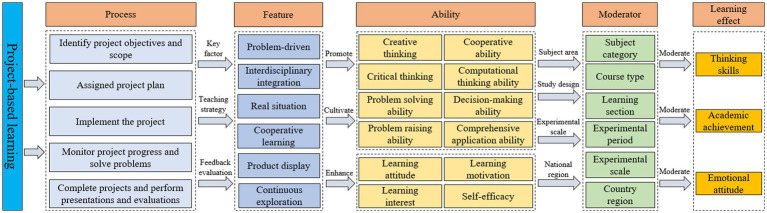
The results of the study showed that compared with the traditional teaching model, project-based learning significantly improved students' learning outcomes and positively contributed to academic achievement, affective attitudes, and thinking skills, especially academic achievement.
The results of the moderating effects test indicated that the effectiveness of project-based learning and teaching was influenced by different moderating variables, including country region, subject area, type of course, academic period, group size, class size, and experimental period : (1) from the perspective of country geography, the effects of project-based learning in Asia, especially in Southeast Asia, were significantly better than those in Western Europe and North America; (2) in terms of curriculum, project-based learning promotes student learning effects more significantly in engineering and technology subjects, and is better applied in laboratory classes than in theory classes; (3) from a pedagogical point of view, project-based learning is more suitable for small group teaching, in which the group size is 4-5 people teaching the best results; (4) in view of the experimental period, 9-18 weeks is more appropriate and has more obvious advantages for application at the high school level.
随着21世纪技能教育改革的推进,众多学者对基于项目的学习进行了探索。然而,基于项目的学习能否有效提高学生的学习效果尚未达成统一结论。
本研究采用元分析方法,将过去20年中66篇基于项目学习的实验或准实验研究论文,根据其实验过程中实验数据的样本量、均值和标准差转化为190个效应值,并进行深入的定量分析。
研究结果表明,与传统教学模式相比,基于项目的学习显著提高了学生的学习成果,并对学业成绩、情感态度和思维技能产生了积极影响,尤其是学业成绩。
调节效应检验结果表明,基于项目的学习与教学的有效性受不同调节变量的影响,包括国家地区、学科领域、课程类型、学术时期、小组规模、班级规模和实验时长:(1)从国家地理角度看,基于项目的学习在亚洲尤其是东南亚的效果显著优于西欧和北美;(2)在课程方面,基于项目的学习在工程技术学科中对学生学习效果的促进作用更为显著,且在实验课中比在理论课中应用效果更好;(3)从教学角度看,基于项目的学习更适合小组教学,其中小组规模为4 - 5人时教学效果最佳;(4)鉴于实验时长,9 - 18周较为合适,且在高中阶段应用优势更为明显。