School of Medical and Life Sciences, Chengdu University of Traditional Chinese Medicine, Chengdu, Sichuan, China.
Clinical Medicine Department, Bengbu Medical College, Bengbu, China.
Front Immunol. 2023 Jul 26;14:1208870. doi: 10.3389/fimmu.2023.1208870. eCollection 2023.
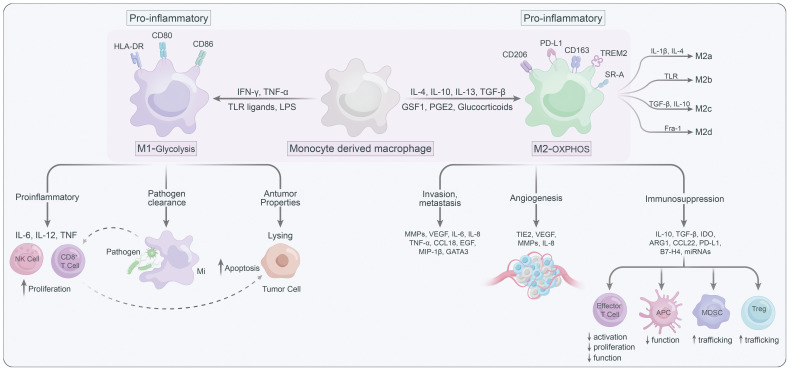
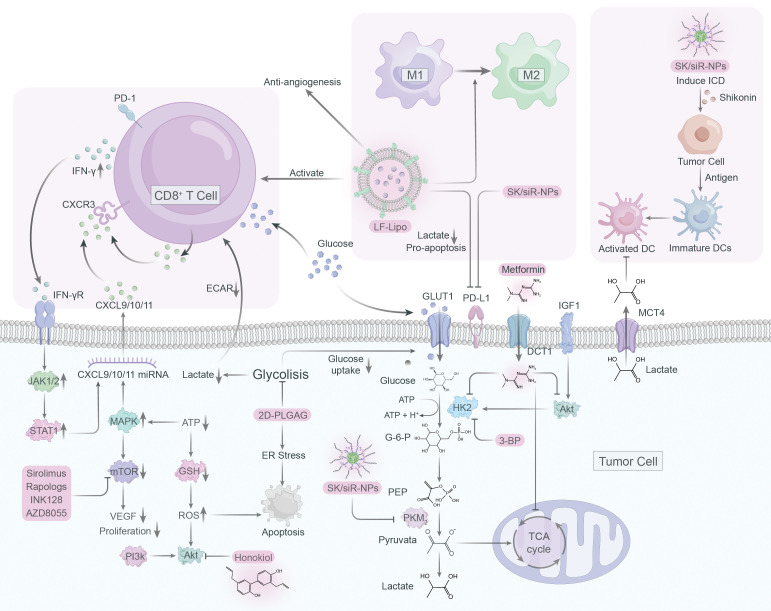
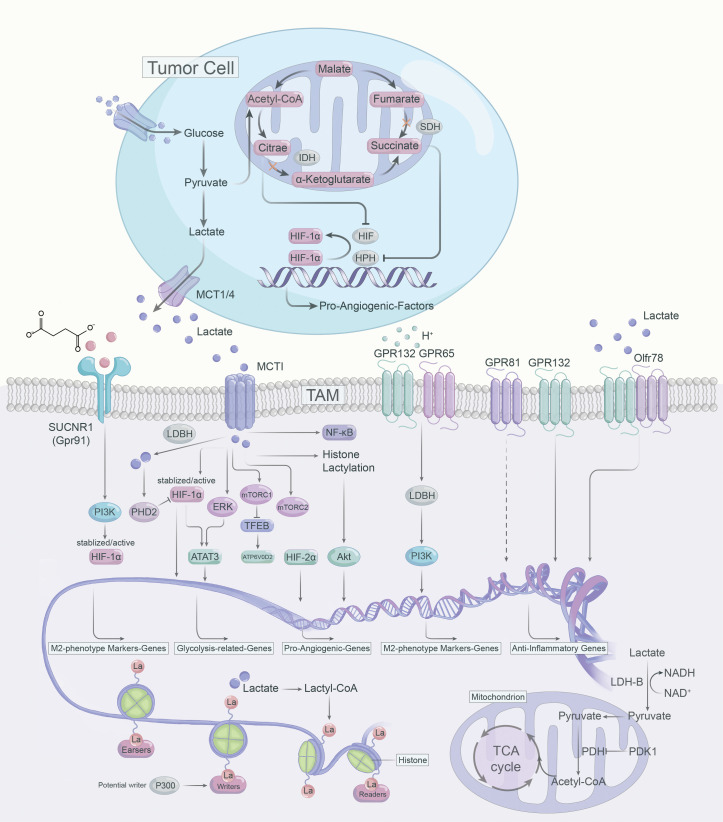
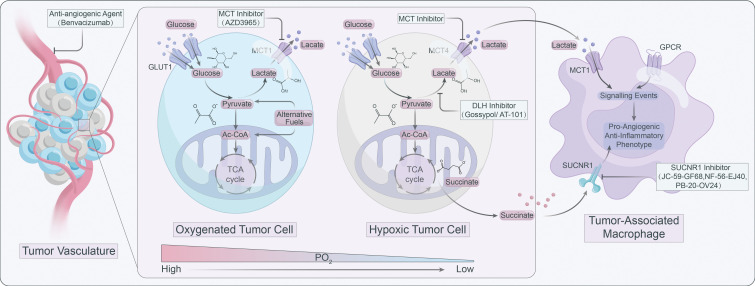
Lactate, traditionally regarded as a metabolic waste product at the terminal of the glycolysis process, has recently been found to have multifaceted functional roles in metabolism and beyond. A metabolic reprogramming phenomenon commonly seen in tumor cells, known as the "Warburg effect," sees high levels of aerobic glycolysis result in an excessive production of lactate. This lactate serves as a substrate that sustains not only the survival of cancer cells but also immune cells. However, it also inhibits the function of tumor-associated macrophages (TAMs), a group of innate immune cells ubiquitously present in solid tumors, thereby facilitating the immune evasion of malignant tumor cells. Characterized by their high plasticity, TAMs are generally divided into the pro-inflammatory M1 phenotype and the pro-tumour M2 phenotype. Through a process of 'education' by lactate, TAMs tend to adopt an immunosuppressive phenotype and collaborate with tumor cells to promote angiogenesis. Additionally, there is growing evidence linking metabolic reprogramming with epigenetic modifications, suggesting the participation of histone modification in diverse cellular events within the tumor microenvironment (TME). In this review, we delve into recent discoveries concerning lactate metabolism in tumors, with a particular focus on the impact of lactate on the function of TAMs. We aim to consolidate the molecular mechanisms underlying lactate-induced TAM polarization and angiogenesis and explore the lactate-mediated crosstalk between TAMs and tumor cells. Finally, we also touch upon the latest progress in immunometabolic therapies and drug delivery strategies targeting glycolysis and lactate production, offering new perspectives for future therapeutic approaches.
乳酸传统上被认为是糖酵解过程末端的代谢废物产物,但最近发现它在代谢和其他方面具有多方面的功能作用。肿瘤细胞中常见的一种代谢重编程现象,称为“Warburg 效应”,表现为高水平的有氧糖酵解导致乳酸的过度产生。这种乳酸不仅作为基质维持癌细胞的存活,还维持免疫细胞的存活。然而,它也抑制了肿瘤相关巨噬细胞(TAMs)的功能,TAMs 是普遍存在于实体瘤中的一组先天免疫细胞。TAMs 的特点是高可塑性,通常分为促炎的 M1 表型和促肿瘤的 M2 表型。通过乳酸的“教育”过程,TAMs 倾向于采用免疫抑制表型,并与肿瘤细胞合作促进血管生成。此外,越来越多的证据将代谢重编程与表观遗传修饰联系起来,表明组蛋白修饰参与了肿瘤微环境(TME)内的各种细胞事件。在这篇综述中,我们深入探讨了肿瘤中乳酸代谢的最新发现,特别关注了乳酸对 TAMs 功能的影响。我们旨在整合乳酸诱导 TAM 极化和血管生成的分子机制,并探讨 TAMs 与肿瘤细胞之间的乳酸介导的串扰。最后,我们还讨论了针对糖酵解和乳酸产生的免疫代谢疗法和药物输送策略的最新进展,为未来的治疗方法提供了新的视角。