Tsaktanis Thanos, Linnerbauer Mathias, Lößlein Lena, Farrenkopf Daniel, Vandrey Oliver, Peter Anne, Cirac Ana, Beyer Tobias, Nirschl Lucy, Grummel Verena, Mühlau Mark, Bussas Matthias, Hemmer Bernhard, Quintana Francisco J, Rothhammer Veit
Department of Neurology, Klinikum rechts der Isar, Technische Universität München, Munich 81675, Germany.
Department of Neurology, University Hospital Erlangen, Friedrich-Alexander University Erlangen-Nuernberg, Erlangen 91054, Germany.
Brain Commun. 2023 Jul 25;5(4):fcad206. doi: 10.1093/braincomms/fcad206. eCollection 2023.
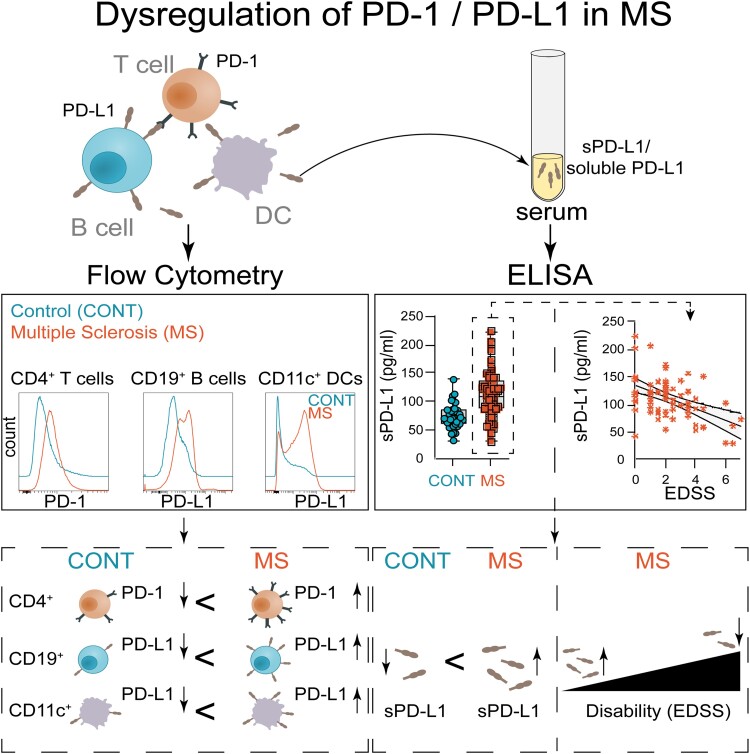
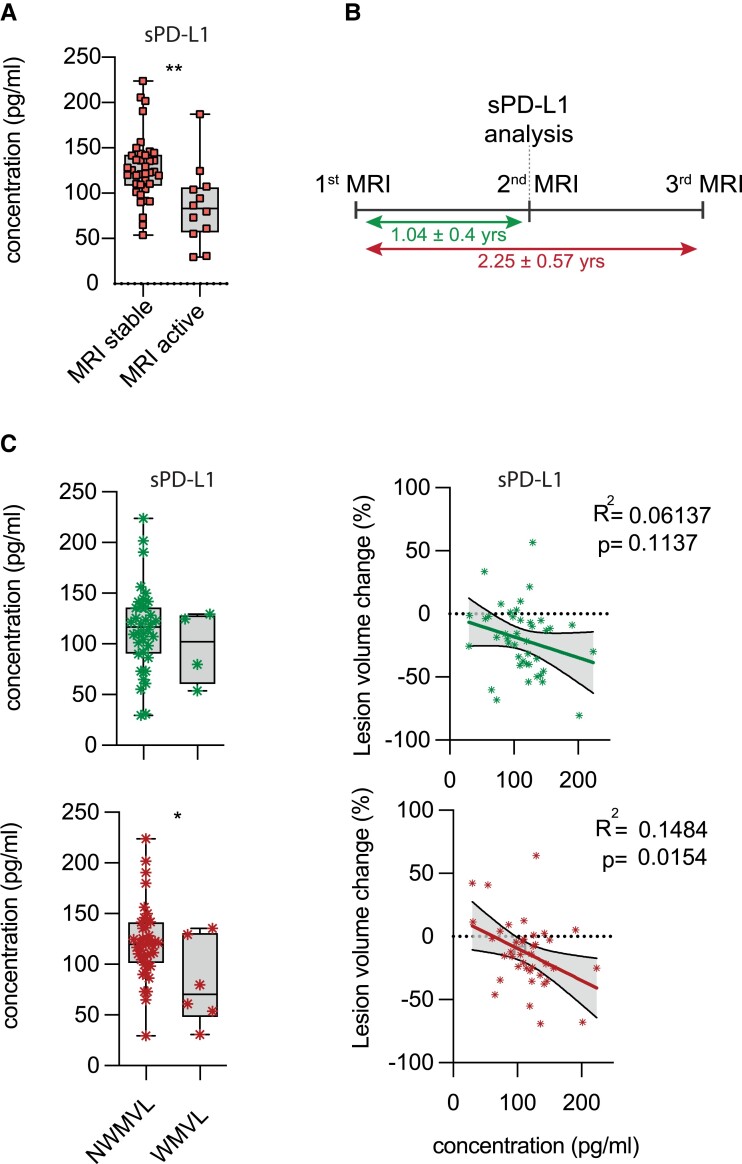
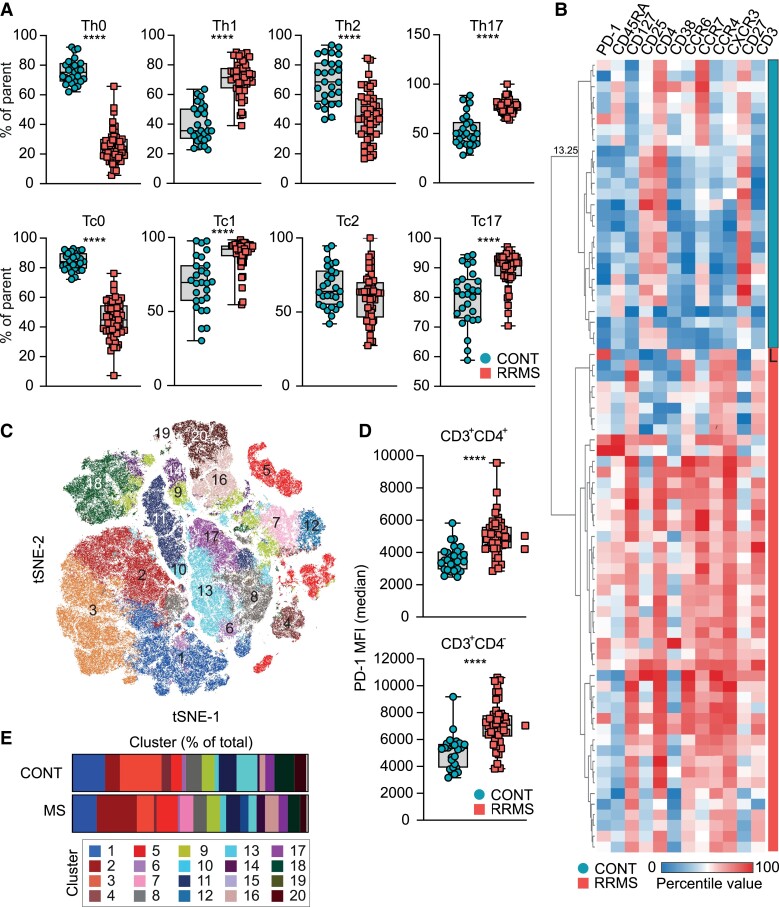
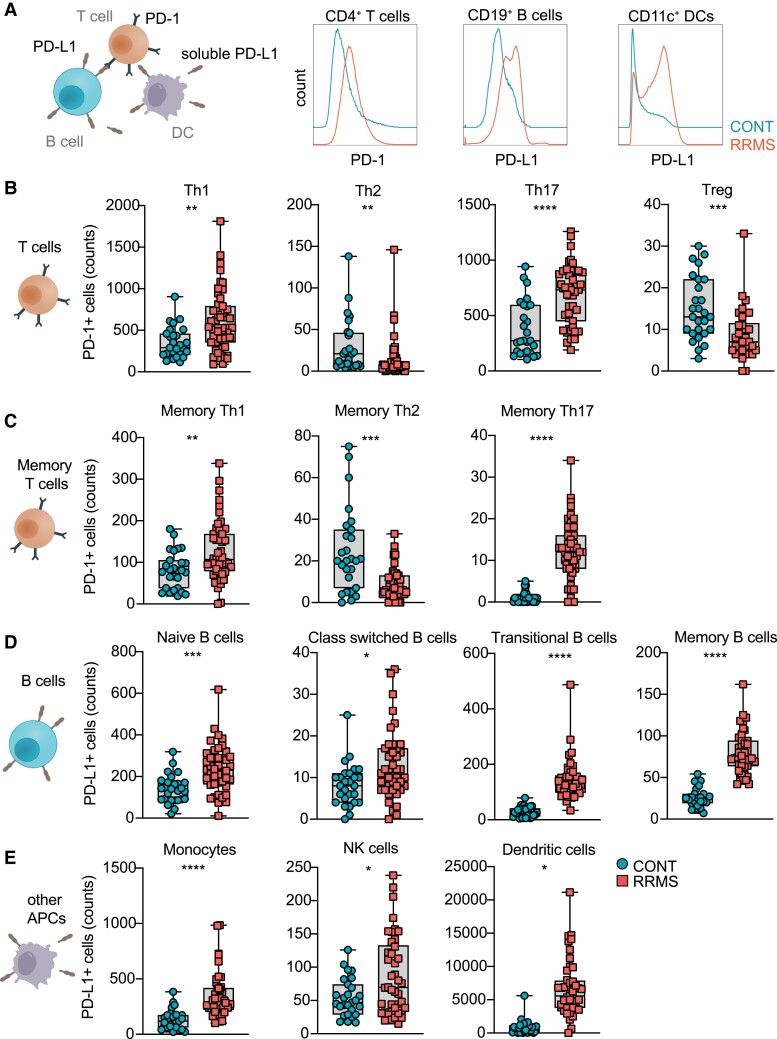
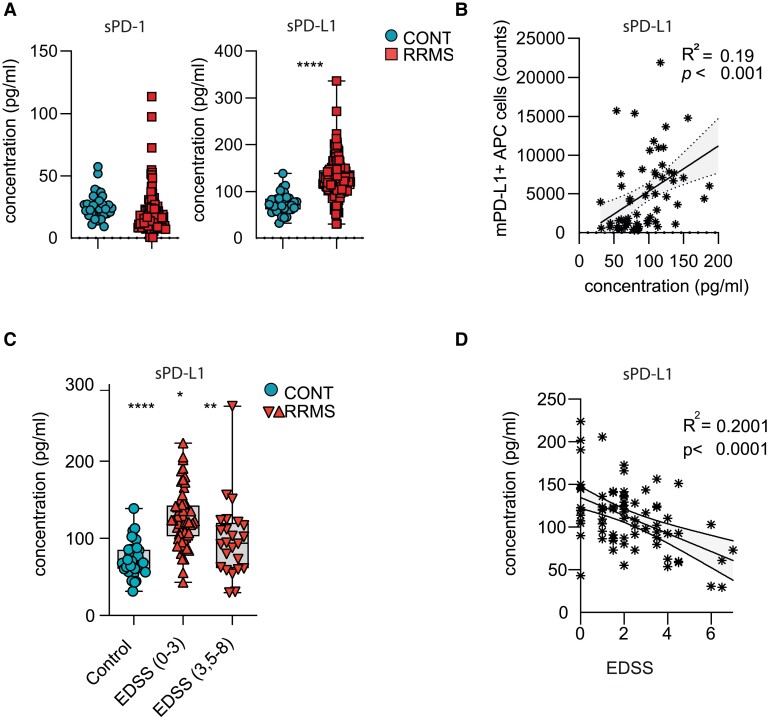
The programmed cell death protein 1/programmed cell death ligand 1 axis plays an important role in the adaptive immune system and has influence on neoplastic and inflammatory diseases, while its role in multiple sclerosis is unclear. Here, we aimed to analyse expression patterns of programmed cell death protein 1 and programmed cell death ligand 1 on peripheral blood mononuclear cells and their soluble variants in multiple sclerosis patients and controls, to determine their correlation with clinical disability and disease activity. In a cross-sectional study, we performed in-depth flow cytometric immunophenotyping of peripheral blood mononuclear cells and analysed soluble programmed cell death protein 1 and programmed cell death ligand 1 serum levels in patients with relapsing-remitting multiple sclerosis and controls. In comparison to control subjects, relapsing-remitting multiple sclerosis patients displayed distinct cellular programmed cell death protein 1/programmed cell death ligand 1 expression patterns in immune cell subsets and increased soluble programmed cell death ligand 1 levels, which correlated with clinical measures of disability and MRI activity over time. This study extends our knowledge of how programmed cell death protein 1 and programmed cell death ligand 1 are expressed in the membranes of patients with relapsing-remitting multiple sclerosis and describes for the first time the elevation of soluble programmed cell death ligand 1 in the blood of multiple sclerosis patients. The distinct expression pattern of membrane-bound programmed cell death protein 1 and programmed cell death ligand 1 and the correlation between soluble programmed cell death ligand 1, membrane-bound programmed cell death ligand 1, disease and clinical factors may offer therapeutic potential in the setting of multiple sclerosis and might improve future diagnosis and clinical decision-making.
程序性细胞死亡蛋白1/程序性细胞死亡配体1轴在适应性免疫系统中发挥重要作用,并对肿瘤性疾病和炎症性疾病产生影响,而其在多发性硬化症中的作用尚不清楚。在此,我们旨在分析多发性硬化症患者和对照组外周血单个核细胞上程序性细胞死亡蛋白1和程序性细胞死亡配体1及其可溶性变体的表达模式,以确定它们与临床残疾和疾病活动的相关性。在一项横断面研究中,我们对复发缓解型多发性硬化症患者和对照组进行了外周血单个核细胞的深度流式细胞免疫表型分析,并分析了可溶性程序性细胞死亡蛋白1和程序性细胞死亡配体1的血清水平。与对照受试者相比,复发缓解型多发性硬化症患者在免疫细胞亚群中表现出独特的细胞程序性细胞死亡蛋白1/程序性细胞死亡配体1表达模式,且可溶性程序性细胞死亡配体1水平升高,这与残疾的临床指标和随时间变化的MRI活动相关。本研究扩展了我们对复发缓解型多发性硬化症患者细胞膜上程序性细胞死亡蛋白1和程序性细胞死亡配体1表达情况的认识,并首次描述了多发性硬化症患者血液中可溶性程序性细胞死亡配体1的升高。膜结合型程序性细胞死亡蛋白1和程序性细胞死亡配体1的独特表达模式以及可溶性程序性细胞死亡配体1、膜结合型程序性细胞死亡配体1、疾病和临床因素之间的相关性可能为多发性硬化症的治疗提供潜力,并可能改善未来的诊断和临床决策。