Department of Colorectal Surgery, Fudan University Shanghai Cancer Center, Shanghai, China.
Department of Oncology, Shanghai Medical College Fudan University, Shanghai, China.
Clin Transl Med. 2023 Aug;13(8):e1352. doi: 10.1002/ctm2.1352.
The tumourigenesis of various cancers is influenced by epigenetic deregulation. Among 591 epigenetic regulator factors (ERFs) examined, AF9 showed significant inhibition of malignancy in colorectal cancer (CRC) based on our wound healing assays. However, the precise role of AF9 in CRC remains to be explored.
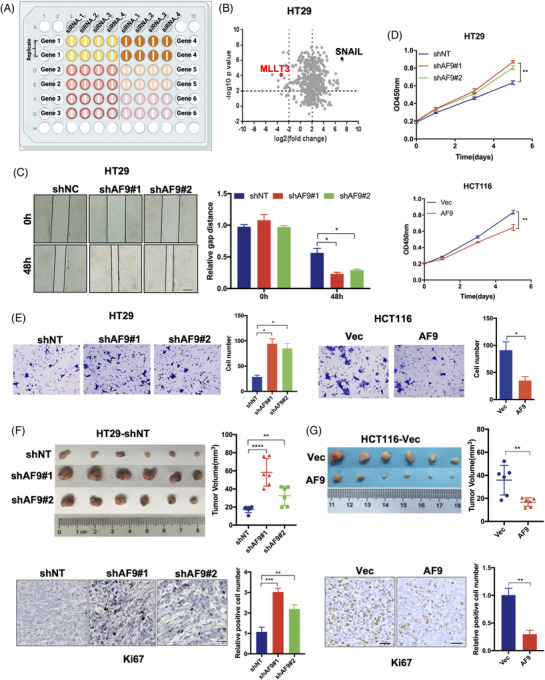
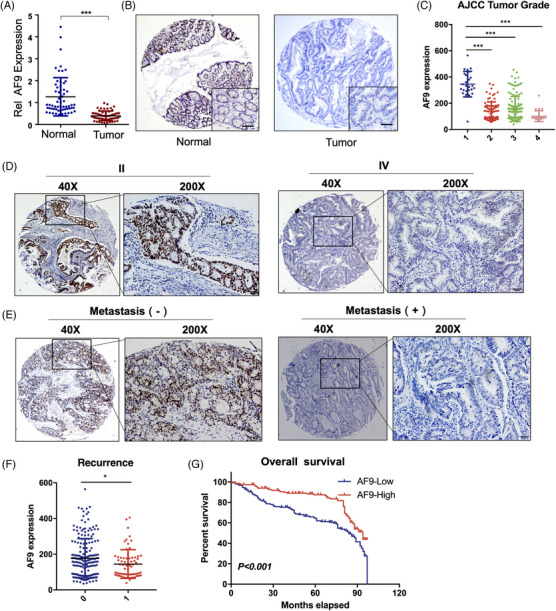
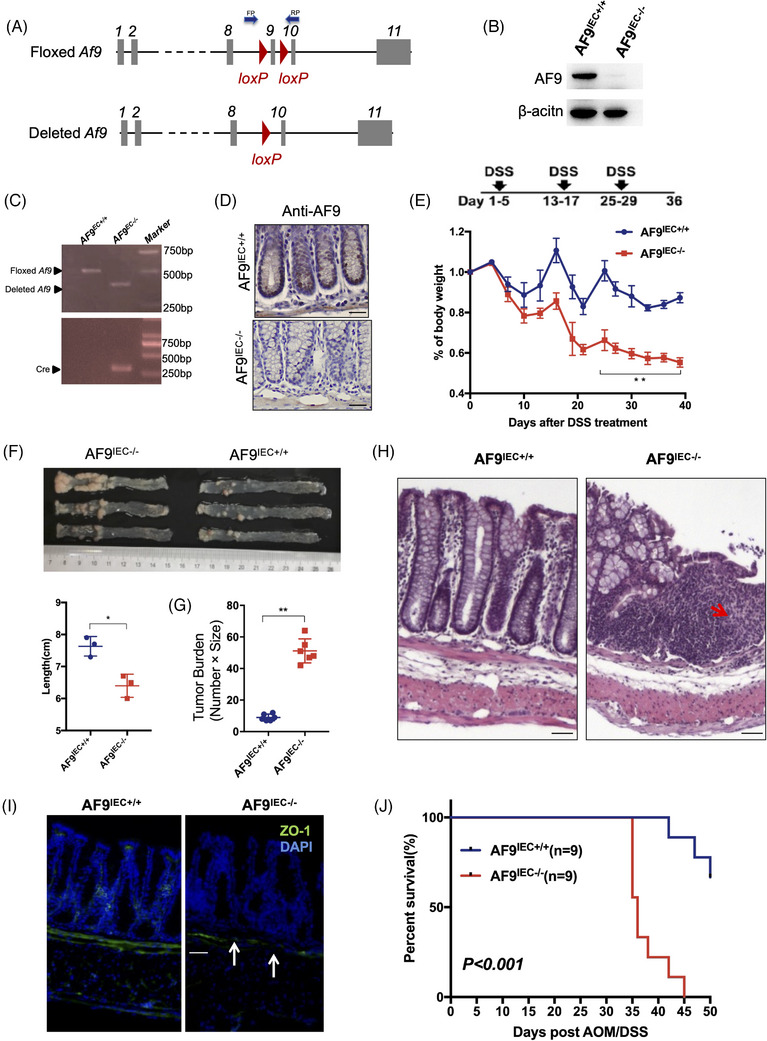
To investigate the function of AF9 in CRC, we utilised small interfering RNAs (siRNAs) to knock down the expression of 591 ERFs. Subsequently, we performed wound healing assays to evaluate cell proliferation and migration. In vitro and in vivo assays were conducted to elucidate the potential impact of AF9 in CRC. Clinical samples were analysed to assess the association between AF9 expression and CRC prognosis. Additionally, an Azoxymethane-Dextran Sodium Sulfate (AOM/DSS) induced CRC AF9 mouse model was employed to confirm the role of AF9 in CRC. To identify the target gene of AF9, RNA-seq and coimmunoprecipitation analyses were performed. Furthermore, bioinformatics prediction was applied to identify potential miRNAs that target AF9.
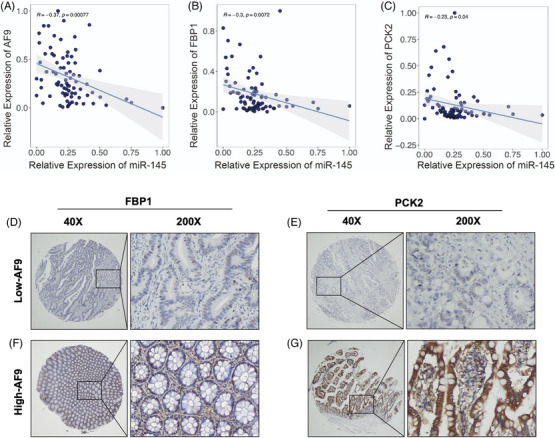
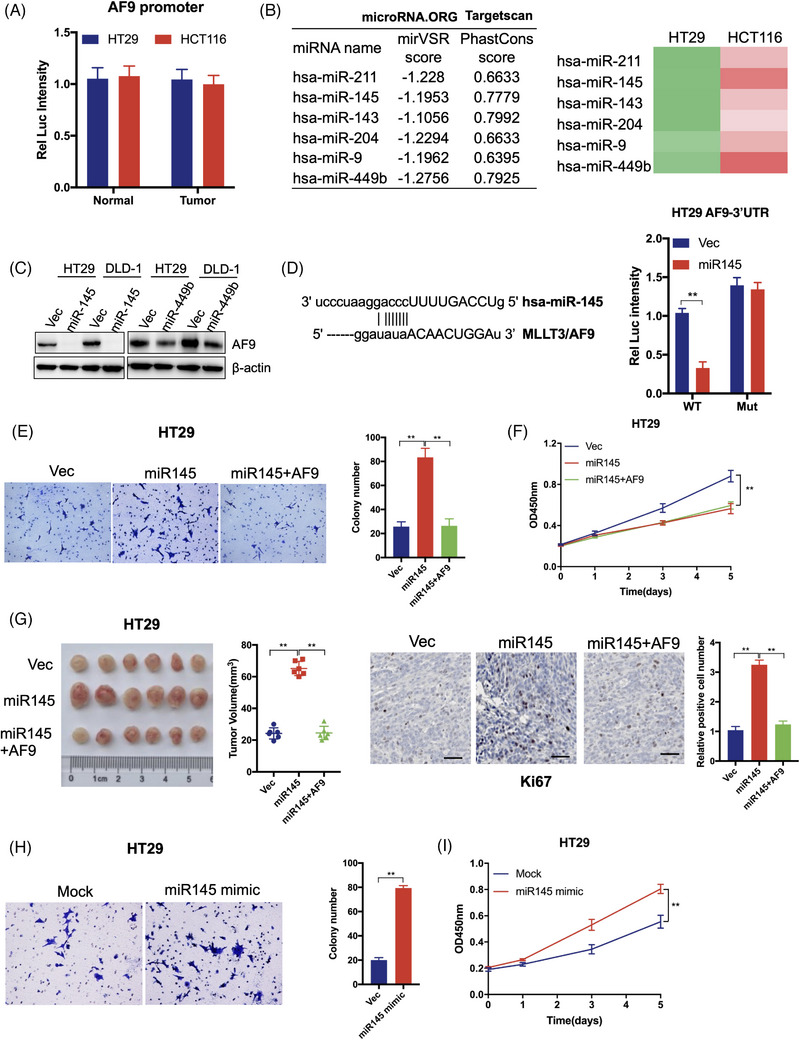
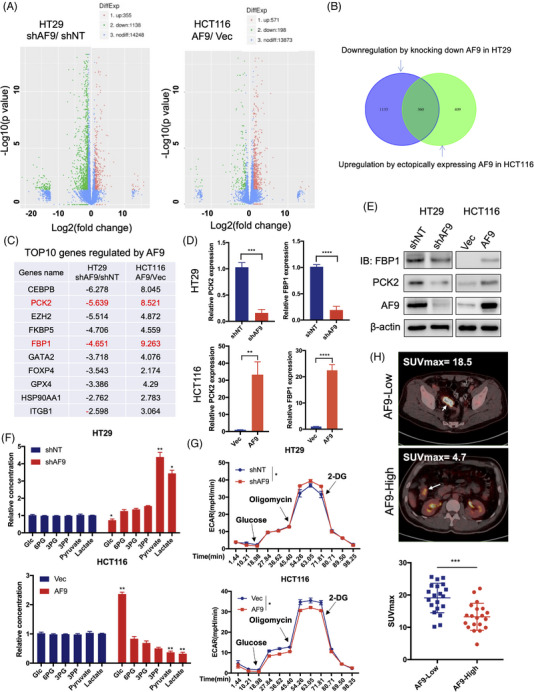
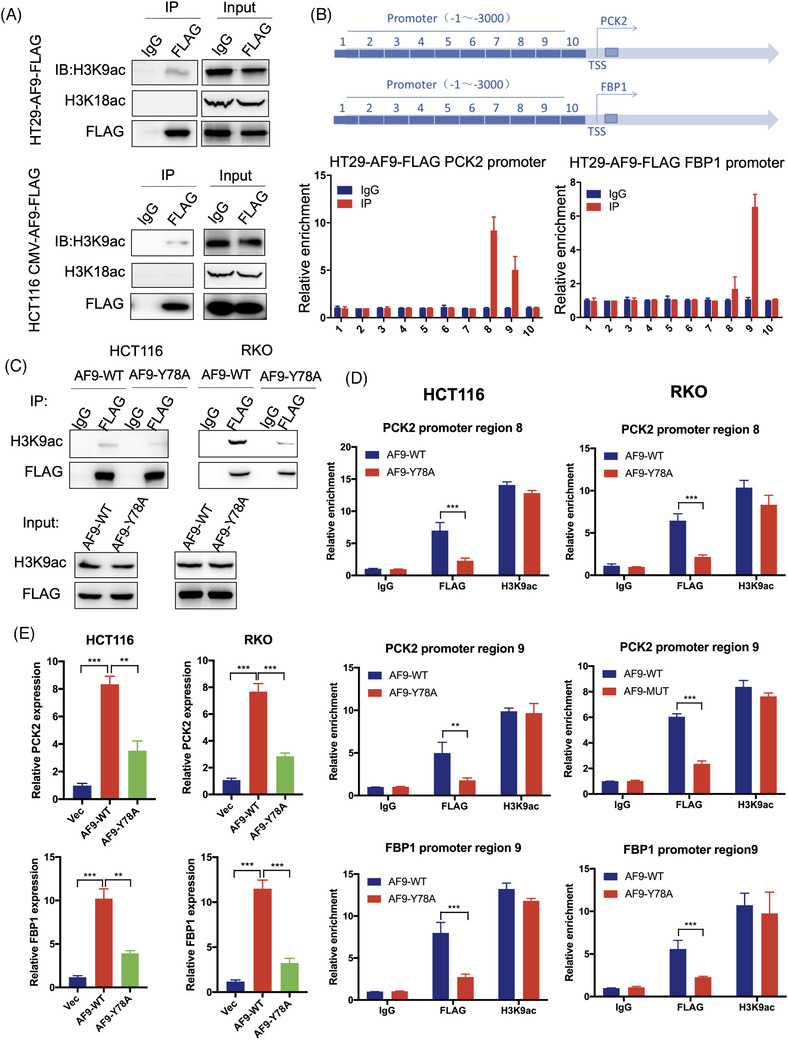
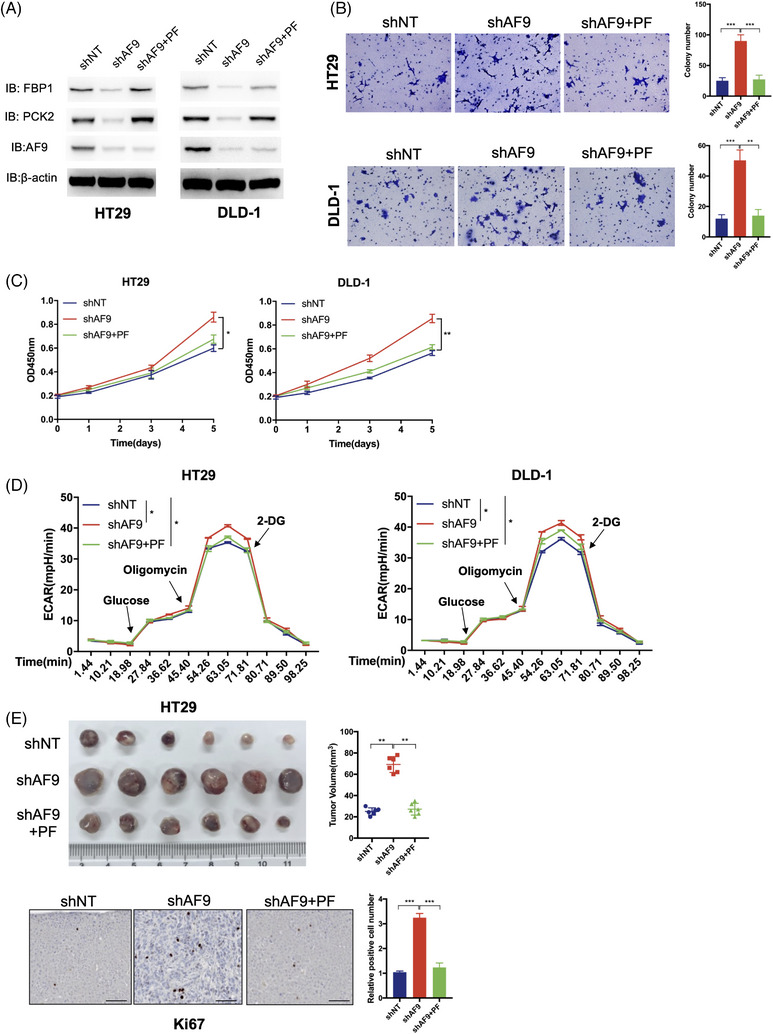
Among the 591 ERFs examined, AF9 exhibited downregulation in CRC and showed a positive correlation with prolonged survival in CRC patients. In vitro and in vivo assays proved that depletion of AF9 could promote cell proliferation, migration as well as glycolysis. Specifically, knockout of MLLT3 (AF9) in intestinal epithelial cells significantly increased tumour formation induced by AOM/DSS. We also identified miR-145 could target 3'untranslated region of AF9 to suppress AF9 expression. Loss of AF9 led to decreased expression of gluconeogenic genes, including phosphoenolpyruvate carboxykinase 2 (PCK2) and fructose 1,6-bisphosphatase 1 (FBP1), subsequently promoting glucose consumption and tumourigenesis.
AF9 is essential for the upregulation of PCK2 and FBP1, and the disruption of the miR-145/AF9 axis may serve as a potential target for the development of CRC therapeutics.
各种癌症的肿瘤发生受表观遗传失调的影响。在检查的 591 种表观遗传调节剂因子(ERFs)中,基于我们的伤口愈合实验,AF9 对结直肠癌(CRC)的恶性程度有显著抑制作用。然而,AF9 在 CRC 中的确切作用仍有待探索。
为了研究 AF9 在 CRC 中的功能,我们利用小干扰 RNA(siRNA)敲低 591 种 ERFs 的表达。随后,我们进行了伤口愈合实验以评估细胞增殖和迁移。进行体外和体内实验以阐明 AF9 在 CRC 中的潜在影响。分析临床样本以评估 AF9 表达与 CRC 预后的相关性。此外,我们还使用了氧化偶氮甲烷-葡聚糖硫酸钠(AOM/DSS)诱导的 CRC AF9 小鼠模型来验证 AF9 在 CRC 中的作用。为了鉴定 AF9 的靶基因,进行了 RNA-seq 和免疫共沉淀分析。此外,还应用了生物信息学预测来鉴定靶向 AF9 的潜在 miRNA。
在检查的 591 种 ERFs 中,AF9 在 CRC 中下调,并与 CRC 患者的生存时间延长呈正相关。体外和体内实验证明,AF9 的耗竭可以促进细胞增殖、迁移和糖酵解。具体来说,肠上皮细胞中 MLLT3(AF9)的敲除显著增加了 AOM/DSS 诱导的肿瘤形成。我们还发现 miR-145 可以靶向 AF9 的 3'非翻译区以抑制 AF9 的表达。AF9 的缺失导致糖异生基因,包括磷酸烯醇丙酮酸羧激酶 2(PCK2)和果糖 1,6-二磷酸酶 1(FBP1)的表达下调,从而促进葡萄糖消耗和肿瘤发生。
AF9 对于 PCK2 和 FBP1 的上调是必需的,破坏 miR-145/AF9 轴可能成为 CRC 治疗的潜在靶点。