School of Economic Sciences, North-West University (NWU), Potchefstroom, South Africa.
Network for Economic Research and Technical Solutions (NERTS), Geneva, Switzerland.
Eval Rev. 2024 Dec;48(6):1050-1087. doi: 10.1177/0193841X231194565. Epub 2023 Aug 11.
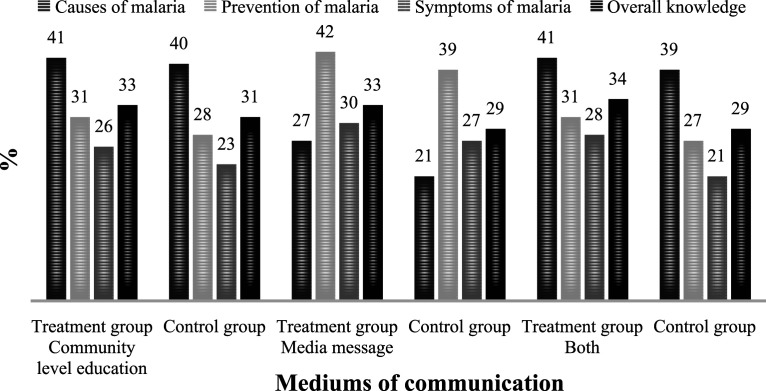
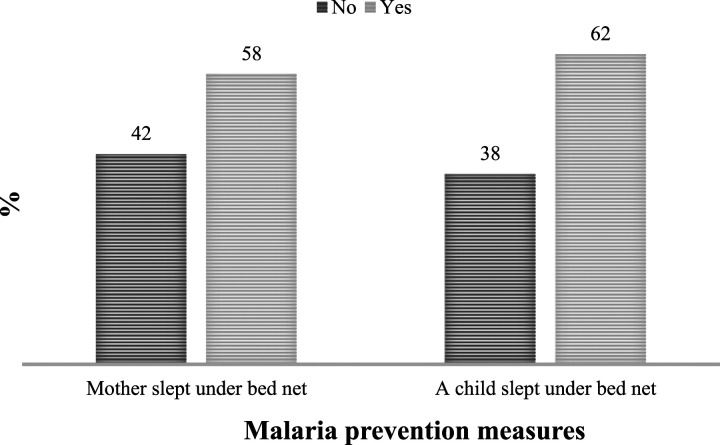
Behaviour change communication (BCC) remains a central component of the interventions used in the fight against malaria in Ghana. However, there is limited evidence of its effectiveness. This study evaluated the effects of BCC strategies on knowledge (symptoms, causes and prevention) and overall knowledge of malaria among Ghanaian women aged 15-49 years. The propensity score matching (PSM) approach and logistic regression were used to analyse data from the 2016 edition of the Malaria Indicator Survey (MIS). Women who participated in community-level education or heard/saw media messages on malaria, or both, had significantly more knowledge of the disease than women who lacked access to any of these mediums of communication. The effect of these strategies on women's overall knowledge of malaria is about 2% to 4% and is higher on their knowledge of the symptoms (3% to 6%) and prevention (2% to 4%) than the causes (2%). The combined effects of both mediums of communication are relatively higher than the effect of either of them as a single medium of communication. Further analysis showed that improved knowledge of the disease is associated with higher preventive measures taken by women for themselves and for their children. The results are more significant in rural and poor households than in urban and non-poor households. These findings underscore the need for the Ministry of Health and its partner institutions to adopt an innovative approach which combines the two strategies in intensively educating Ghanaians, and women in particular, on the symptoms and prevention of malaria, giving due cognisance to households' socioeconomic status and geographical location.
行为改变沟通(BCC)仍然是加纳抗击疟疾干预措施的核心组成部分。然而,其有效性的证据有限。本研究评估了 BCC 策略对加纳 15-49 岁妇女的疟疾知识(症状、病因和预防)和总体知识的影响。采用倾向评分匹配(PSM)方法和逻辑回归分析了 2016 年疟疾指标调查(MIS)的数据分析。参与社区教育或听说/看到疟疾媒体信息或两者都有的妇女,比没有接触过任何这些沟通媒介的妇女,对该病的了解明显更多。这些策略对妇女整体疟疾知识的影响约为 2%至 4%,对症状(3%至 6%)和预防(2%至 4%)的了解高于病因(2%)。两种沟通媒介的综合效果相对高于任何一种沟通媒介的效果。进一步的分析表明,对疾病的了解程度的提高与妇女为自己和子女采取的更高预防性措施有关。在农村和贫困家庭中的结果比在城市和非贫困家庭中的结果更为显著。这些发现强调了卫生部及其合作伙伴机构需要采取创新方法,将这两种策略结合起来,对加纳人进行强化教育,特别是对疟疾的症状和预防进行教育,同时适当考虑到家庭的社会经济地位和地理位置。