Department of Animal Sciences, D.H. Barron Reproductive and Perinatal Biology Research Program, and Genetics Institute, University of Florida, Gainesville, FL 32611-0910, USA.
Animal. 2023 May;17 Suppl 1(Suppl 1):100745. doi: 10.1016/j.animal.2023.100745.
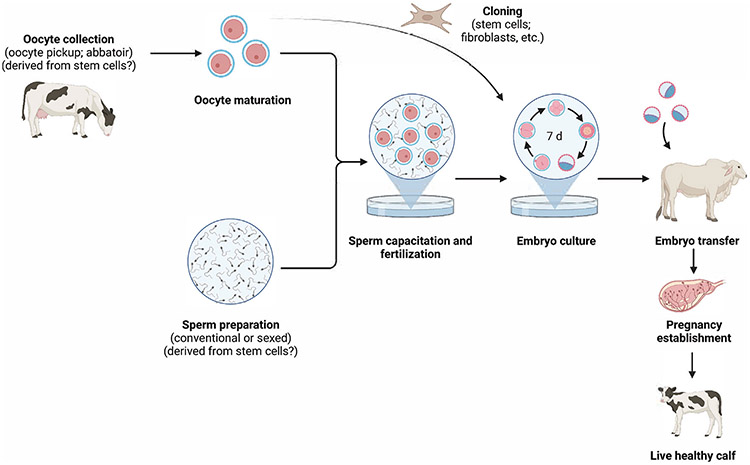
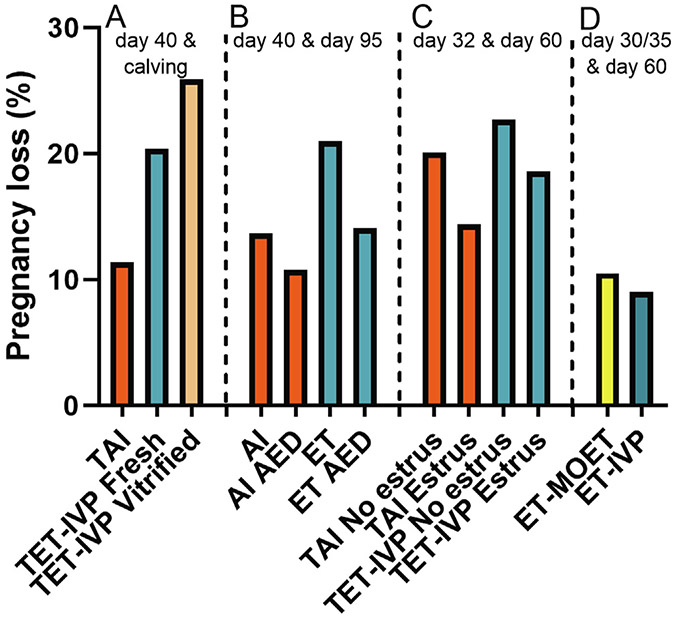
The embryo produced by in vitro oocyte maturation, fertilization, and embryonic development is an important resource for genetic improvement and has the potential to improve female fertility and to be programmed to produce offspring with superior ability for health and production. The cultured embryo is also an important component of several realized and potential technologies such as gene editing, somatic cell nuclear cloning, stem cell technologies and gamete generation in vitro. Full realization of the opportunities afforded by the in vitro-produced embryo will require overcoming some technical obstacles to cost-effective implementation of an embryo transfer program. Among the research goals for improving the penetration of embryo transfer in the cattle industry are development of methods to increase the supply of oocytes from genetically elite females, enhance the proportion of oocytes that become transferrable embryos, improve the fraction of embryos that establish pregnancy after transfer, reduce pregnancy wastage after pregnancy diagnosis, and identify culture conditions to optimize postnatal phenotype.
体外成熟、受精和胚胎发育产生的胚胎是遗传改良的重要资源,具有提高雌性生育能力和对后代进行健康和生产能力的优良编程的潜力。培养胚胎也是基因编辑、体细胞核克隆、干细胞技术和配子体外生成等几种已实现和潜在技术的重要组成部分。要充分实现体外生产胚胎所带来的机遇,就需要克服一些技术障碍,以实现胚胎移植计划的成本效益。在提高牛群胚胎移植效率的研究目标中,包括开发从遗传上优秀的雌性中增加卵母细胞供应的方法,提高可转化为胚胎的卵母细胞比例,提高胚胎移植后建立妊娠的比例,减少妊娠诊断后的妊娠损失,并确定培养条件以优化产后表型。