Landuzzi Lorena, Manara Maria Cristina, Pazzaglia Laura, Lollini Pier-Luigi, Scotlandi Katia
Experimental Oncology Laboratory, IRCCS Istituto Ortopedico Rizzoli, 40136 Bologna, Italy.
Laboratory of Immunology and Biology of Metastasis, Department of Medical and Surgical Sciences (DIMEC), University of Bologna, 40126 Bologna, Italy.
Cancers (Basel). 2023 Jul 30;15(15):3887. doi: 10.3390/cancers15153887.
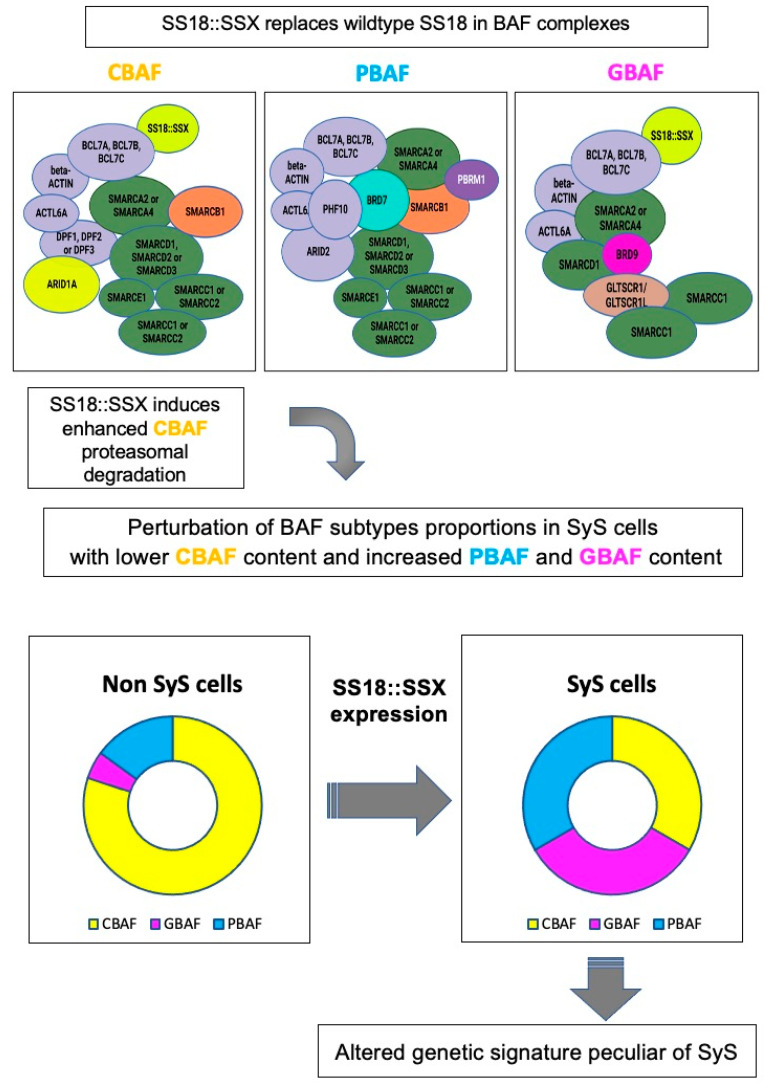
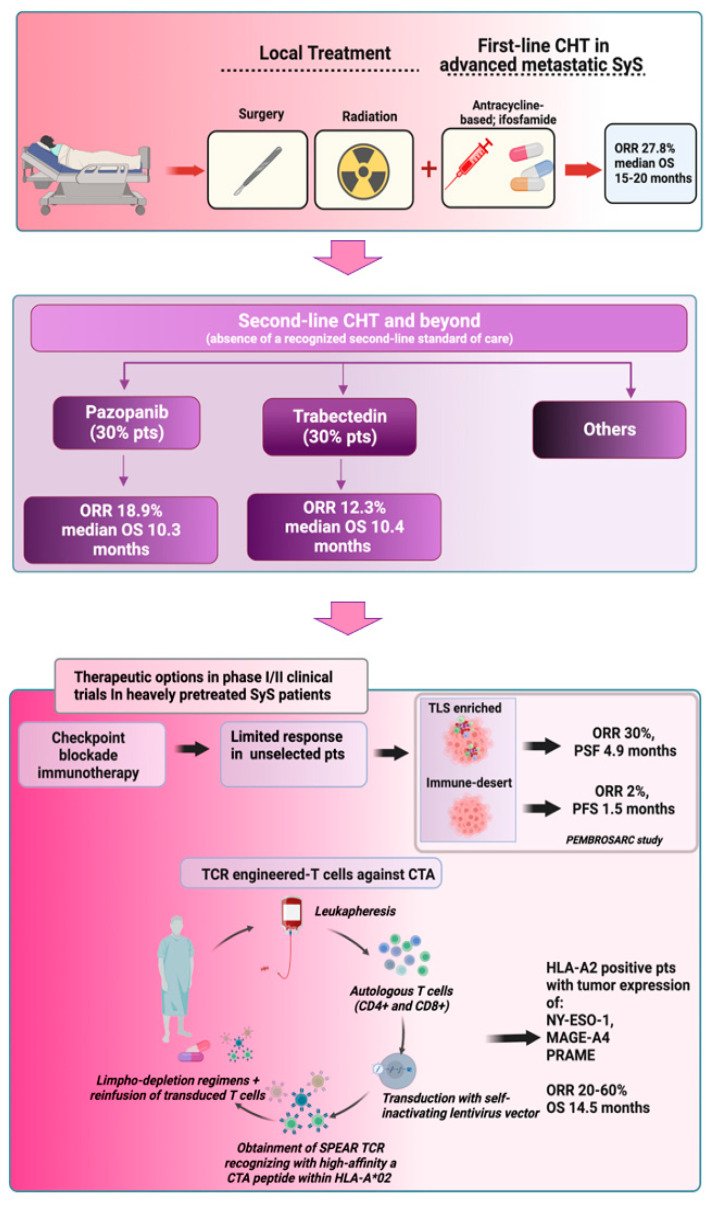
Synovial sarcoma (SyS) is a rare aggressive soft tissue sarcoma carrying the chromosomal translocation t(X;18), encoding the fusion transcript SS18::SSX. The fusion oncoprotein interacts with both BAF enhancer complexes and polycomb repressor complexes, resulting in genome-wide epigenetic perturbations and a unique altered genetic signature. Over 80% of the patients are initially diagnosed with localized disease and have a 5-year survival rate of 70-80%, but metastatic relapse occurs in 50% of the cases. Advanced, unresectable, or metastatic disease has a 5-year survival rate below 10%, representing a critical issue. This review summarizes the molecular mechanisms behind SyS and illustrates current treatments in front line, second line, and beyond settings. We analyze the use of immune check point inhibitors (ICI) in SyS that do not behave as an ICI-sensitive tumor, claiming the need for predictive genetic signatures and tumor immune microenvironment biomarkers. We highlight the clinical translation of innovative technologies, such as proteolysis targeting chimera (PROTAC) protein degraders or adoptive transfer of engineered immune cells. Adoptive cell transfer of engineered T-cell receptor cells targeting selected cancer/testis antigens has shown promising results against metastatic SyS in early clinical trials and further improvements are awaited from refinements involving immune cell engineering and tumor immune microenvironment enhancement.
滑膜肉瘤(SyS)是一种罕见的侵袭性软组织肉瘤,具有染色体易位t(X;18),编码融合转录本SS18::SSX。融合癌蛋白与BAF增强子复合物和多梳抑制复合物相互作用,导致全基因组表观遗传扰动和独特的遗传特征改变。超过80%的患者最初被诊断为局限性疾病,5年生存率为70-80%,但50%的病例会发生转移性复发。晚期、不可切除或转移性疾病的5年生存率低于10%,这是一个关键问题。本综述总结了滑膜肉瘤背后的分子机制,并阐述了一线、二线及其他情况下的当前治疗方法。我们分析了免疫检查点抑制剂(ICI)在滑膜肉瘤中的应用,滑膜肉瘤并非对ICI敏感的肿瘤,因此需要预测性遗传特征和肿瘤免疫微环境生物标志物。我们强调了创新技术的临床转化,如蛋白酶靶向嵌合体(PROTAC)蛋白降解剂或工程免疫细胞的过继转移。在早期临床试验中,靶向选定癌症/睾丸抗原的工程化T细胞受体细胞的过继性细胞转移已显示出针对转移性滑膜肉瘤的有前景的结果,并且期待通过免疫细胞工程和肿瘤免疫微环境增强的改进取得进一步进展。