International Laboratory EPIGEN, Consejo de Ciencia y Tecnología del Estado de Puebla (CONCYTEP), Instituto de Ciencias, Ecocampus Valsequillo, Benemérita Universidad Autónoma de Puebla (BUAP), Puebla 72570, Mexico.
Laboratoire IMoPA, Université de Lorraine, CNRS, UMR 7365, F-54000 Nancy, France.
Int J Mol Sci. 2023 Aug 1;24(15):12302. doi: 10.3390/ijms241512302.
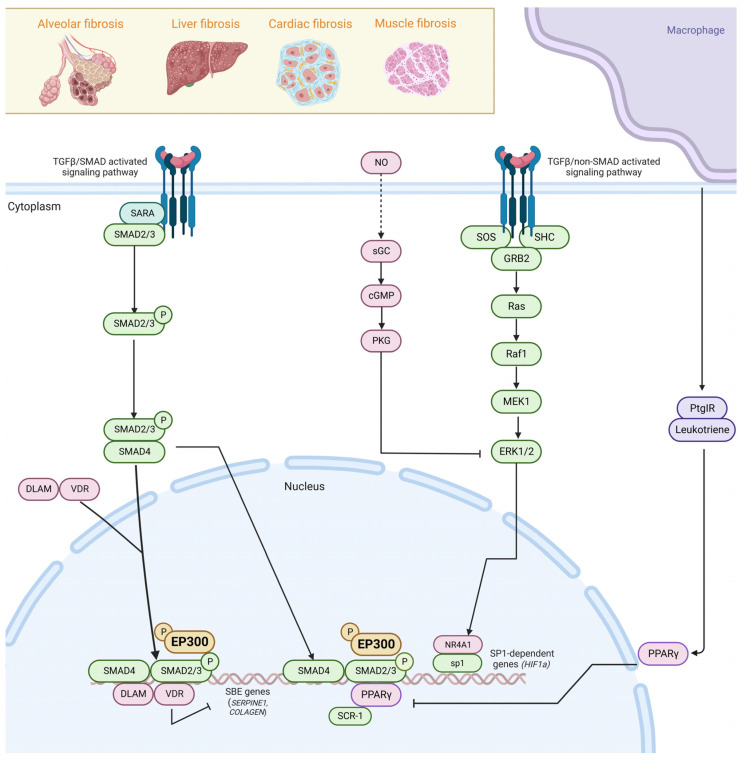
Fibrosis is a condition characterized by the excessive accumulation of extracellular matrix proteins in tissues, leading to organ dysfunction and failure. Recent studies have identified EP300, a histone acetyltransferase, as a crucial regulator of the epigenetic changes that contribute to fibrosis. In fact, EP300-mediated acetylation of histones alters global chromatin structure and gene expression, promoting the development and progression of fibrosis. Here, we review the role of EP300-mediated epigenetic regulation in multi-organ fibrosis and its potential as a therapeutic target. We discuss the preclinical evidence that suggests that EP300 inhibition can attenuate fibrosis-related molecular processes, including extracellular matrix deposition, inflammation, and epithelial-to-mesenchymal transition. We also highlight the contributions of small molecule inhibitors and gene therapy approaches targeting EP300 as novel therapies against fibrosis.
纤维化是一种特征为组织中细胞外基质蛋白过度积累,导致器官功能障碍和衰竭的疾病。最近的研究已经确定 EP300(一种组蛋白乙酰转移酶)是导致纤维化的表观遗传变化的关键调节因子。事实上,EP300 介导的组蛋白乙酰化改变了全局染色质结构和基因表达,促进了纤维化的发展和进展。在这里,我们回顾了 EP300 介导的表观遗传调控在多器官纤维化中的作用及其作为治疗靶点的潜力。我们讨论了提示 EP300 抑制可以减轻纤维化相关分子过程(包括细胞外基质沉积、炎症和上皮间质转化)的临床前证据。我们还强调了针对 EP300 的小分子抑制剂和基因治疗方法的贡献,它们是针对纤维化的新型治疗方法。