Department of Cardiology, Boston Children's Hospital, Boston, Massachusetts 02115, USA.
Genome Res. 2013 Jun;23(6):917-27. doi: 10.1101/gr.149674.112. Epub 2013 Apr 1.
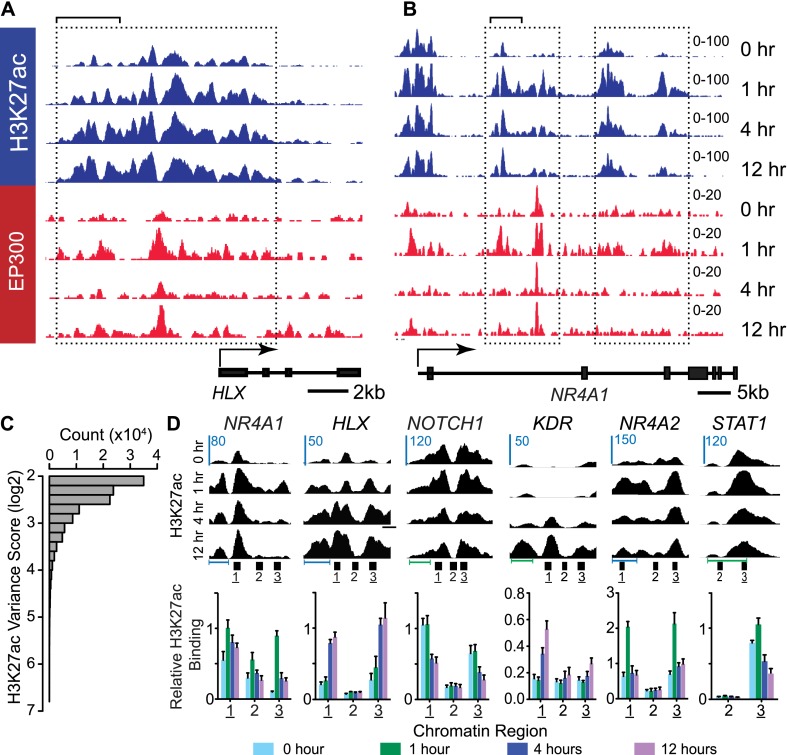
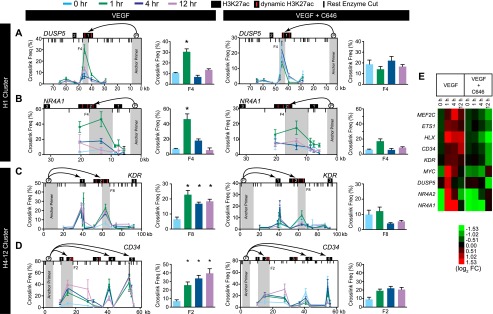
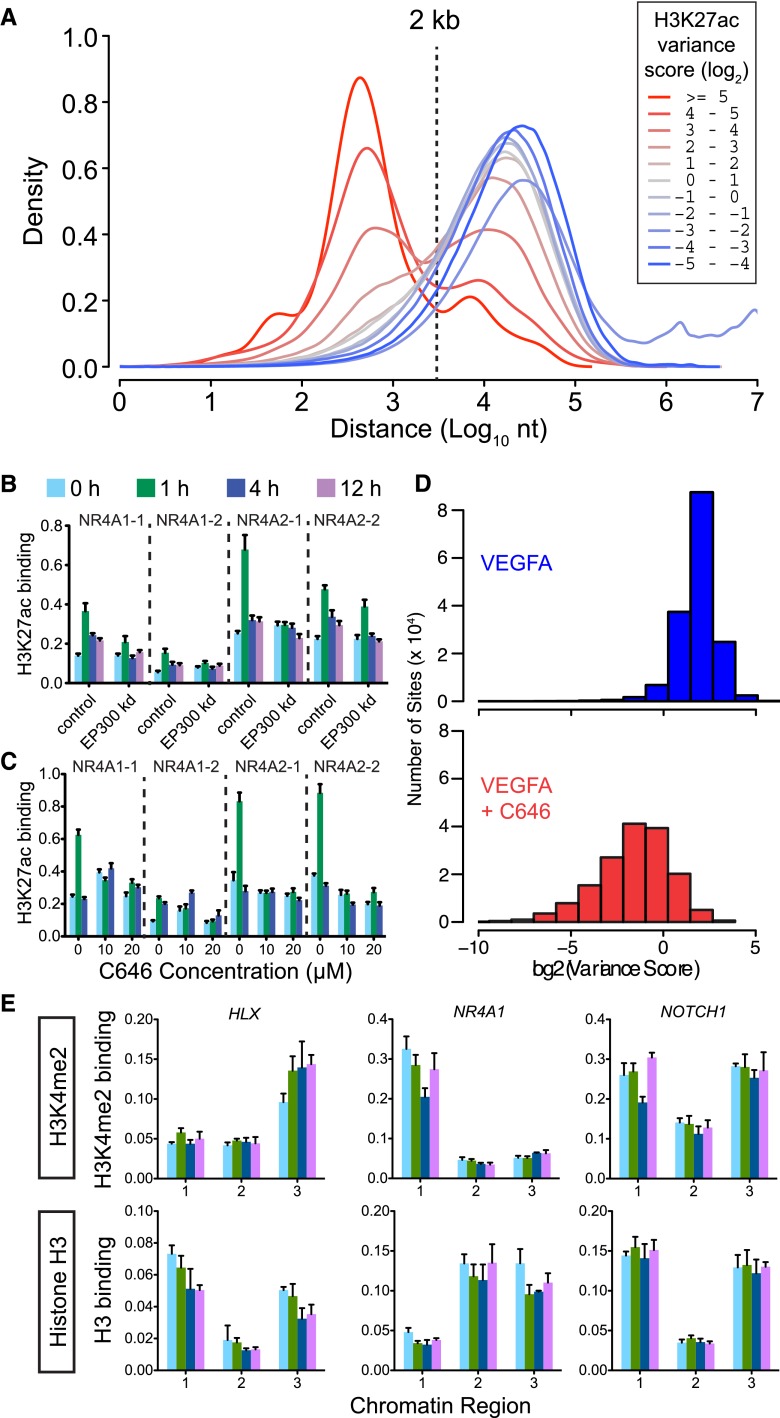
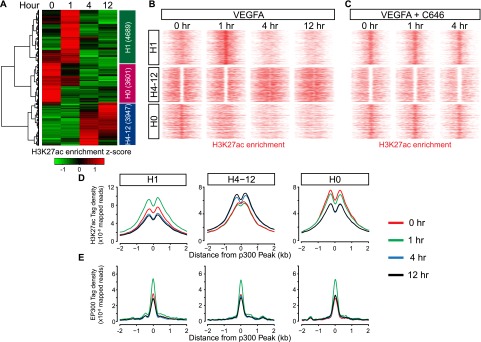
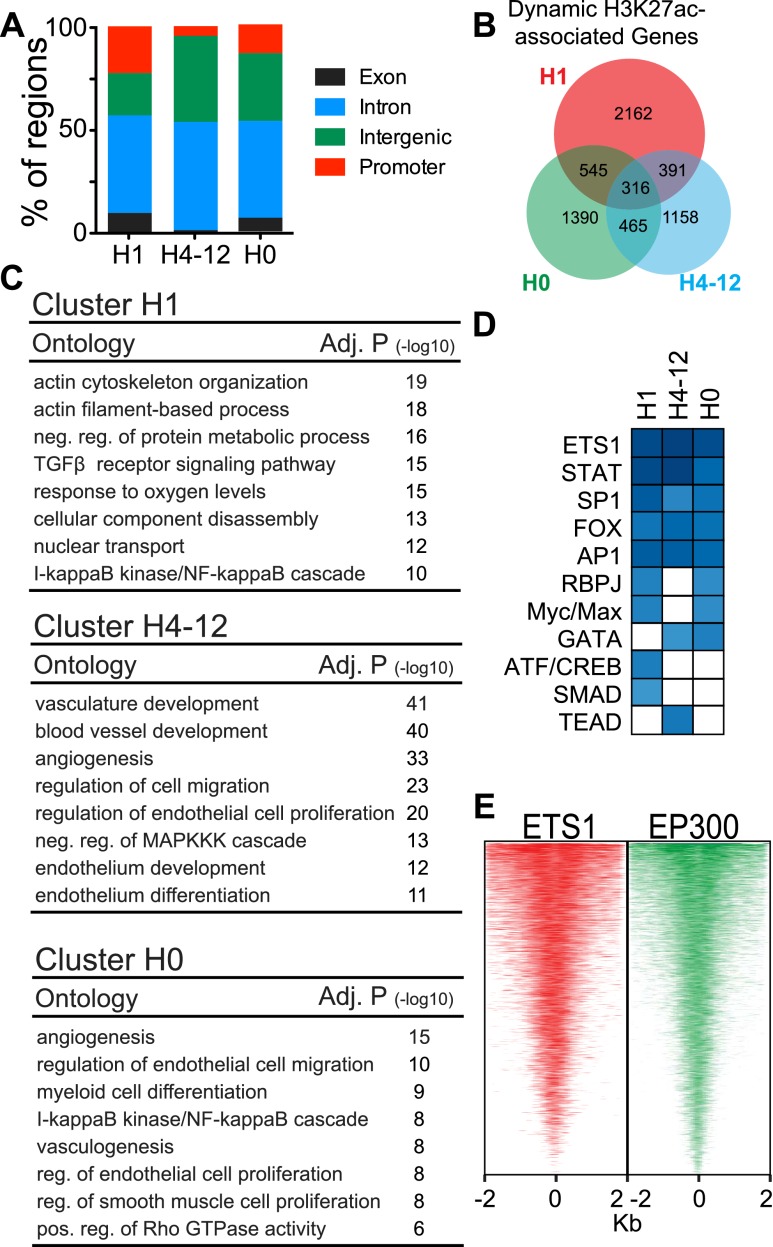
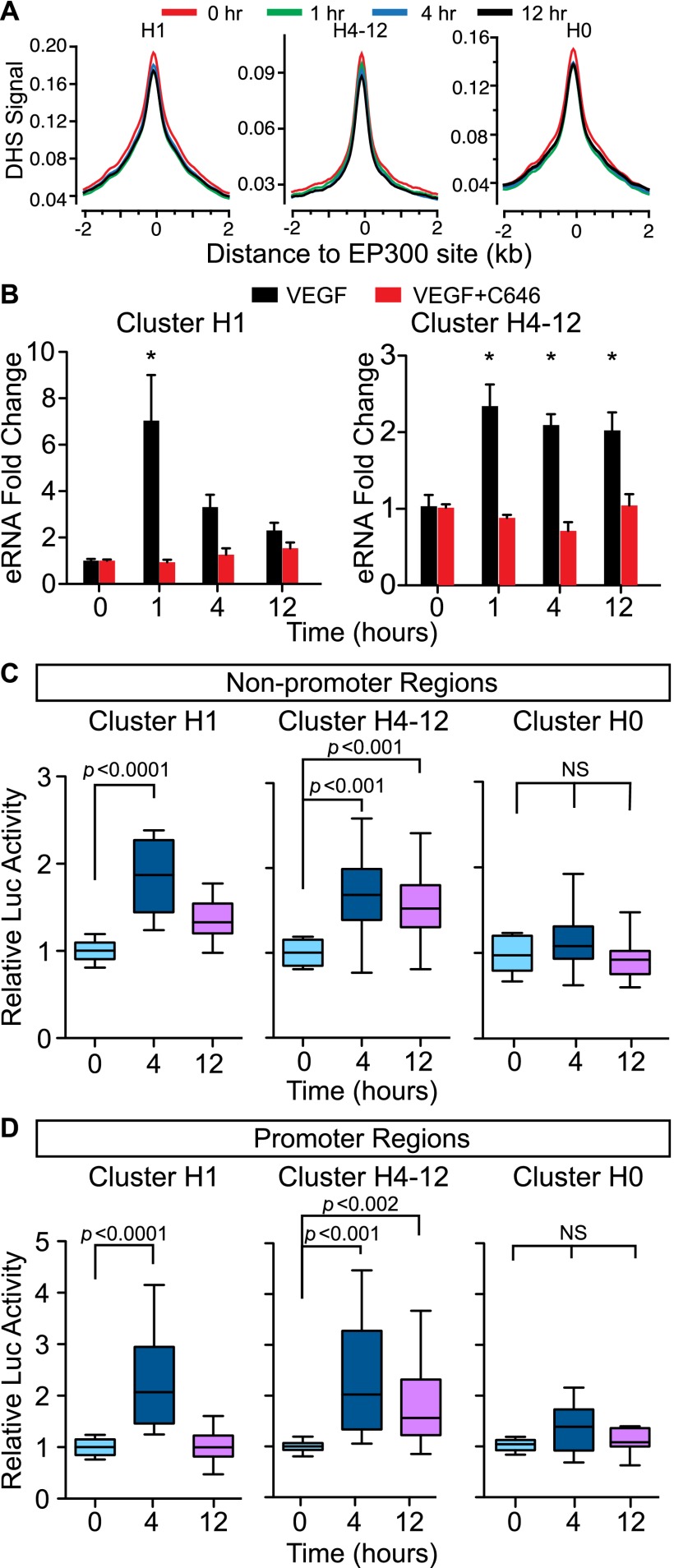
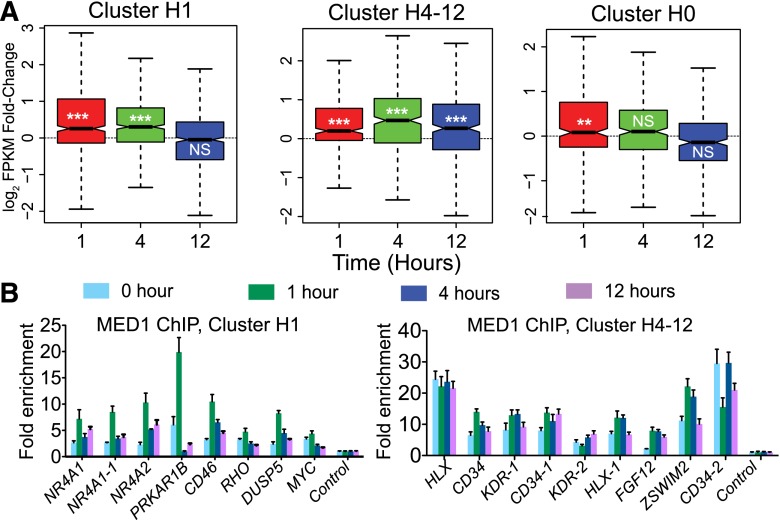
Histone modifications are now well-established mediators of transcriptional programs that distinguish cell states. However, the kinetics of histone modification and their role in mediating rapid, signal-responsive gene expression changes has been little studied on a genome-wide scale. Vascular endothelial growth factor A (VEGFA), a major regulator of angiogenesis, triggers changes in transcriptional activity of human umbilical vein endothelial cells (HUVECs). Here, we used chromatin immunoprecipitation followed by high-throughput sequencing (ChIP-seq) to measure genome-wide changes in histone H3 acetylation at lysine 27 (H3K27ac), a marker of active enhancers, in unstimulated HUVECs and HUVECs stimulated with VEGFA for 1, 4, and 12 h. We show that sites with the greatest H3K27ac change upon stimulation were associated tightly with EP300, a histone acetyltransferase. Using the variation of H3K27ac as a novel epigenetic signature, we identified transcriptional regulatory elements that are functionally linked to angiogenesis, participate in rapid VEGFA-stimulated changes in chromatin conformation, and mediate VEGFA-induced transcriptional responses. Dynamic H3K27ac deposition and associated changes in chromatin conformation required EP300 activity instead of altered nucleosome occupancy or changes in DNase I hypersensitivity. EP300 activity was also required for a subset of dynamic H3K27ac sites to loop into proximity of promoters. Our study identified thousands of endothelial, VEGFA-responsive enhancers, demonstrating that an epigenetic signature based on the variation of a chromatin feature is a productive approach to define signal-responsive genomic elements. Further, our study implicates global epigenetic modifications in rapid, signal-responsive transcriptional regulation.
组蛋白修饰现已成为区分细胞状态的转录程序的重要介质。然而,组蛋白修饰的动力学及其在介导快速、信号响应的基因表达变化中的作用在全基因组范围内研究甚少。血管内皮生长因子 A(VEGFA)是血管生成的主要调节剂,它引发人脐静脉内皮细胞(HUVEC)转录活性的变化。在这里,我们使用染色质免疫沉淀结合高通量测序(ChIP-seq)来测量未刺激的 HUVEC 和用 VEGFA 刺激 1、4 和 12 小时后的 HUVEC 中组蛋白 H3 赖氨酸 27 乙酰化(H3K27ac)的全基因组变化,H3K27ac 是活性增强子的标志物。我们表明,刺激后 H3K27ac 变化最大的位点与组蛋白乙酰转移酶 EP300 紧密相关。使用 H3K27ac 的变化作为一种新的表观遗传特征,我们鉴定了与血管生成功能相关的转录调节元件,这些元件参与快速 VEGFA 刺激的染色质构象变化,并介导 VEGFA 诱导的转录反应。动态 H3K27ac 沉积和相关的染色质构象变化需要 EP300 活性,而不是改变核小体占有率或 DNA 酶 I 超敏性的变化。EP300 活性也需要一组动态 H3K27ac 位点环入启动子附近。我们的研究鉴定了数千个内皮细胞、VEGFA 反应性增强子,表明基于染色质特征变化的表观遗传特征是定义信号响应基因组元件的有效方法。此外,我们的研究表明,全局表观遗传修饰参与了快速、信号响应的转录调控。