Department of Pharmaceutical Biology, Institute of Pharmaceutical and Biomedical Sciences, Johannes Gutenberg University-Mainz, Staudinger Weg 5, 55128 Mainz, Germany.
Division of Cancer Genome Research, German Cancer Research Center (DKFZ), German Cancer Consortium (DKTK), National Center for Tumor Disease (NCT), Im Neuenheimer Feld 460, 69120 Heidelberg, Germany.
Molecules. 2023 Jul 26;28(15):5658. doi: 10.3390/molecules28155658.
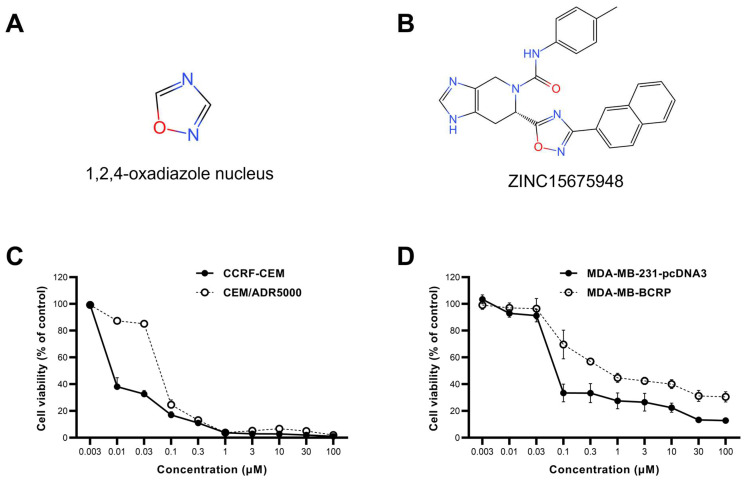
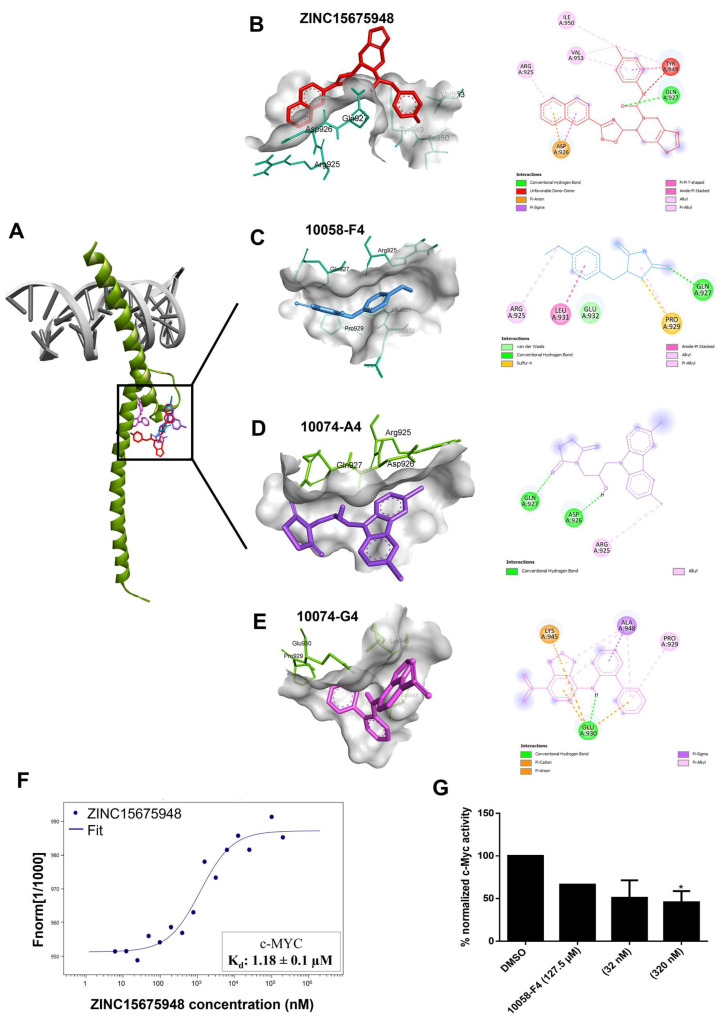
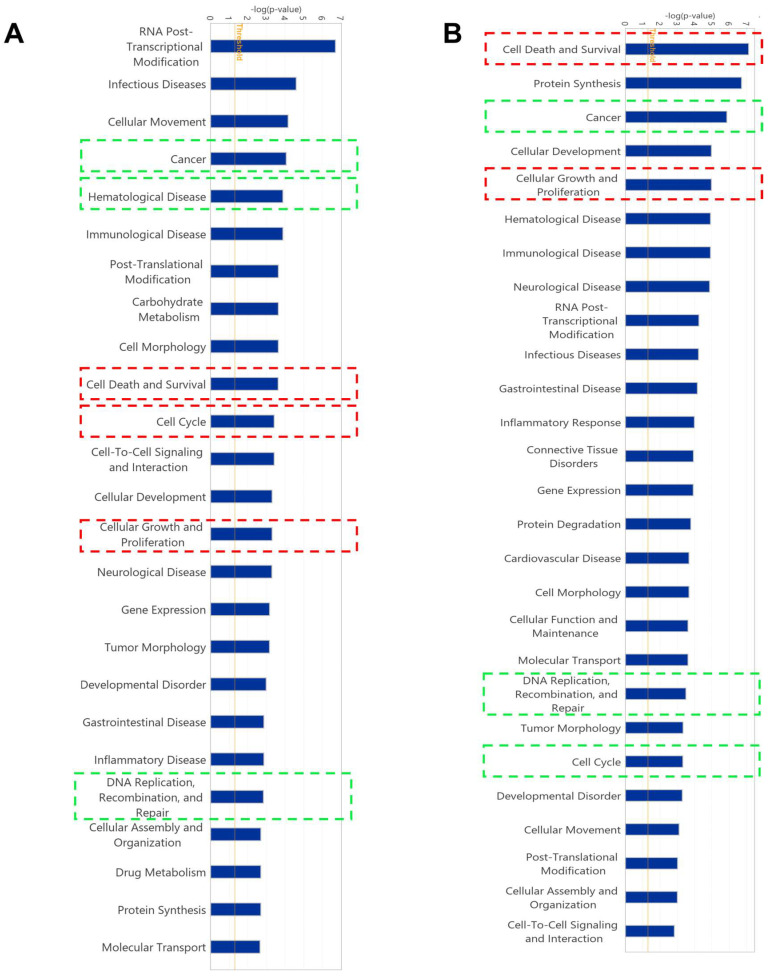
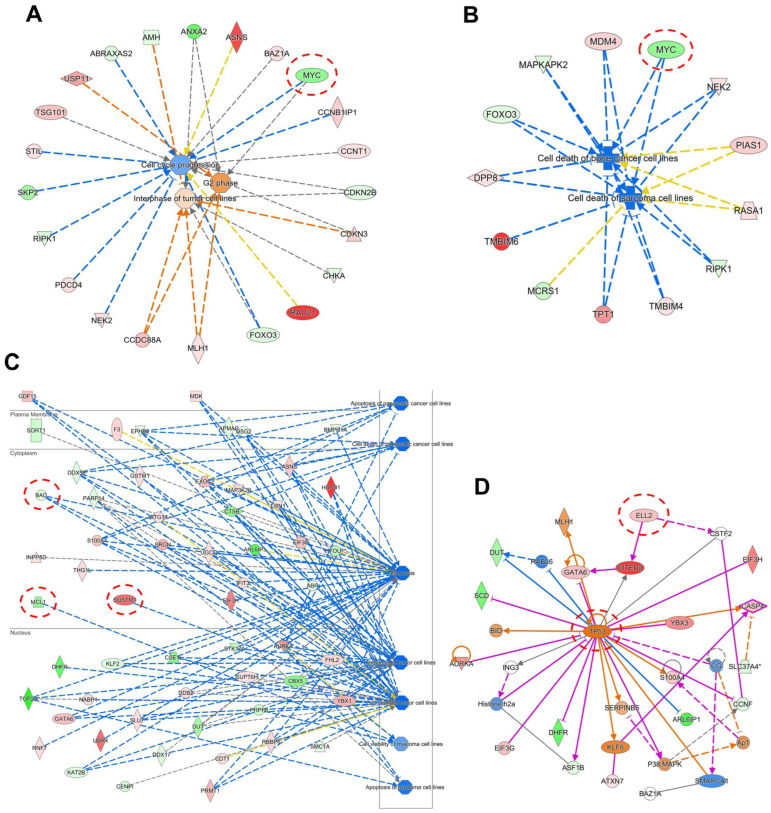
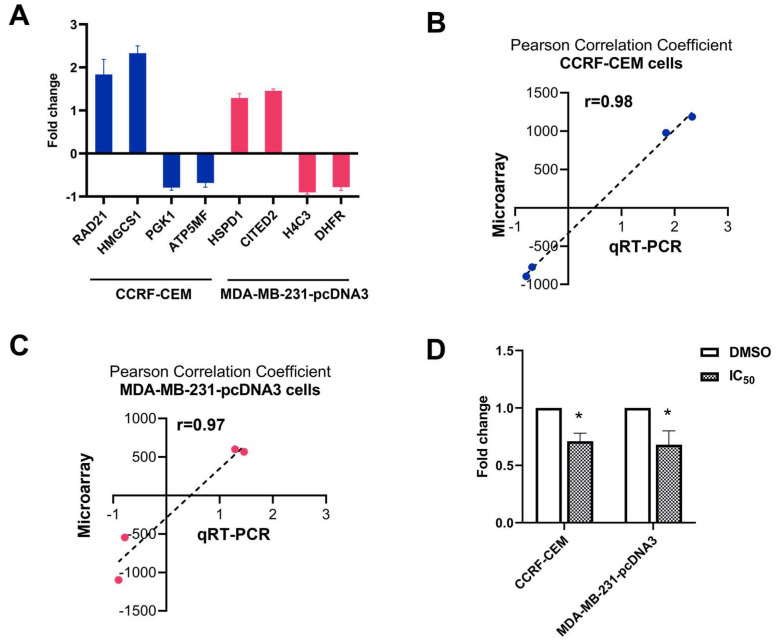
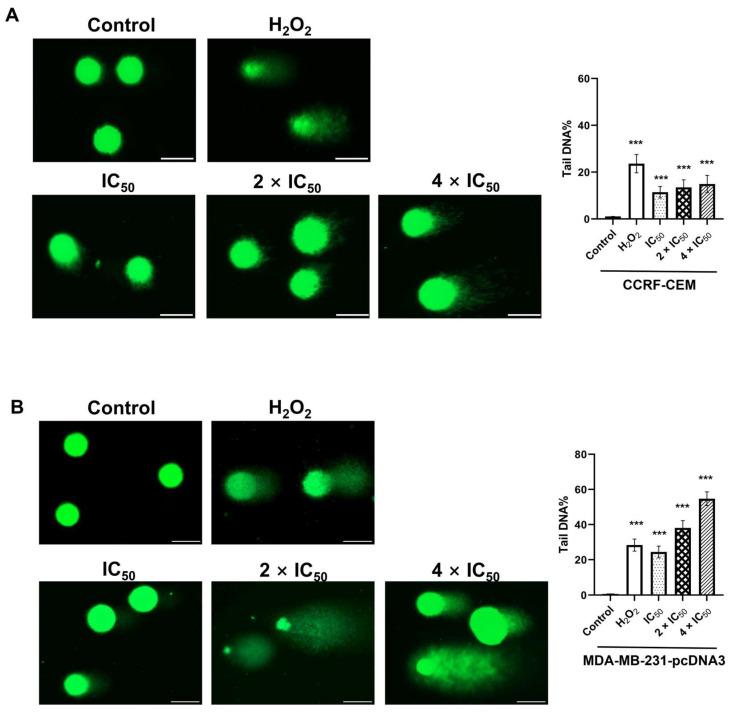
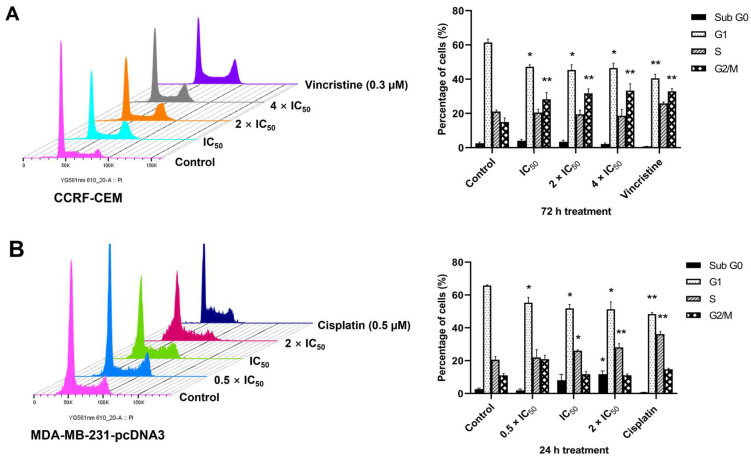
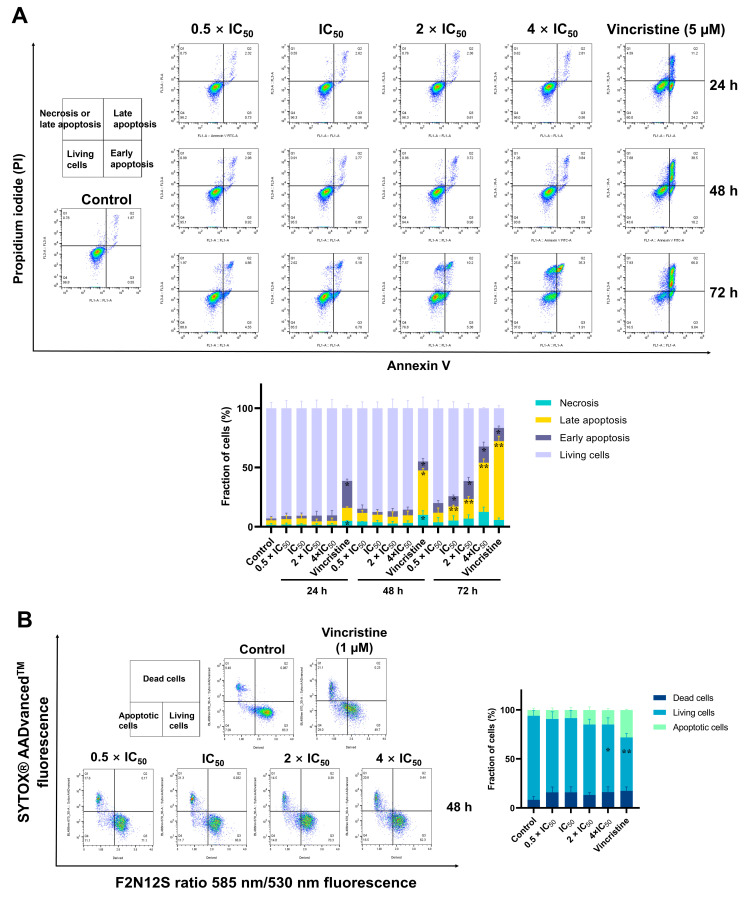
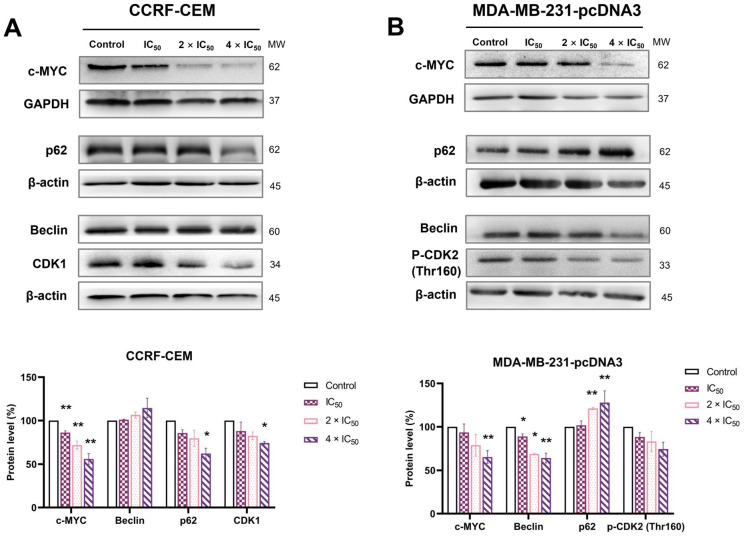
The oncogene regulates multiple cellular activities and is a potent driver of many highly aggressive human cancers, such as leukemia and triple-negative breast cancer. The oxadiazole class of compounds has gained increasing interest for its anticancer activities. The aim of this study was to investigate the molecular modes of action of a 1,2,4-oxadiazole derivative (ZINC15675948) as a c-MYC inhibitor. ZINC15675948 displayed profound cytotoxicity at the nanomolar range in CCRF-CEM leukemia and MDA-MB-231-pcDNA3 breast cancer cells. Multidrug-resistant sublines thereof (i.e., CEM/ADR5000 and MDA-MB-231-BCRP) were moderately cross-resistant to this compound (<10-fold). Molecular docking and microscale thermophoresis revealed a strong binding of ZINC15675948 to c-MYC by interacting close to the c-MYC/MAX interface. A c-MYC reporter assay demonstrated that ZINC15675948 inhibited c-MYC activity. Western blotting and qRT-PCR showed that c-MYC expression was downregulated by ZINC15675948. Applying microarray hybridization and signaling pathway analyses, ZINC15675948 affected signaling routes downstream of c-MYC in both leukemia and breast cancer cells as demonstrated by the induction of DNA damage using single cell gel electrophoresis (alkaline comet assay) and induction of apoptosis using flow cytometry. ZINC15675948 also caused G2/M phase and S phase arrest in CCRF-CEM cells and MDA-MB-231-pcDNA3 cells, respectively, accompanied by the downregulation of CDK1 and p-CDK2 expression using western blotting. Autophagy induction was observed in CCRF-CEM cells but not MDA-MB-231-pcDNA3 cells. Furthermore, microarray-based mRNA expression profiling indicated that ZINC15675948 may target c-MYC-regulated ubiquitination, since the novel ubiquitin ligase (ELL2) was upregulated in the absence of c-MYC expression. We propose that ZINC15675948 is a promising natural product-derived compound targeting c-MYC in c-MYC-driven cancers through DNA damage, cell cycle arrest, and apoptosis.
癌基因调节多种细胞活动,是许多高度侵袭性人类癌症(如白血病和三阴性乳腺癌)的强大驱动因素。恶二唑类化合物因其抗癌活性而受到越来越多的关注。本研究旨在研究 1,2,4-恶二唑衍生物(ZINC15675948)作为 c-MYC 抑制剂的分子作用模式。ZINC15675948 在 CCRF-CEM 白血病和 MDA-MB-231-pcDNA3 乳腺癌细胞中以纳摩尔范围显示出显著的细胞毒性。其多药耐药亚系(即 CEM/ADR5000 和 MDA-MB-231-BCRP)对该化合物的中度交叉耐药性(<10 倍)。分子对接和微量热泳法显示,ZINC15675948 通过与 c-MYC/MAX 界面附近相互作用,与 c-MYC 强烈结合。c-MYC 报告基因测定表明 ZINC15675948 抑制 c-MYC 活性。Western blot 和 qRT-PCR 显示 ZINC15675948 下调 c-MYC 表达。应用微阵列杂交和信号通路分析,ZINC15675948 如单细胞凝胶电泳(碱性彗星试验)所示,通过诱导 DNA 损伤和使用流式细胞术诱导细胞凋亡,影响白血病和乳腺癌细胞中 c-MYC 下游的信号通路。ZINC15675948 还分别导致 CCRF-CEM 细胞和 MDA-MB-231-pcDNA3 细胞的 G2/M 期和 S 期阻滞,并用 Western blot 检测到 CDK1 和 p-CDK2 表达下调。在 CCRF-CEM 细胞中观察到自噬诱导,但在 MDA-MB-231-pcDNA3 细胞中未观察到。此外,基于微阵列的 mRNA 表达谱分析表明,ZINC15675948 可能靶向 c-MYC 调节的泛素化,因为在缺乏 c-MYC 表达的情况下新型泛素连接酶(ELL2)上调。我们提出,ZINC15675948 是一种有前途的天然产物衍生化合物,通过 DNA 损伤、细胞周期阻滞和细胞凋亡靶向 c-MYC 驱动的癌症中的 c-MYC。