Medical Devices R&D Center, Gachon University Gil Medical Center, 21, 774 Beon-gil, Namdong-daero, Namdong-gu, Incheon 21565, Republic of Korea.
Department of Biomedical Engineering, College of Medicine, Gachon University, 38-13, 3 Beon-gil, Dokjom-ro 3, Namdong-gu, Incheon 21565, Republic of Korea.
Sensors (Basel). 2023 Jul 27;23(15):6722. doi: 10.3390/s23156722.
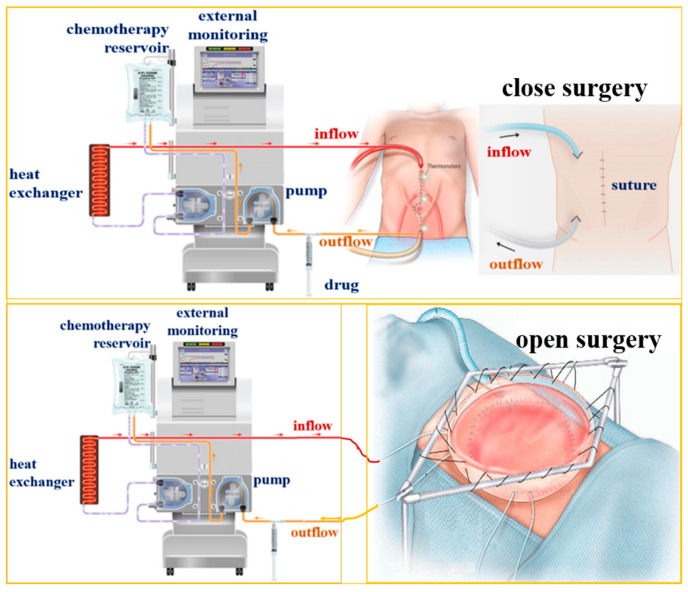
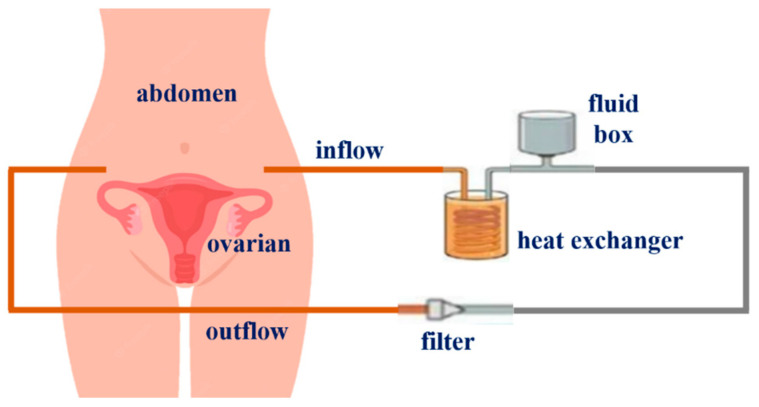
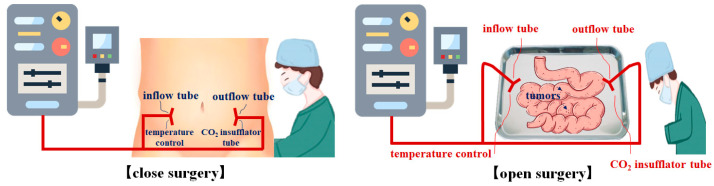
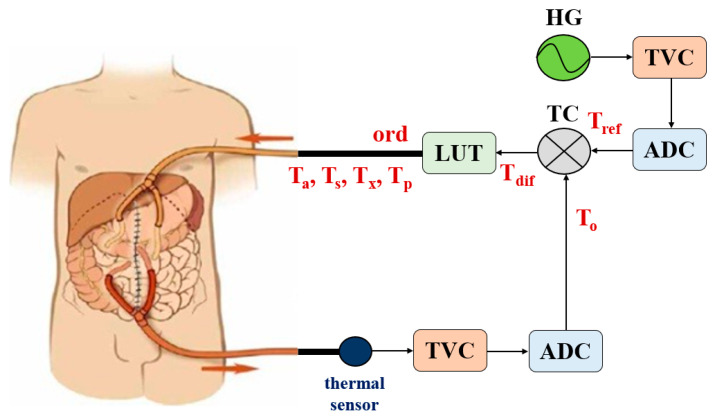
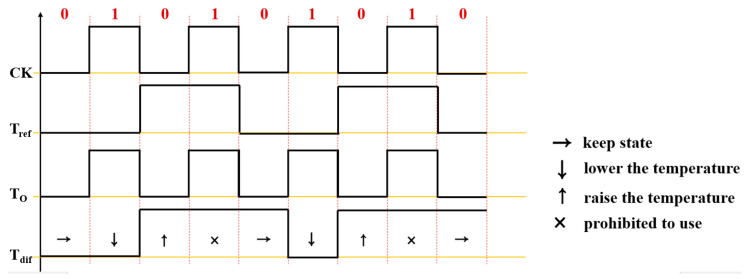
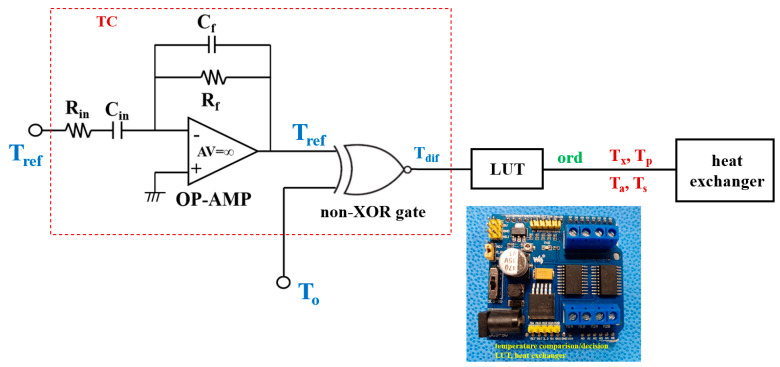
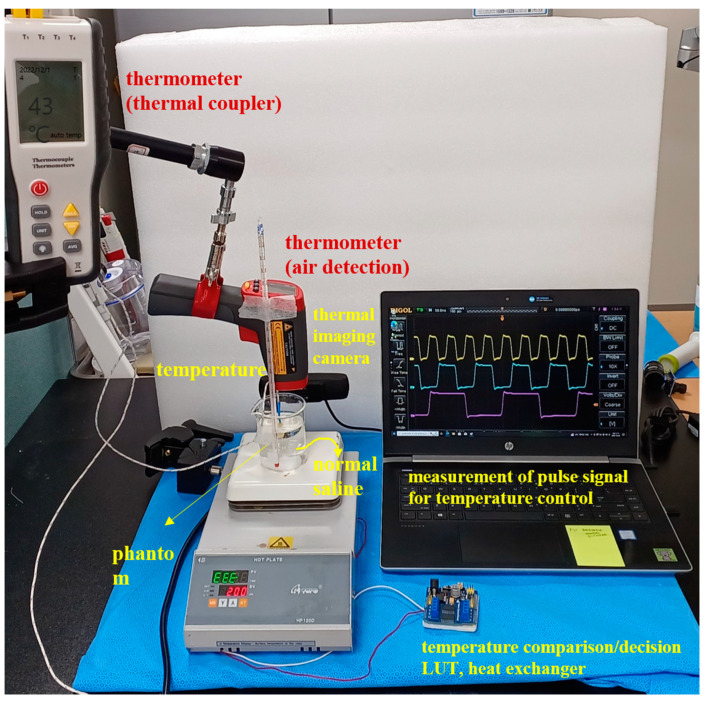
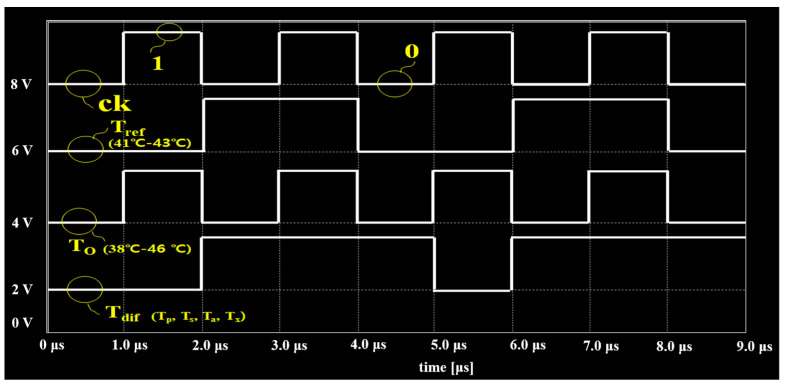
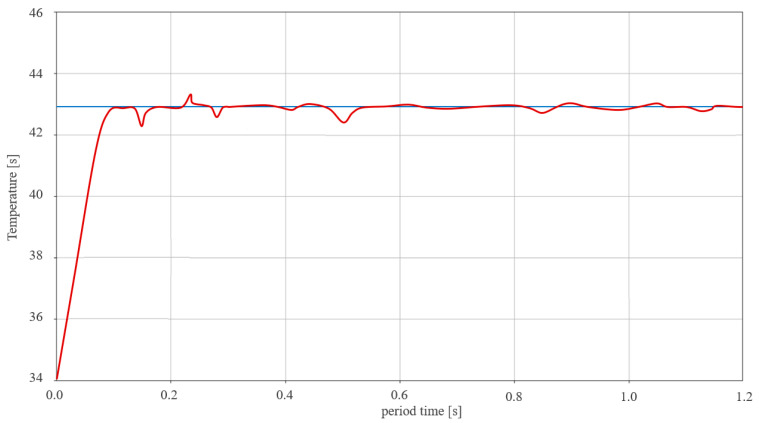
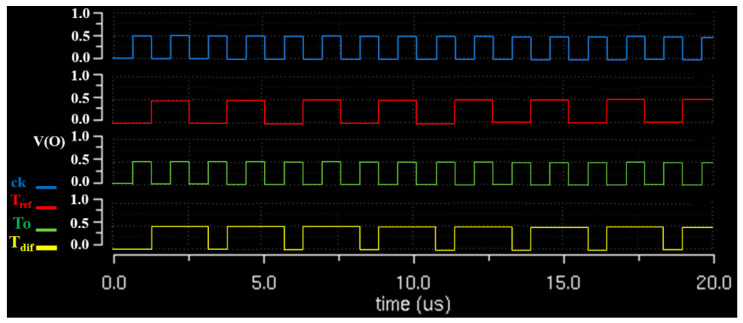
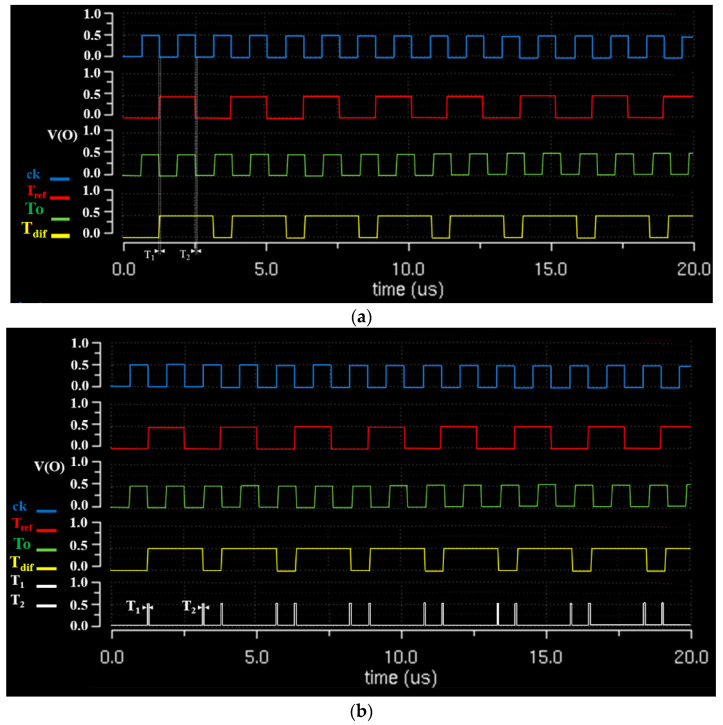
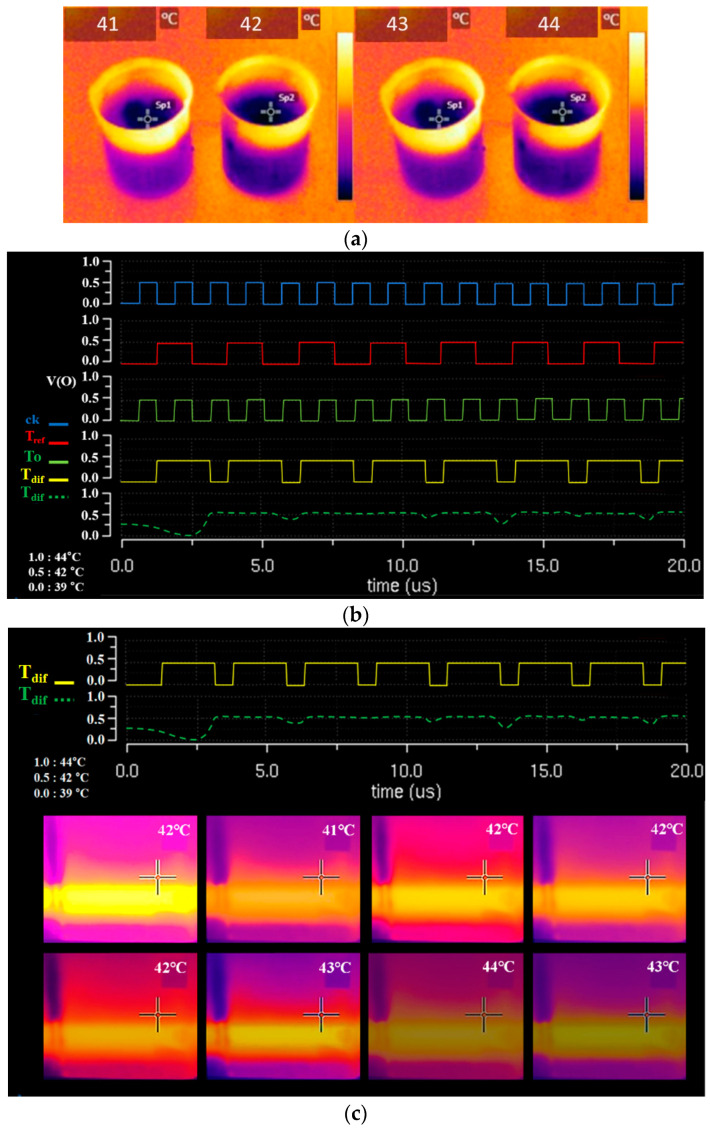
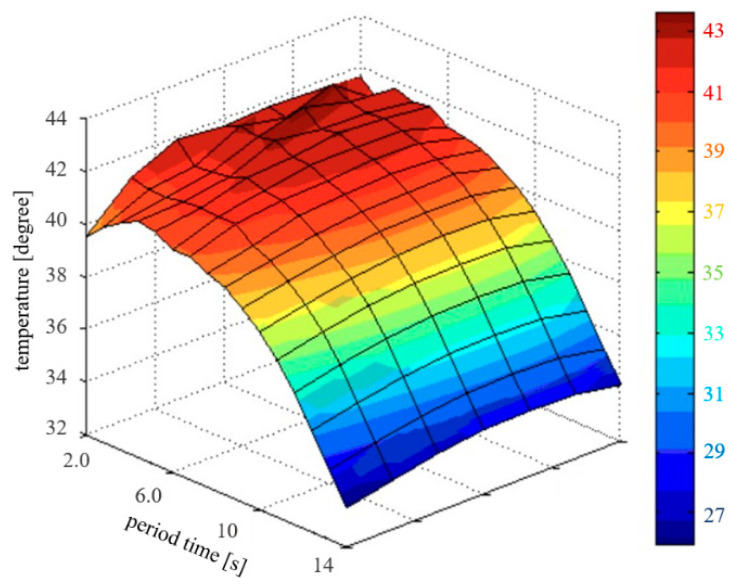
After surgery for ovarian cancer or colorectal cancer, residual tumors are left around. A practical way to treat residual tumors is to destroy them with heat by injecting high-temperature drugs into the abdominal cavity. The injected medicinal substances are induced to flow out of the abdominal cavity; then, the spilled drug flows back into the abdominal cavity through feedback. During this process, the heat starts to decrease; thus, the treatment performance reduces. To overcome this problem, this study compares and assesses the temperature needed to maintain the heat for treatment and transmits a command signal to the heat exchanger through a look-up table (LUT). When the temperature decreases during the circulation of medications leaking out of the abdominal cavity, the LUT transmits a control signal () to the heat exchanger, which increases or vice versa. However, if the temperature () is within the treatment range, the LUT sends a signal to the heat exchanger. This principle generates a pulse signal for the temperature difference () in TC by comparing and determining the temperature () of the substance flowing out of the abdominal cavity with the reference temperature () through the temperature comparator (TC). At this time, if the signal is 41 °C or less, the LUT generates (heats) a signal so that the temperature of the heat exchanger can be maintained in the range of 41 °C to 43 °C. If the is 44 °C or higher, the LUT generates (cools) the T signal and maintains the temperature of the heat exchanger at 41-43 °C. If the is maintained at 41-43 °C, the LUT generates a signal to stop the system performance. At this time, the TC operation performance and generation process for comparing and determining the signal of and for drugs leaking out of the abdominal cavity is very important. It was observed that the faster the response signal, the lower the comparison and judgment error was; therefore, the response signal was confirmed to be 0.209 μs. The proposed method can guarantee rapid/accurate/safe treatment and automatically induce temperature adjustment; thus, it could be applied to the field of surgery.
在卵巢癌或结直肠癌手术后,会在周围留下残余肿瘤。一种实用的治疗残余肿瘤的方法是通过向腹腔内注射高温药物来用热破坏它们。注入的药物被诱导流出腹腔;然后,溢出的药物通过反馈流回腹腔。在这个过程中,热量开始下降;因此,治疗效果降低。为了克服这个问题,本研究比较和评估了维持治疗所需的热量所需的温度,并通过查找表 (LUT) 将命令信号传输到热交换器。当药物从腹腔漏出循环时温度降低时,LUT 向热交换器发送控制信号 (),反之亦然。但是,如果温度 ()在治疗范围内,LUT 会向热交换器发送信号。该原理通过比较和确定流出腹腔的物质的温度 ()与参考温度 ()通过温度比较器 (TC) 来为 TC 中的温度差 () 生成脉冲信号。此时,如果信号为 41°C 或更低,LUT 生成 () 信号,以使热交换器的温度可以保持在 41°C 至 43°C 的范围内。如果 为 44°C 或更高,则 LUT 生成 () 信号并将热交换器的温度保持在 41-43°C。如果保持在 41-43°C,则 LUT 生成信号以停止系统性能。此时,对于比较和确定流出腹腔的药物的信号和的 TC 操作性能和生成过程非常重要。观察到响应信号越快,比较和判断误差越低;因此,确认响应信号为 0.209 μs。该方法可以保证快速/准确/安全的治疗,并自动进行温度调节;因此,它可以应用于手术领域。