Liberto Juliane M, Chen Sheng-Yin, Shih Ie-Ming, Wang Tza-Huei, Wang Tian-Li, Pisanic Thomas R
Department of Pathology, Johns Hopkins University School of Medicine, Baltimore, MD 21231, USA.
School of Medicine, Chang Gung University, 33302 Taoyuan, Taiwan.
Cancers (Basel). 2022 Jun 11;14(12):2885. doi: 10.3390/cancers14122885.
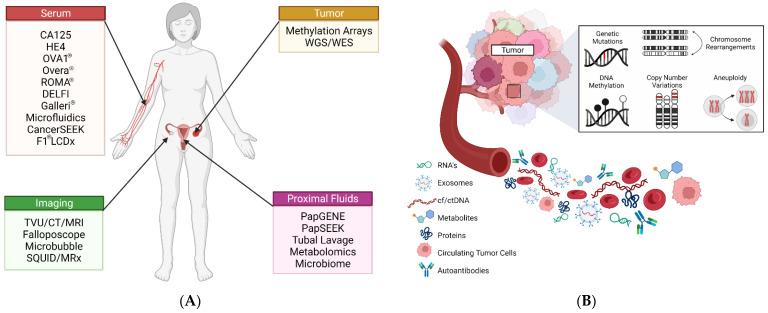
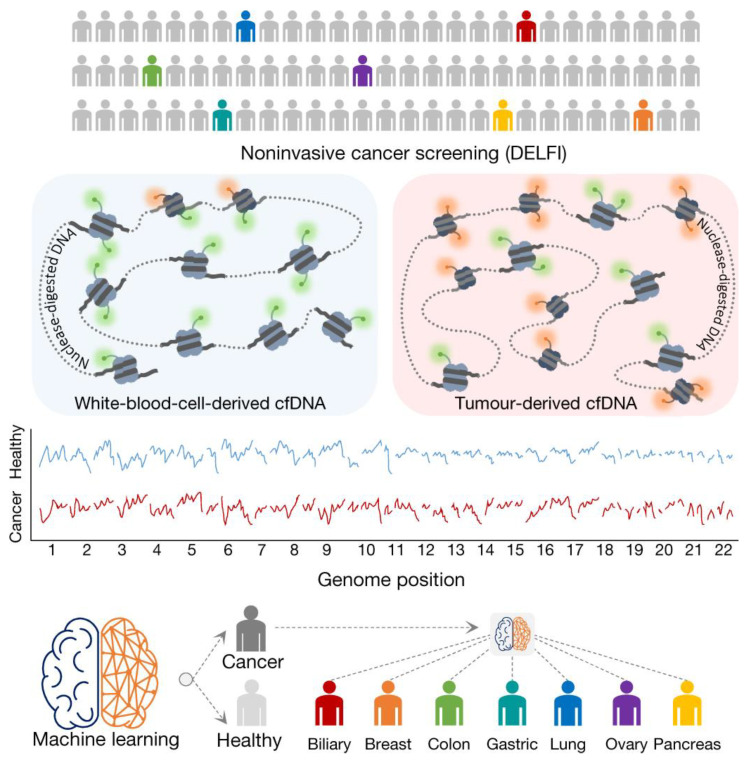
With a 5-year survival rate of less than 50%, ovarian high-grade serous carcinoma (HGSC) is one of the most highly aggressive gynecological malignancies affecting women today. The high mortality rate of HGSC is largely attributable to delays in diagnosis, as most patients remain undiagnosed until the late stages of -disease. There are currently no recommended screening tests for ovarian cancer and there thus remains an urgent need for new diagnostic methods, particularly those that can detect the disease at early stages when clinical intervention remains effective. While diagnostics for ovarian cancer share many of the same technical hurdles as for other cancer types, the low prevalence of the disease in the general population, coupled with a notable lack of sensitive and specific biomarkers, have made the development of a clinically useful screening strategy particularly challenging. Here, we present a detailed review of the overall landscape of ovarian cancer diagnostics, with emphasis on emerging methods that employ novel protein, genetic, epigenetic and imaging-based biomarkers and/or advanced diagnostic technologies for the noninvasive detection of HGSC, particularly in women at high risk due to germline mutations such as . Lastly, we discuss the translational potential of these approaches for achieving a clinically implementable solution for screening and diagnostics of early-stage ovarian cancer as a means of ultimately improving patient outcomes in both the general and high-risk populations.
卵巢高级别浆液性癌(HGSC)的5年生存率低于50%,是当今影响女性的侵袭性最强的妇科恶性肿瘤之一。HGSC的高死亡率在很大程度上归因于诊断延迟,因为大多数患者直到疾病晚期才被诊断出来。目前尚无推荐的卵巢癌筛查试验,因此迫切需要新的诊断方法,特别是那些能够在临床干预仍然有效的早期阶段检测出该疾病的方法。虽然卵巢癌的诊断与其他癌症类型有许多相同的技术障碍,但该疾病在普通人群中的低患病率,加上明显缺乏敏感和特异的生物标志物,使得开发一种临床上有用的筛查策略特别具有挑战性。在此,我们对卵巢癌诊断的整体情况进行详细综述,重点关注新兴方法,这些方法采用新型蛋白质、基因、表观遗传和基于成像的生物标志物和/或先进诊断技术用于HGSC的无创检测,特别是在因种系突变(如 )而处于高风险的女性中。最后,我们讨论这些方法在实现早期卵巢癌筛查和诊断的临床可实施解决方案方面的转化潜力,以此作为最终改善普通人群和高风险人群患者预后的一种手段。