• 文献检索
  • 文档翻译
  • 深度研究
  • 学术资讯
  • Suppr Zotero 插件Zotero 插件
  • 邀请有礼
  • 套餐&价格
  • 历史记录
应用&插件
Suppr Zotero 插件Zotero 插件浏览器插件Mac 客户端Windows 客户端微信小程序
定价
高级版会员购买积分包购买API积分包
服务
文献检索文档翻译深度研究API 文档MCP 服务
关于我们
关于 Suppr公司介绍联系我们用户协议隐私条款
关注我们

Suppr 超能文献

核心技术专利:CN118964589B侵权必究
粤ICP备2023148730 号-1Suppr @ 2026

文献检索

告别复杂PubMed语法,用中文像聊天一样搜索,搜遍4000万医学文献。AI智能推荐,让科研检索更轻松。

立即免费搜索

文件翻译

保留排版,准确专业,支持PDF/Word/PPT等文件格式,支持 12+语言互译。

免费翻译文档

深度研究

AI帮你快速写综述,25分钟生成高质量综述,智能提取关键信息,辅助科研写作。

立即免费体验

比较爵士乐演奏者身体动作的同步性与他们的情绪。

Comparing Synchronicity in Body Movement among Jazz Musicians with Their Emotions.

机构信息

MIT Center for Collective Intelligence, Cambridge, MA 02142, USA.

Shanti Music Productions Renold & Co., 5012 Schönenwerd, Switzerland.

出版信息

Sensors (Basel). 2023 Jul 29;23(15):6789. doi: 10.3390/s23156789.

DOI:10.3390/s23156789
PMID:37571571
原文链接:https://pmc.ncbi.nlm.nih.gov/articles/PMC10422624/
Abstract

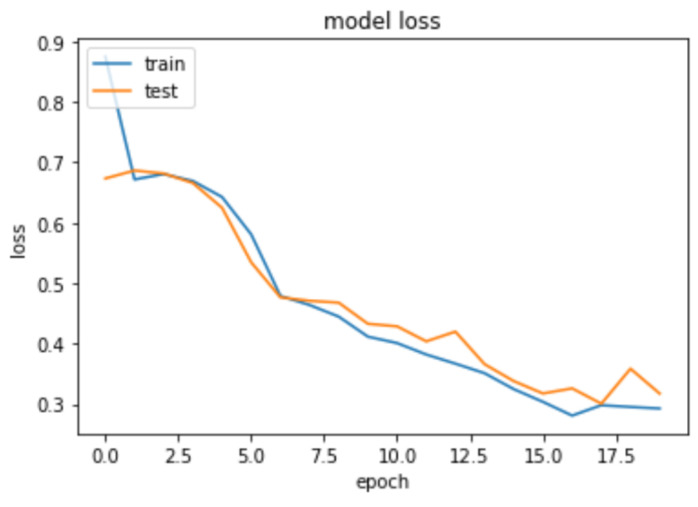
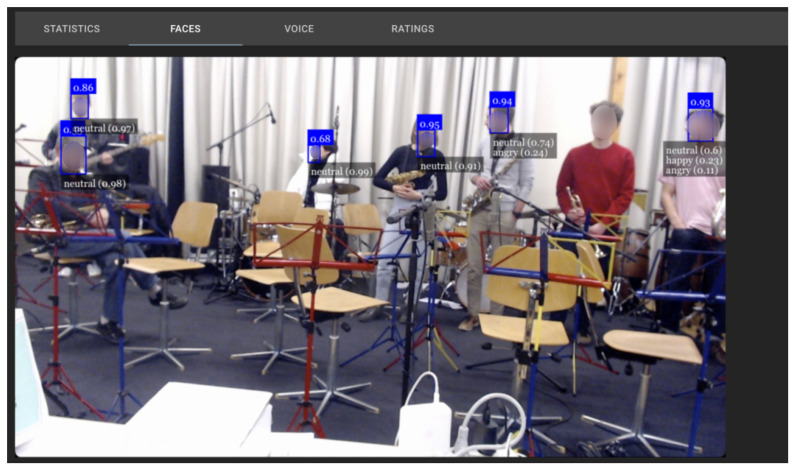
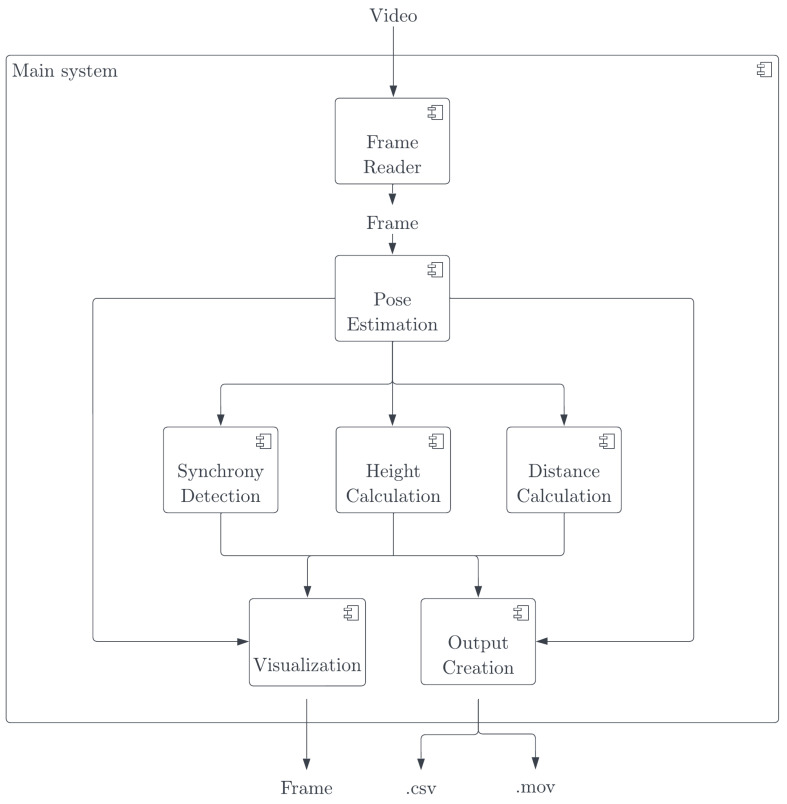
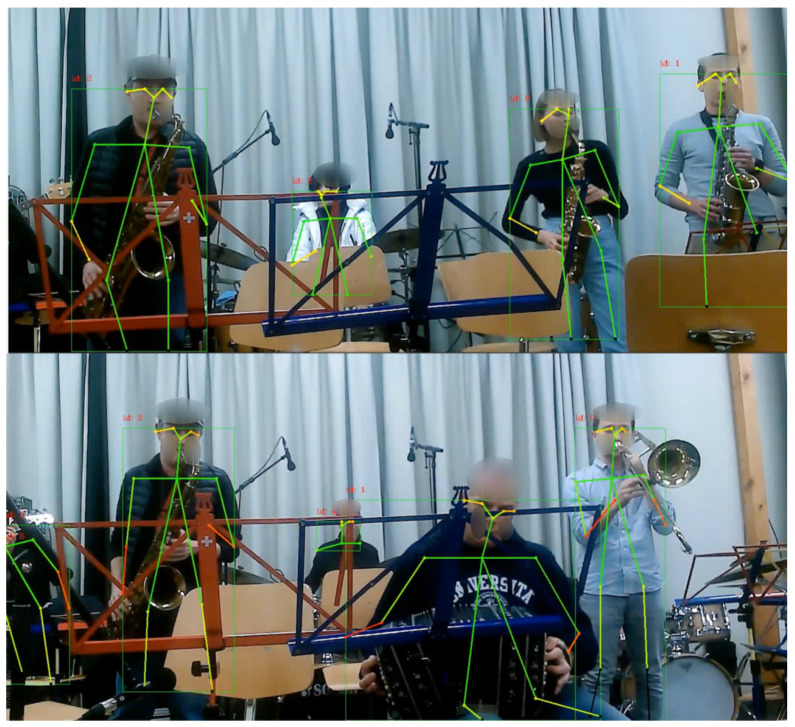
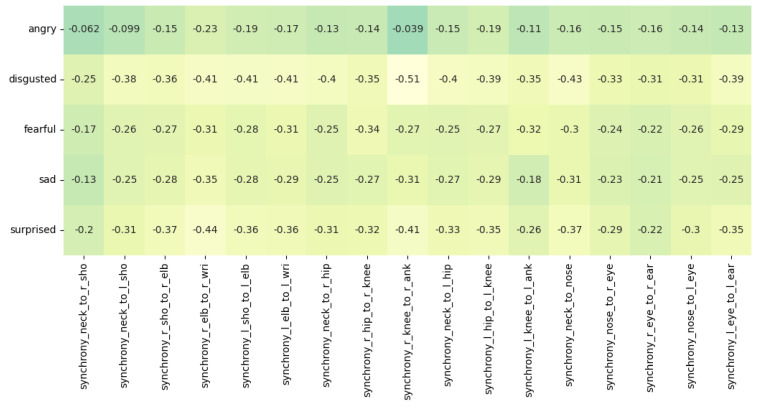
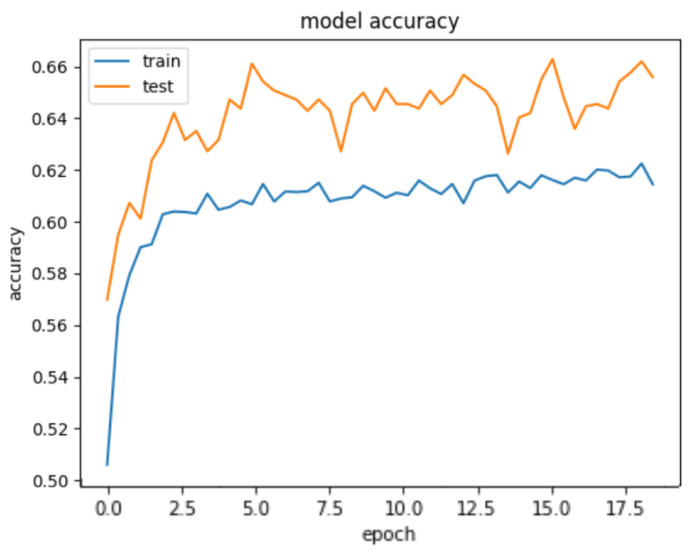
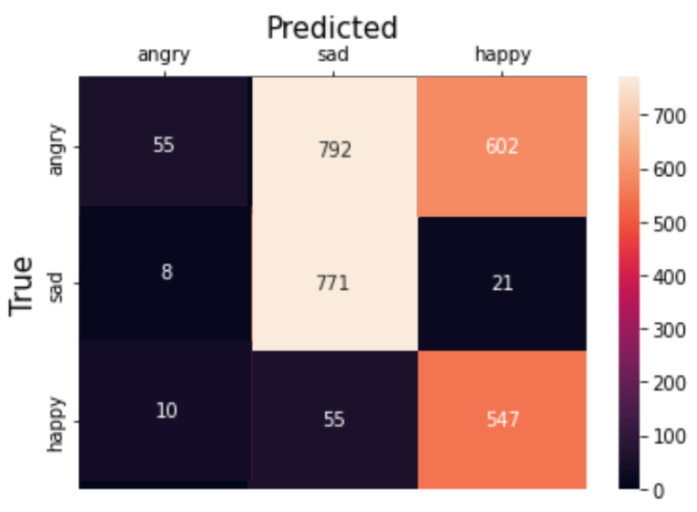
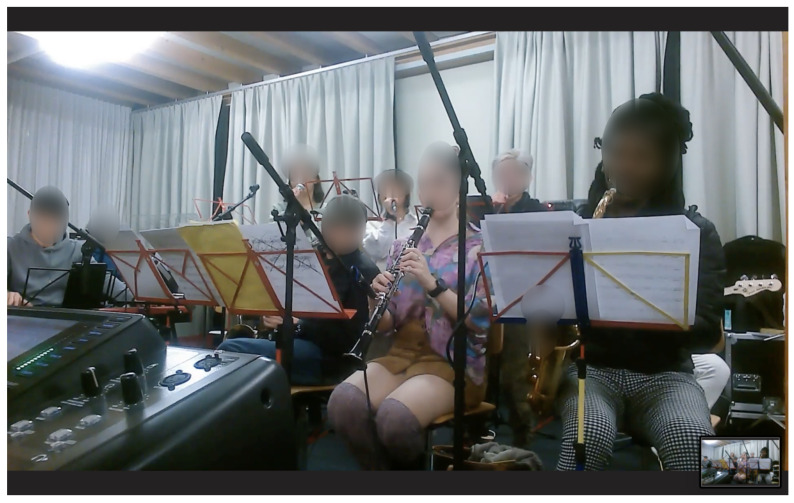
This paper presents novel preliminary research that investigates the relationship between the flow of a group of jazz musicians, quantified through multi-person pose synchronization, and their collective emotions. We have developed a real-time software to calculate the physical synchronicity of team members by tracking the difference in arm, leg, and head movements using Lightweight OpenPose. We employ facial expression recognition to evaluate the musicians' collective emotions. Through correlation and regression analysis, we establish that higher levels of synchronized body and head movements correspond to lower levels of disgust, anger, sadness, and higher levels of joy among the musicians. Furthermore, we utilize 1-D CNNs to predict the collective emotions of the musicians. The model leverages 17 body synchrony keypoint vectors as features, resulting in a training accuracy of 61.47% and a test accuracy of 66.17%.

摘要

本文提出了一项新颖的初步研究,旨在调查通过多人姿态同步量化的一群爵士音乐家的流动与他们的集体情绪之间的关系。我们已经开发了一个实时软件,通过使用 Lightweight OpenPose 跟踪手臂、腿部和头部运动的差异来计算团队成员的身体同步性。我们采用面部表情识别来评估音乐家的集体情绪。通过相关和回归分析,我们确定更高水平的身体和头部运动同步性与音乐家的更低水平的厌恶、愤怒、悲伤和更高水平的喜悦相对应。此外,我们利用 1-D CNN 来预测音乐家的集体情绪。该模型利用 17 个身体同步关键点向量作为特征,训练准确率为 61.47%,测试准确率为 66.17%。
https://cdn.ncbi.nlm.nih.gov/pmc/blobs/bb98/10422624/91930e594bea/sensors-23-06789-g013.jpg
https://cdn.ncbi.nlm.nih.gov/pmc/blobs/bb98/10422624/0d325ae9772b/sensors-23-06789-g001.jpg
https://cdn.ncbi.nlm.nih.gov/pmc/blobs/bb98/10422624/20514f4deb78/sensors-23-06789-g002.jpg
https://cdn.ncbi.nlm.nih.gov/pmc/blobs/bb98/10422624/125d51f5ae0d/sensors-23-06789-g003.jpg
https://cdn.ncbi.nlm.nih.gov/pmc/blobs/bb98/10422624/404a20024fbc/sensors-23-06789-g004.jpg
https://cdn.ncbi.nlm.nih.gov/pmc/blobs/bb98/10422624/ada4ac6a7b3c/sensors-23-06789-g005.jpg
https://cdn.ncbi.nlm.nih.gov/pmc/blobs/bb98/10422624/f71ecc0c48df/sensors-23-06789-g006.jpg
https://cdn.ncbi.nlm.nih.gov/pmc/blobs/bb98/10422624/097b3b8ab86b/sensors-23-06789-g007.jpg
https://cdn.ncbi.nlm.nih.gov/pmc/blobs/bb98/10422624/fdac2e30867d/sensors-23-06789-g008.jpg
https://cdn.ncbi.nlm.nih.gov/pmc/blobs/bb98/10422624/60193990a94a/sensors-23-06789-g009.jpg
https://cdn.ncbi.nlm.nih.gov/pmc/blobs/bb98/10422624/c5604507b580/sensors-23-06789-g010.jpg
https://cdn.ncbi.nlm.nih.gov/pmc/blobs/bb98/10422624/943fb3abb88e/sensors-23-06789-g011.jpg
https://cdn.ncbi.nlm.nih.gov/pmc/blobs/bb98/10422624/d996d3c21337/sensors-23-06789-g012.jpg
https://cdn.ncbi.nlm.nih.gov/pmc/blobs/bb98/10422624/91930e594bea/sensors-23-06789-g013.jpg
https://cdn.ncbi.nlm.nih.gov/pmc/blobs/bb98/10422624/0d325ae9772b/sensors-23-06789-g001.jpg
https://cdn.ncbi.nlm.nih.gov/pmc/blobs/bb98/10422624/20514f4deb78/sensors-23-06789-g002.jpg
https://cdn.ncbi.nlm.nih.gov/pmc/blobs/bb98/10422624/125d51f5ae0d/sensors-23-06789-g003.jpg
https://cdn.ncbi.nlm.nih.gov/pmc/blobs/bb98/10422624/404a20024fbc/sensors-23-06789-g004.jpg
https://cdn.ncbi.nlm.nih.gov/pmc/blobs/bb98/10422624/ada4ac6a7b3c/sensors-23-06789-g005.jpg
https://cdn.ncbi.nlm.nih.gov/pmc/blobs/bb98/10422624/f71ecc0c48df/sensors-23-06789-g006.jpg
https://cdn.ncbi.nlm.nih.gov/pmc/blobs/bb98/10422624/097b3b8ab86b/sensors-23-06789-g007.jpg
https://cdn.ncbi.nlm.nih.gov/pmc/blobs/bb98/10422624/fdac2e30867d/sensors-23-06789-g008.jpg
https://cdn.ncbi.nlm.nih.gov/pmc/blobs/bb98/10422624/60193990a94a/sensors-23-06789-g009.jpg
https://cdn.ncbi.nlm.nih.gov/pmc/blobs/bb98/10422624/c5604507b580/sensors-23-06789-g010.jpg
https://cdn.ncbi.nlm.nih.gov/pmc/blobs/bb98/10422624/943fb3abb88e/sensors-23-06789-g011.jpg
https://cdn.ncbi.nlm.nih.gov/pmc/blobs/bb98/10422624/d996d3c21337/sensors-23-06789-g012.jpg
https://cdn.ncbi.nlm.nih.gov/pmc/blobs/bb98/10422624/91930e594bea/sensors-23-06789-g013.jpg

相似文献

1
Comparing Synchronicity in Body Movement among Jazz Musicians with Their Emotions.比较爵士乐演奏者身体动作的同步性与他们的情绪。
Sensors (Basel). 2023 Jul 29;23(15):6789. doi: 10.3390/s23156789.
2
Differential audiovisual information processing in emotion recognition: An eye-tracking study.情绪识别中的视听信息处理差异:一项眼动研究。
Emotion. 2023 Jun;23(4):1028-1039. doi: 10.1037/emo0001144. Epub 2022 Aug 18.
3
Putting "context" in context: The effects of body posture and emotion scene on adult categorizations of disgust facial expressions.从语境到语境:身体姿势和情绪场景对成人厌恶面部表情分类的影响。
Emotion. 2018 Feb;18(1):153-158. doi: 10.1037/emo0000350. Epub 2017 Jul 17.
4
Four-layer ConvNet to facial emotion recognition with minimal epochs and the significance of data diversity.四层卷积神经网络,使用最少的 epoch 进行面部情绪识别,以及数据多样性的重要性。
Sci Rep. 2022 Apr 28;12(1):6991. doi: 10.1038/s41598-022-11173-0.
5
Early Maladaptive Schemas and the Accuracy of Facial Emotion Recognition: A Preliminary Investigation.早期适应不良模式与面部情绪识别的准确性:初步研究。
Psychol Rep. 2023 Aug;126(4):1585-1604. doi: 10.1177/00332941221075248. Epub 2022 Mar 2.
6
Facial Emotion Recognition and Expression in Parkinson's Disease: An Emotional Mirror Mechanism?帕金森病中的面部情绪识别与表达:一种情绪镜像机制?
PLoS One. 2017 Jan 9;12(1):e0169110. doi: 10.1371/journal.pone.0169110. eCollection 2017.
7
Developmental eye movement strategies for decoding facial expressions of emotion.发展性眼球运动策略解码情绪的面部表情。
J Exp Child Psychol. 2023 May;229:105622. doi: 10.1016/j.jecp.2022.105622. Epub 2023 Jan 13.
8
Not on the face alone: perception of contextualized face expressions in Huntington's disease.不仅仅局限于面部:亨廷顿舞蹈症中情境化面部表情的感知
Brain. 2009 Jun;132(Pt 6):1633-44. doi: 10.1093/brain/awp067. Epub 2009 May 18.
9
Perceptual learning and recognition confusion reveal the underlying relationships among the six basic emotions.知觉学习与识别混淆揭示了六种基本情绪之间的潜在关系。
Cogn Emot. 2019 Jun;33(4):754-767. doi: 10.1080/02699931.2018.1491831. Epub 2018 Jun 30.
10
Beyond disgust: impaired recognition of negative emotions prior to diagnosis in Huntington's disease.超越厌恶:亨廷顿舞蹈症诊断前对负面情绪的识别受损
Brain. 2007 Jul;130(Pt 7):1732-44. doi: 10.1093/brain/awm107.

本文引用的文献

1
Beyond collective intelligence: Collective adaptation.超越集体智慧:集体适应。
J R Soc Interface. 2023 Mar;20(200):20220736. doi: 10.1098/rsif.2022.0736. Epub 2023 Mar 22.
2
Time-series analysis with smoothed Convolutional Neural Network.使用平滑卷积神经网络的时间序列分析。
J Big Data. 2022;9(1):44. doi: 10.1186/s40537-022-00599-y. Epub 2022 Apr 26.
3
Liking as a balance between synchronization, complexity and novelty.喜欢是同步性、复杂性和新颖性之间的平衡。
Sci Rep. 2022 Feb 24;12(1):3181. doi: 10.1038/s41598-022-06610-z.
4
Recognition of Emotion Intensities Using Machine Learning Algorithms: A Comparative Study.基于机器学习算法的情感强度识别:一项比较研究。
Sensors (Basel). 2019 Apr 21;19(8):1897. doi: 10.3390/s19081897.
5
Sequential effects in Olympic synchronized diving scores.奥运会双人跳水分数中的顺序效应。
R Soc Open Sci. 2017 Jan 25;4(1):160812. doi: 10.1098/rsos.160812. eCollection 2017 Jan.
6
Geometric feature-based facial expression recognition in image sequences using multi-class AdaBoost and support vector machines.基于几何特征的多类 AdaBoost 和支持向量机的图像序列表情识别。
Sensors (Basel). 2013 Jun 14;13(6):7714-34. doi: 10.3390/s130607714.
7
The organizational neurodynamics of teams.团队的组织神经动力学
Nonlinear Dynamics Psychol Life Sci. 2013 Jan;17(1):67-86.
8
Interpersonal body and neural synchronization as a marker of implicit social interaction.人际身体和神经同步作为隐性社会互动的标志物。
Sci Rep. 2012;2:959. doi: 10.1038/srep00959. Epub 2012 Dec 11.
9
Physiological compliance and team performance.生理顺应性和团队表现。
Appl Ergon. 2009 Nov;40(6):997-1003. doi: 10.1016/j.apergo.2009.02.002. Epub 2009 Mar 9.
10
Recognizing emotions expressed by body pose: a biologically inspired neural model.识别身体姿势所表达的情绪:一种受生物启发的神经模型。
Neural Netw. 2008 Nov;21(9):1238-46. doi: 10.1016/j.neunet.2008.05.003. Epub 2008 Jun 27.