Farcas Adriana, Christi Praise, Iftene Felicia
Queen's University, Providence Care Hospital, Kingston, Ontario, Canada.
Compr Psychoneuroendocrinol. 2023 Jul 13;15:100192. doi: 10.1016/j.cpnec.2023.100192. eCollection 2023 Aug.
With a complex etiology and chronic, disabling evolution, schizophrenia continues to represent a challenge for patients, clinicians, and researchers alike. Recent emphasis in research on finding practical blood-based biomarkers for diagnosis improvement, disease development prediction, and therapeutic response monitoring in schizophrenia, led to studies aiming at elucidating a connection between stress and inflammation markers.
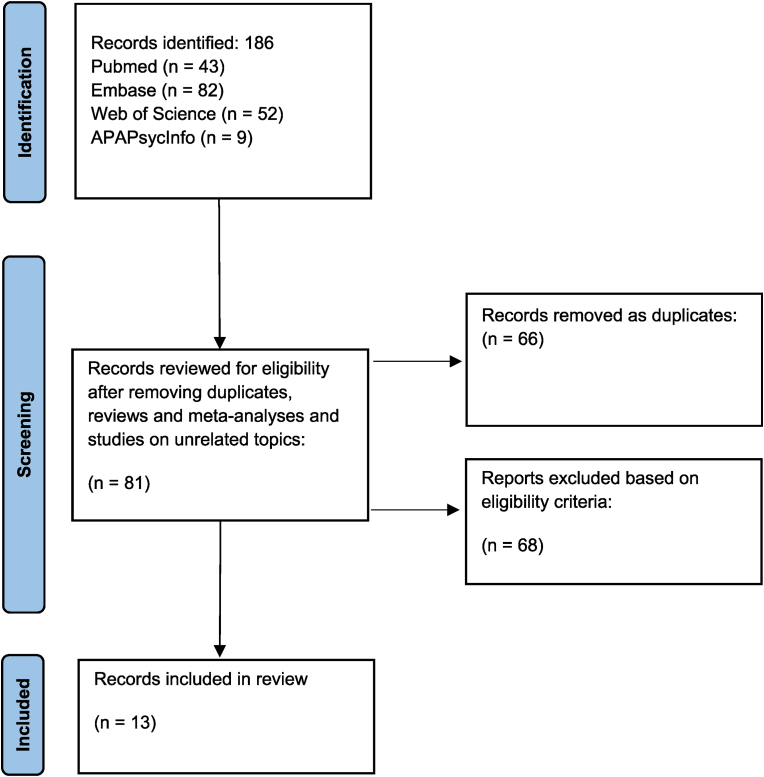
We set here to explore recent literature aiming to understand the connection between cytokines and cortisol level changes in individuals with schizophrenia and their potential relevance as markers of clinical improvement under treatment. A search was completed in Pubmed, Embase, Web of Science, and APAPsycInfo databases with search terms: (cytokines) AND (cortisol) AND (schizophrenia). This provided 43 results from Pubmed, 82 results from Embase, 52 results from Web of Science, and 9 results from APA PsycInfo. After removing articles not fitting the criteria, 13 articles were selected.
While all studies included assess cortisol levels in individuals with schizophrenia, most of them included a healthy control group for comparisons there is diversity in the inflammation markers assessed - the most frequent being the IL-2, IL-4, IL-6, IL-8, and TNF-α. Eleven of the 13 studies compare stress and inflammatory markers in individuals with schizophrenia to healthy controls, one study compares two subgroups of patients with schizophrenia, and one study compares pre- and post-measures in the same group of individuals with schizophrenia.
The focus of the studies within the topic is diverse. Many of the selected studies found correlations between cortisol and inflammation markers, however, the direction of correlation and inflammatory markers included differed. A variety of mechanisms behind cortisol and immunological changes associated with schizophrenia were considered. Evidence was found in these studies to suggest that biological immune and stress markers may be associated with clinical improvement in participants with schizophrenia, however, the exact mechanisms remain to be determined.
由于病因复杂且呈慢性致残性进展,精神分裂症对患者、临床医生和研究人员来说仍然是一个挑战。近期研究重点在于寻找实用的血液生物标志物,以改善精神分裂症的诊断、预测疾病发展及监测治疗反应,这促使了旨在阐明应激与炎症标志物之间联系的研究。
我们在此探索近期文献,旨在了解精神分裂症患者细胞因子与皮质醇水平变化之间的联系及其作为治疗中临床改善标志物的潜在相关性。在PubMed、Embase、科学网和美国心理学会心理学文摘数据库中进行检索,检索词为:(细胞因子)AND(皮质醇)AND(精神分裂症)。这在PubMed中提供了43条结果,在Embase中提供了82条结果,在科学网中提供了52条结果,在美国心理学会心理学文摘数据库中提供了9条结果。在剔除不符合标准的文章后,选择了13篇文章。
虽然所有研究都包括评估精神分裂症患者的皮质醇水平,但大多数研究纳入了健康对照组进行比较,所评估的炎症标志物存在差异——最常见的是白细胞介素-2、白细胞介素-4、白细胞介素-6、白细胞介素-8和肿瘤坏死因子-α。13项研究中的11项将精神分裂症患者的应激和炎症标志物与健康对照组进行比较,1项研究比较了精神分裂症患者的两个亚组,1项研究比较了同一组精神分裂症患者的测量前后结果。
该主题内研究的重点各不相同。许多所选研究发现皮质醇与炎症标志物之间存在相关性,然而,相关方向和所包括的炎症标志物有所不同。考虑了与精神分裂症相关的皮质醇和免疫变化背后的多种机制。这些研究中有证据表明,生物免疫和应激标志物可能与精神分裂症患者的临床改善有关,然而,确切机制仍有待确定。