Institute of Microbiology & Infection and School of Biosciences, University of Birmingham, Edgbaston, Birmingham, B15 2TT, United Kingdom.
School of Biomedical Sciences, Faculty of Health, University of Plymouth, Plymouth, United Kingdom.
Nat Commun. 2023 Aug 14;14(1):4895. doi: 10.1038/s41467-023-40635-w.
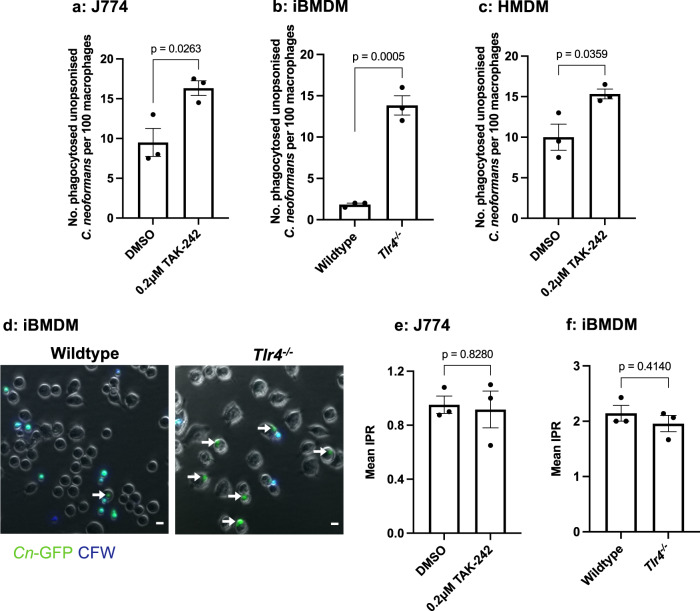
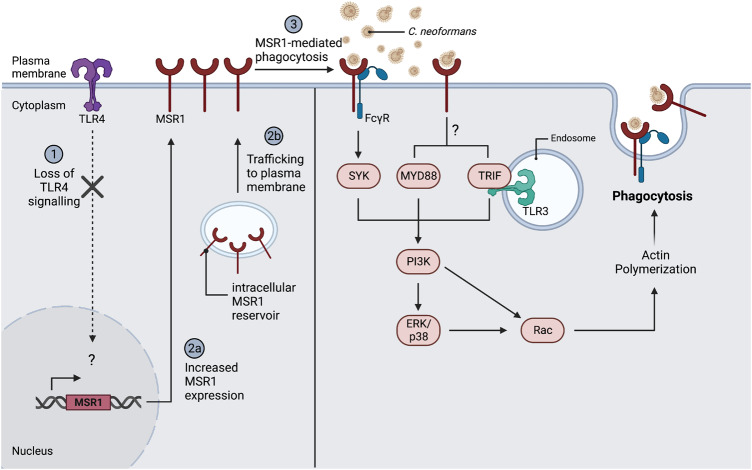
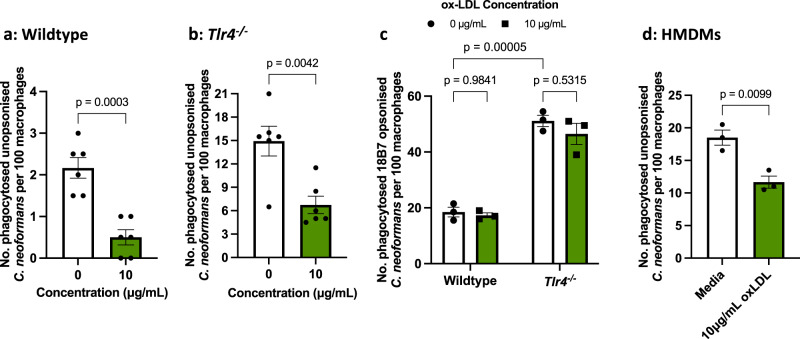
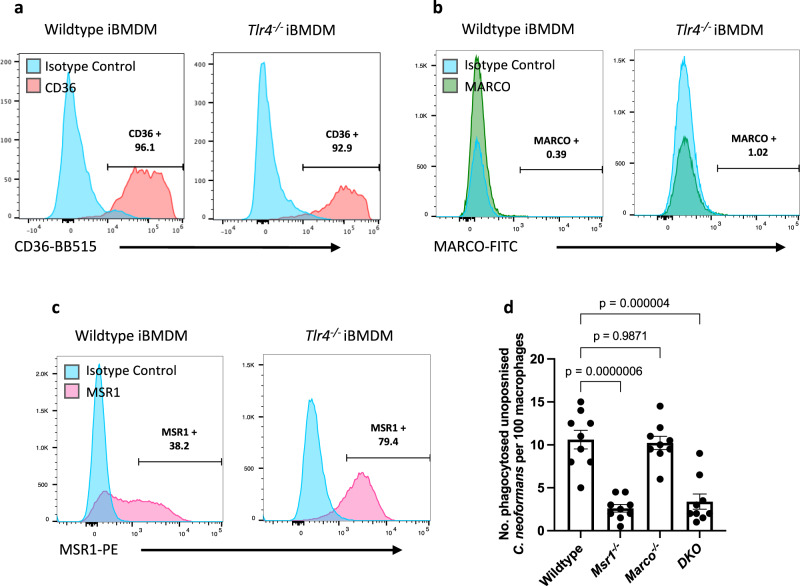
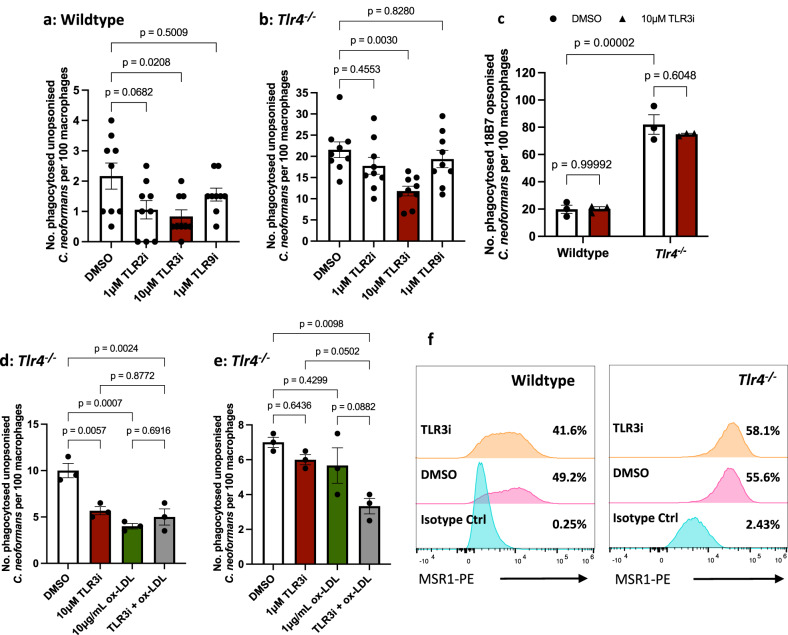
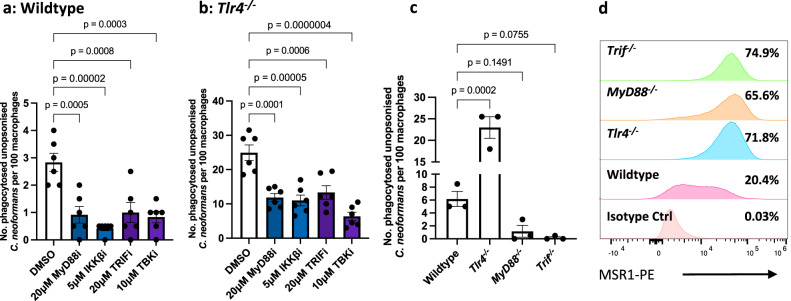
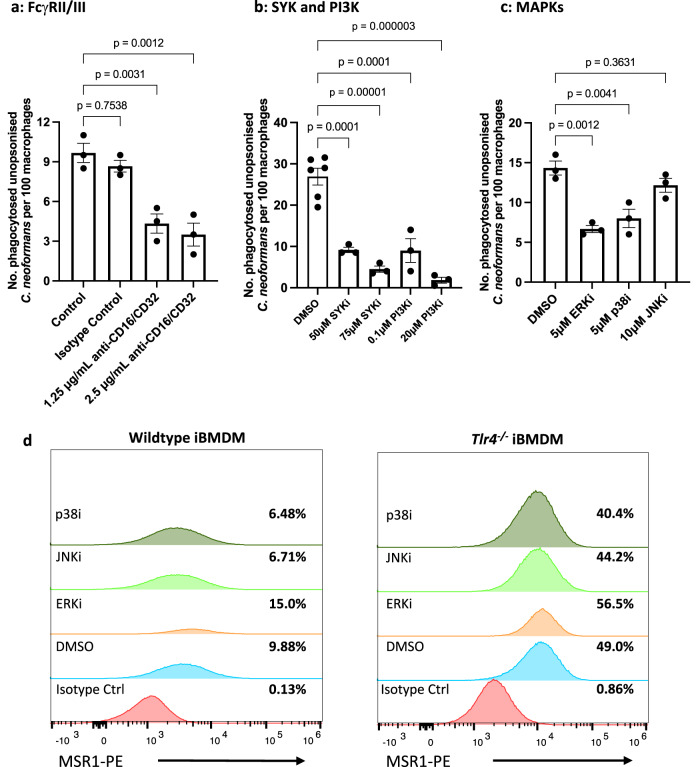
The opportunistic fungal pathogen Cryptococcus neoformans causes lethal infections in immunocompromised patients. Macrophages are central to the host response to cryptococci; however, it is unclear how C. neoformans is recognised and phagocytosed by macrophages. Here we investigate the role of TLR4 in the non-opsonic phagocytosis of C. neoformans. We find that loss of TLR4 function unexpectedly increases phagocytosis of non-opsonised cryptococci by murine and human macrophages. The increased phagocytosis observed in Tlr4 cells was dampened by pre-treatment of macrophages with oxidised-LDL, a known ligand of scavenger receptors. The scavenger receptor, macrophage scavenger receptor 1 (MSR1) (also known as SR-A1 or CD204) was upregulated in Tlr4 macrophages. Genetic ablation of MSR1 resulted in a 75% decrease in phagocytosis of non-opsonised cryptococci, strongly suggesting that it is a key non-opsonic receptor for this pathogen. We go on to show that MSR1-mediated uptake likely involves the formation of a multimolecular signalling complex involving FcγR leading to SYK, PI3K, p38 and ERK1/2 activation to drive actin remodelling and phagocytosis. Altogether, our data indicate a hitherto unidentified role for TLR4/MSR1 crosstalk in the non-opsonic phagocytosis of C. neoformans.
机会致病真菌病原体新生隐球菌在免疫功能低下的患者中引起致命感染。巨噬细胞是宿主对隐球菌反应的核心;然而,新生隐球菌如何被巨噬细胞识别和吞噬仍不清楚。在这里,我们研究了 TLR4 在非调理吞噬新生隐球菌中的作用。我们发现,TLR4 功能丧失出人意料地增加了鼠和人巨噬细胞对未调理的隐球菌的吞噬作用。在巨噬细胞中用氧化型 LDL(已知的清道夫受体配体)预处理可减弱 Tlr4 细胞中观察到的吞噬作用。TLR4 巨噬细胞中清道夫受体,巨噬细胞清道夫受体 1(MSR1)(也称为 SR-A1 或 CD204)上调。MSR1 的基因缺失导致未调理的隐球菌吞噬作用降低了 75%,强烈表明它是该病原体的关键非调理受体。我们继续表明,MSR1 介导的摄取可能涉及形成涉及 FcγR 的多分子信号复合物,导致 SYK、PI3K、p38 和 ERK1/2 激活以驱动肌动蛋白重塑和吞噬作用。总之,我们的数据表明 TLR4/MSR1 相互作用在新生隐球菌的非调理吞噬作用中具有以前未知的作用。