Department of Neurology, Xiangya Hospital, Central South University, 87# Xiangya Road, Changsha, Hunan, China.
Clinical Research Center for Cerebrovascular Disease of Hunan Province, Central South University, Changsha, Hunan, China.
Arthritis Res Ther. 2023 Aug 14;25(1):148. doi: 10.1186/s13075-023-03122-7.
In addition to decreasing the level of cholesterol, proprotein convertase subtilis kexin 9 (PCSK9) inhibitor has pleiotropic effects, including immune regulation. However, the impact of PCSK9 on autoimmune diseases is controversial. Therefore, we used drug target Mendelian randomization (MR) analysis to investigate the effect of PCSK9 inhibitor on different autoimmune diseases.
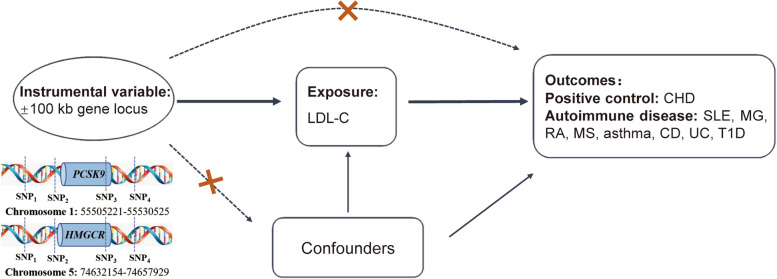
We collected single nucleotide polymorphisms (SNPs) of PCSK9 from published genome-wide association studies statistics and conducted drug target MR analysis to detect the causal relationship between PCSK9 inhibitor and the risk of autoimmune diseases. 3-Hydroxy-3-methylglutaryl-assisted enzyme A reductase (HMGCR) inhibitor, the drug target of statin, was used to compare the effect with that of PCSK9 inhibitor. With the risk of coronary heart disease as a positive control, primary outcomes included the risk of systemic lupus erythematosus (SLE), rheumatoid arthritis (RA), myasthenia gravis (MG), multiple sclerosis (MS), asthma, Crohn's disease (CD), ulcerative colitis (UC), and type 1 diabetes (T1D).
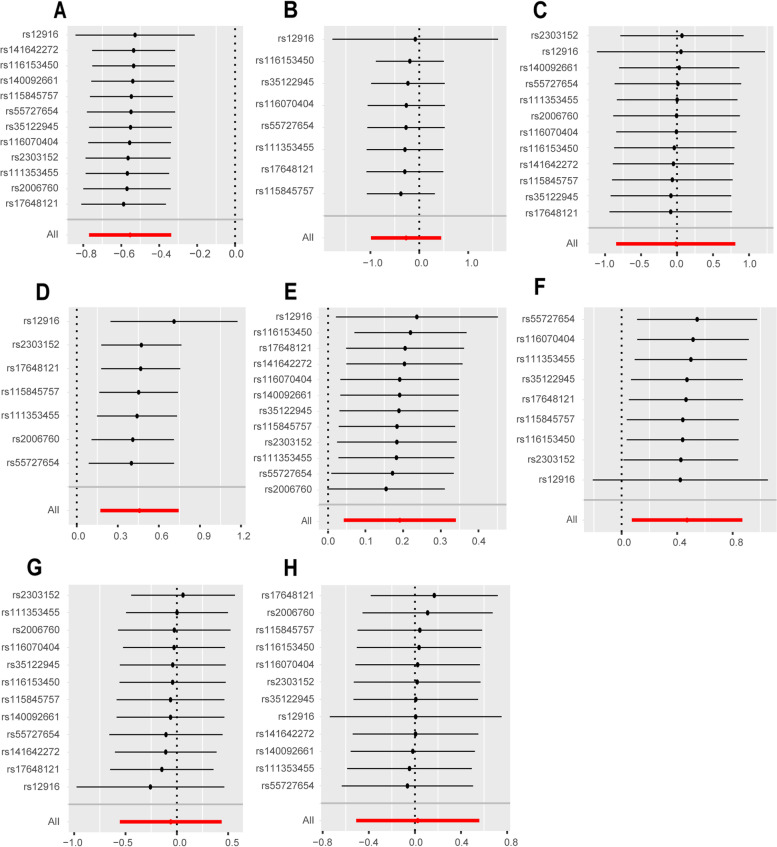
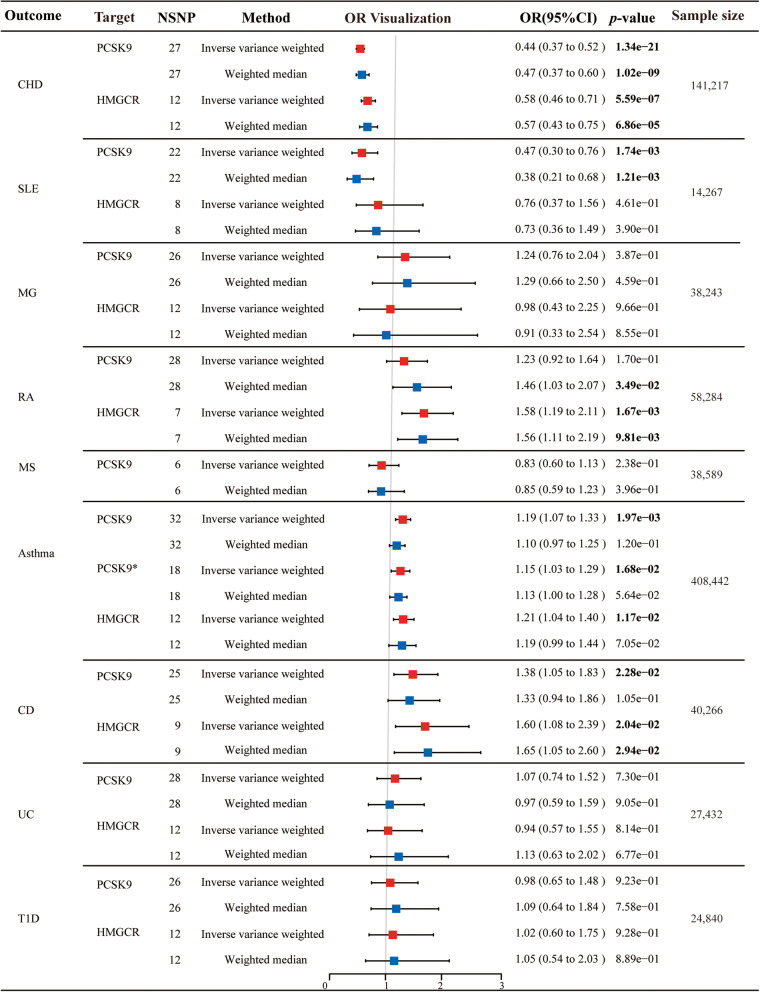
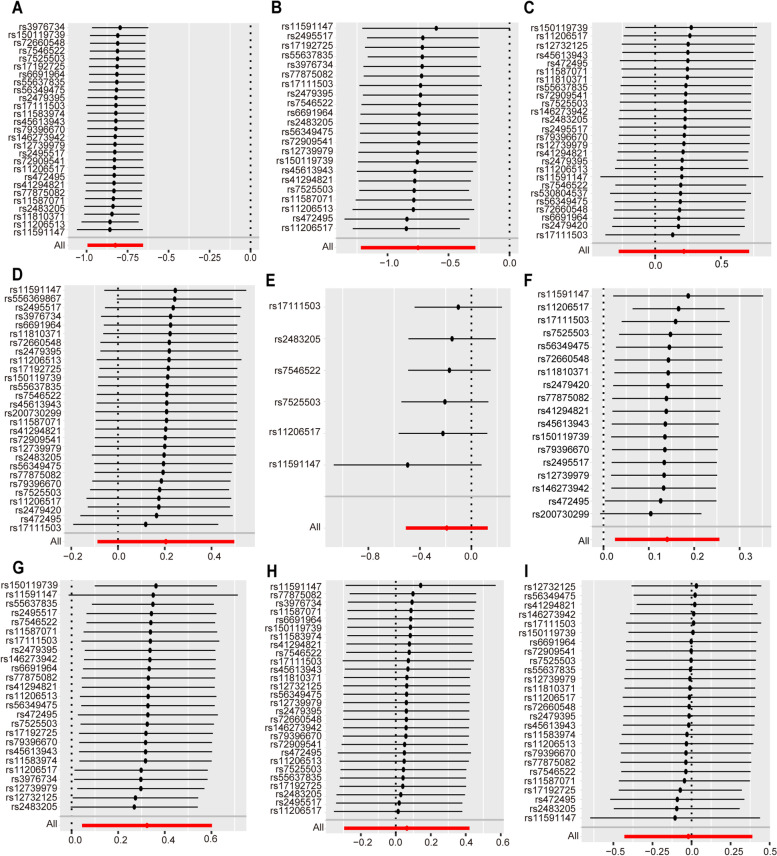
PCSK9 inhibitor significantly reduced the risk of SLE (OR [95%CI] = 0.47 [0.30 to 0.76], p = 1.74 × 10) but increased the risk of asthma (OR [95%CI] = 1.15 [1.03 to 1.29], p = 1.68 × 10) and CD (OR [95%CI] = 1.38 [1.05 to 1.83], p = 2.28 × 10). In contrast, HMGCR inhibitor increased the risk of RA (OR [95%CI] = 1.58 [1.19 to 2.11], p = 1.67 × 10), asthma (OR [95%CI] = 1.21 [1.04 to 1.40], p = 1.17 × 10), and CD (OR [95%CI] = 1.60 [1.08 to 2.39], p = 2.04 × 10).
PCSK9 inhibitor significantly reduced the risk of SLE but increased the risk of asthma and CD. In contrast, HMGCR inhibitor may be a risk factor for RA, asthma, and CD.
除了降低胆固醇水平外,前蛋白转化酶枯草溶菌素 9(PCSK9)抑制剂还具有免疫调节等多种作用。然而,PCSK9 对自身免疫性疾病的影响存在争议。因此,我们使用药物靶点孟德尔随机化(MR)分析来研究 PCSK9 抑制剂对不同自身免疫性疾病的影响。
我们从已发表的全基因组关联研究统计数据中收集了 PCSK9 的单核苷酸多态性(SNP),并进行了药物靶点 MR 分析,以检测 PCSK9 抑制剂与自身免疫性疾病风险之间的因果关系。他汀类药物的靶点 3-羟基-3-甲基戊二酰基辅酶 A 还原酶(HMGCR)抑制剂用于与 PCSK9 抑制剂的作用进行比较。以冠心病风险为阳性对照,主要结局包括系统性红斑狼疮(SLE)、类风湿关节炎(RA)、重症肌无力(MG)、多发性硬化症(MS)、哮喘、克罗恩病(CD)、溃疡性结肠炎(UC)和 1 型糖尿病(T1D)的风险。
PCSK9 抑制剂显著降低了 SLE 的风险(OR [95%CI] = 0.47 [0.30 至 0.76],p = 1.74 × 10),但增加了哮喘的风险(OR [95%CI] = 1.15 [1.03 至 1.29],p = 1.68 × 10)和 CD 的风险(OR [95%CI] = 1.38 [1.05 至 1.83],p = 2.28 × 10)。相比之下,HMGCR 抑制剂增加了 RA(OR [95%CI] = 1.58 [1.19 至 2.11],p = 1.67 × 10)、哮喘(OR [95%CI] = 1.21 [1.04 至 1.40],p = 1.17 × 10)和 CD(OR [95%CI] = 1.60 [1.08 至 2.39],p = 2.04 × 10)的风险。
PCSK9 抑制剂显著降低了 SLE 的风险,但增加了哮喘和 CD 的风险。相比之下,HMGCR 抑制剂可能是 RA、哮喘和 CD 的危险因素。