From the Departments of Radiology (T.H.K., N.G., D.D.B.B., V.P., M.J.G., N.H.), Pathology (C.F., J.S.), Surgery (H.M.T., J.G.A.), and Epidemiology and Biostatistics (J.Z., M.C.), Memorial Sloan-Kettering Cancer Center, 1275 York Ave, Box 29, New York, NY 10065.
Radiology. 2023 Aug;308(2):e230079. doi: 10.1148/radiol.230079.
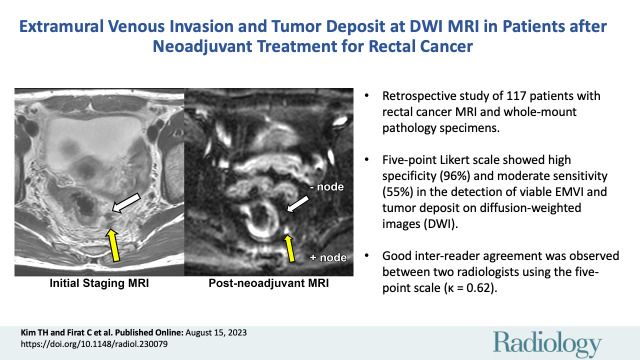
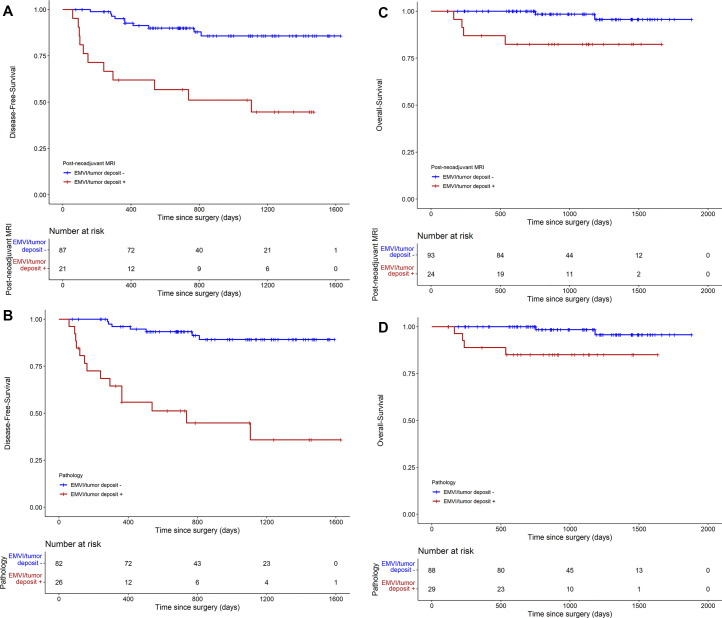
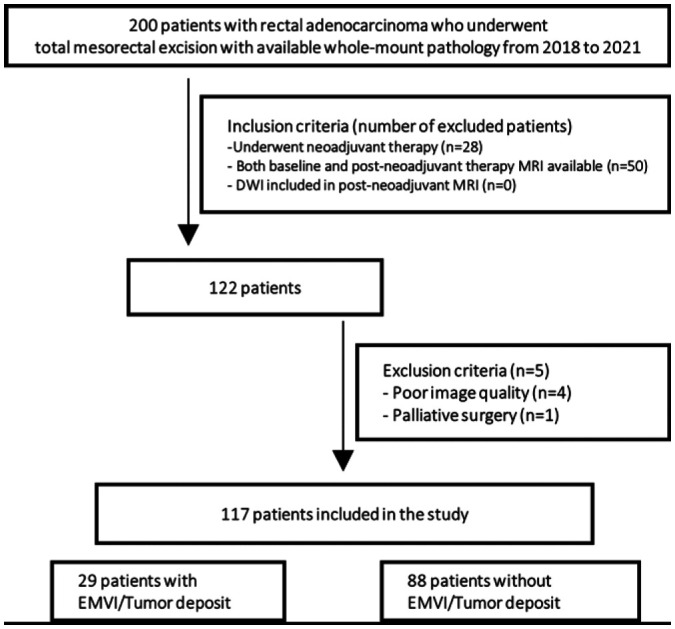
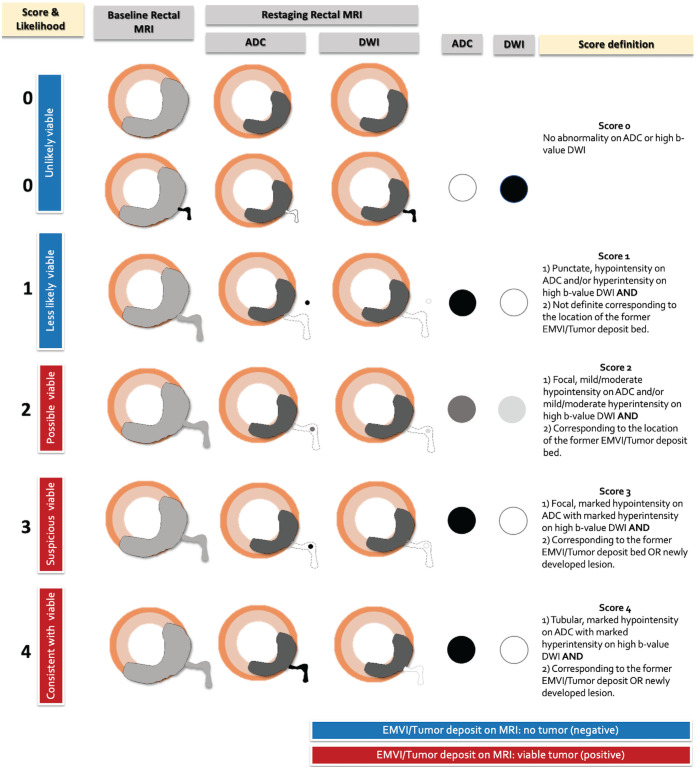
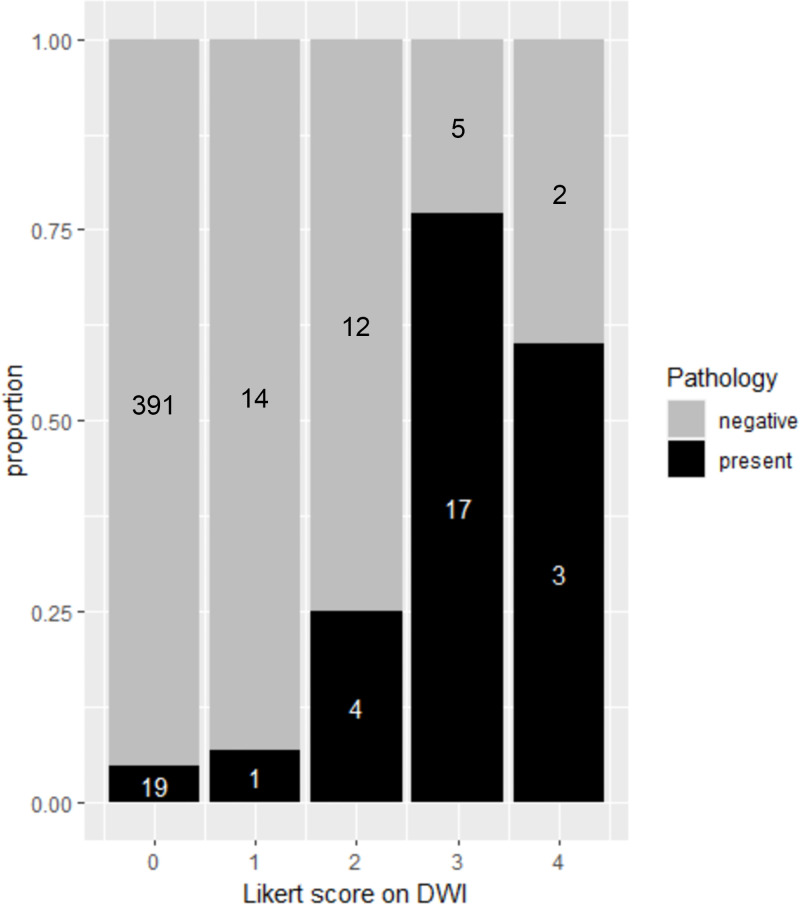
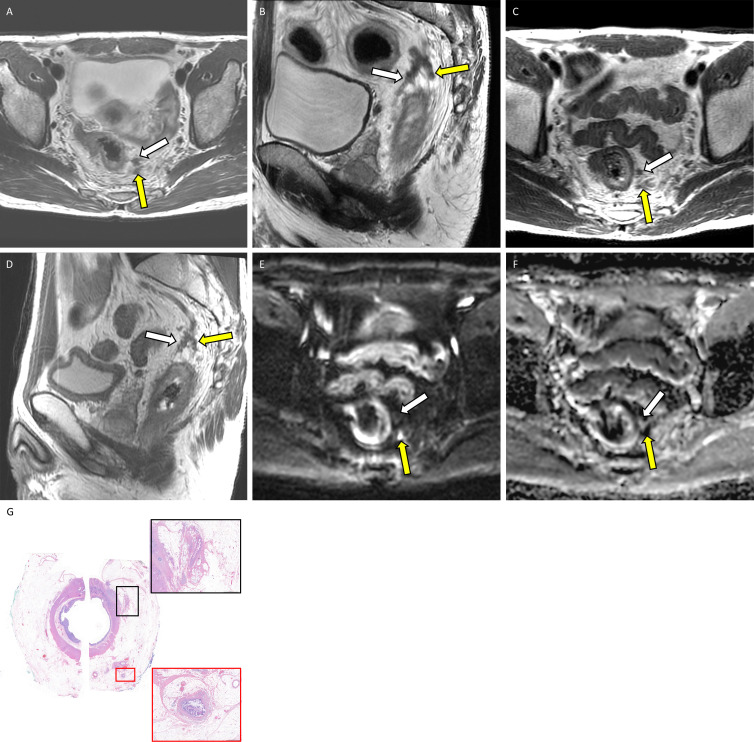
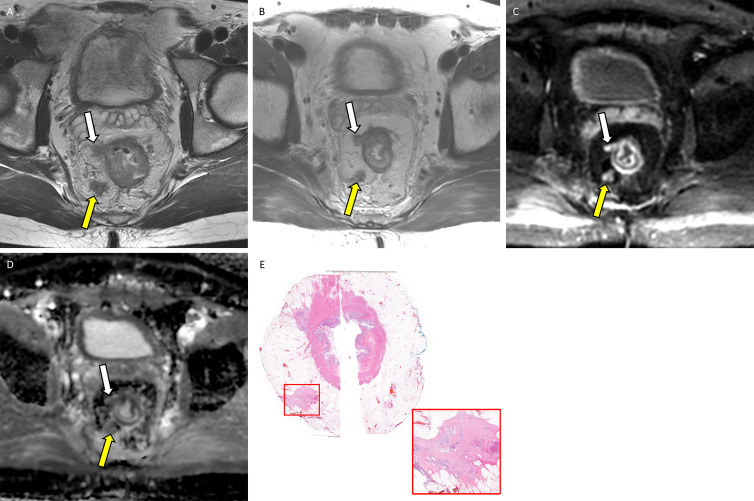
Background Diffusion-weighted (DW) imaging is useful in detecting tumor in the primary tumor bed in locally advanced rectal cancer (LARC) after neoadjuvant therapy, but its value in detecting extramural venous invasion (EMVI) and tumor deposit is not well validated. Purpose To evaluate diagnostic accuracy and association with patient prognosis of viable EMVI and tumor deposit on DW images in patients with LARC after neoadjuvant therapy using whole-mount pathology specimens. Materials and Methods This retrospective study included patients who underwent neoadjuvant therapy and surgery from 2018 to 2021. Innovative five-point Likert scale was used by two radiologists to independently evaluate the likelihood of viable EMVI and tumor deposit on restaging DW MRI scans in four axial quadrants (12 to 3 o'clock, 3 to 6 o'clock, 6 to 9 o'clock, and 9 to 12 o'clock). Diagnostic accuracy was assessed at both the per-quadrant and per-patient level, with whole-mount pathology as the reference standard. Weighted κ values for interreader agreement and Cox regression models for disease-free survival and overall survival analyses were used. Results A total of 117 patients (mean age, 56 years ± 12 [SD]; 70 male, 47 female) were included. Pathologically proven viable EMVI and tumor deposit was detected in 29 of 117 patients (25%) and in 44 of 468 quadrants (9.4%). Per-quadrant analyses showed an area under the receiver operating characteristics curve of 0.75 (95% CI: 0.68, 0.83), with sensitivity and specificity of 55% and 96%, respectively. Good interreader agreement was observed between the radiologists (κ = 0.62). Per-patient analysis showed sensitivity and specificity of 62% and 93%, respectively. The presence of EMVI and tumor deposit on restaging DW MRI scans was associated with worse disease-free survival (hazard ratio [HR], 5.6; 95% CI: 2.4, 13.3) and overall survival (HR, 8.9; 95% CI: 1.6, 48.5). Conclusion DW imaging using the five-point Likert scale showed high specificity and moderate sensitivity in the detection of viable extramural venous invasion and tumor deposits in LARC after neoadjuvant therapy, and its presence on restaging DW MRI scans is associated with worse prognosis. Published under a CC BY 4.0 license. See also the editorial by Méndez and Ayuso in this issue.
扩散加权(DW)成像在局部晚期直肠癌(LARC)新辅助治疗后检测原发肿瘤床中的肿瘤方面很有用,但在检测壁外静脉侵犯(EMVI)和肿瘤沉积方面的价值尚未得到很好的验证。目的:使用全直肠标本评估 DW 图像上有活力的 EMVI 和肿瘤沉积在新辅助治疗后 LARC 患者中的诊断准确性及其与患者预后的相关性。材料与方法:本回顾性研究纳入了 2018 年至 2021 年接受新辅助治疗和手术的患者。两位放射科医生使用创新的五分 Likert 量表独立评估四个轴位象限(12 点至 3 点、3 点至 6 点、6 点至 9 点和 9 点至 12 点)再分期 DW MRI 扫描中存活的 EMVI 和肿瘤沉积的可能性。以全直肠标本为参考标准,评估象限内和患者水平的诊断准确性。使用加权κ值评估读者间的一致性,使用 Cox 回归模型评估无病生存率和总生存率。结果:共纳入 117 例患者(平均年龄 56 岁±12 岁[标准差];70 例男性,47 例女性)。29 例(25%)117 例患者和 44 例(9.4%)468 个象限中存在病理证实的有活力的 EMVI 和肿瘤沉积。象限内分析显示受试者工作特征曲线下面积为 0.75(95%CI:0.68,0.83),灵敏度和特异性分别为 55%和 96%。两位放射科医生之间观察到良好的读者间一致性(κ=0.62)。患者水平分析显示灵敏度和特异性分别为 62%和 93%。再分期 DW MRI 扫描上存在 EMVI 和肿瘤沉积与无病生存率(危险比[HR],5.6;95%CI:2.4,13.3)和总生存率(HR,8.9;95%CI:1.6,48.5)较差相关。结论:使用五分 Likert 量表的 DW 成像在检测新辅助治疗后 LARC 中的有活力的壁外静脉侵犯和肿瘤沉积方面具有高特异性和中等灵敏度,其在再分期 DW MRI 扫描上的存在与预后较差相关。在 CC BY 4.0 许可下发布。 另请参阅本期 Méndez 和 Ayuso 的社论。