Department of Anesthesiology, The Third Affiliated Hospital, Sun Yat-Sen University, Guangzhou, 510630, China.
Department of Medical Quality Management, Nanfang Hospital, Southern Medical University, Guangzhou, 510000, China.
Cell Mol Biol Lett. 2023 Aug 15;28(1):65. doi: 10.1186/s11658-023-00474-5.
Peripheral nerve damage causes neuroinflammation, which plays a critical role in establishing and maintaining neuropathic pain (NeP). The mechanisms contributing to neuroinflammation remain poorly elucidated, and pharmacological strategies for NeP are limited. Thus, in this study, we planned to explore the possible link between astrocyte senescence and NeP disorders following chronic sciatic nerve injury.
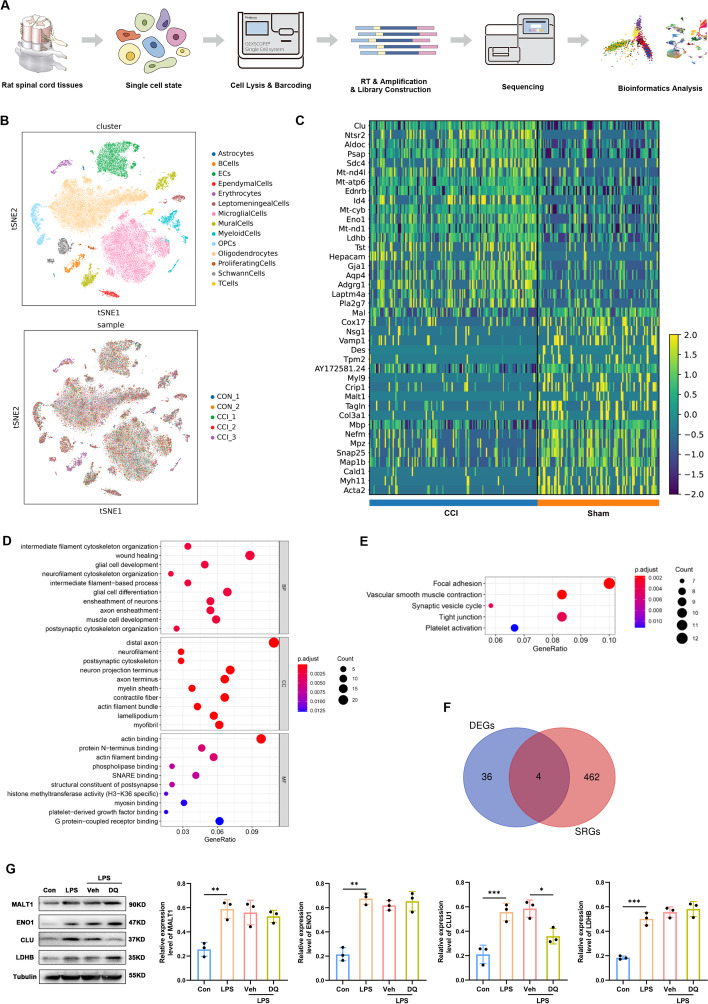
An NeP animal model was established by inducing chronic constrictive injury (CCI) to the sciatic nerve in adult rats. A senolytic drug combination of dasatinib and quercetin was gavaged daily from the first postoperative day until the end of the study. Paw mechanical withdrawal threshold (PMWT) and paw thermal withdrawal latency (PTWL) were evaluated to assess behaviors in response to pain in the experimental rats. Senescence-associated β-galactosidase staining, western blot analysis, and immunofluorescence were applied to examine the levels of proinflammatory factors and severity of the senescence-like response in the spinal cord. Lipopolysaccharide (LPS) was administered to induce senescence of spinal astrocytes in primary cultures in vitro, to explore the potential impacts of senescence on the secretion of proinflammatory factors. Furthermore, single-cell RNA sequencing (scRNA-seq) was conducted to identify senescence-related molecular responses in spinal astrocytes under neuropathic pain.
Following sciatic nerve CCI, rats exhibited reduced PMWT and PTWL, increased levels of spinal proinflammatory factors, and an enhanced degree of senescence in spinal astrocytes. Treatment with dasatinib and quercetin effectively attenuated spinal neuroinflammation and mitigated the hypersensitivities of the rats subjected to sciatic nerve CCI. Mechanistically, the dasatinib-quercetin combination reversed senescence in LPS-stimulated primary cultured astrocytes and decreased the levels of proinflammatory factors. The scRNA-seq data revealed four potential senescence-related genes in the spinal astrocyte population, and the expression of clusterin (CLU) protein was validated via in vitro experiments.
The findings indicate the potential role of astrocyte senescence in neuroinflammation following peripheral nerve injury, and suggest that targeting CLU activation in astrocytes might provide a novel therapeutic strategy to treat NeP.
周围神经损伤引起神经炎症,在建立和维持神经病理性疼痛(NeP)中起着关键作用。导致神经炎症的机制仍未得到充分阐明,用于 NeP 的药理学策略也有限。因此,在这项研究中,我们计划探讨慢性坐骨神经损伤后星形胶质细胞衰老与 NeP 障碍之间的可能联系。
通过对成年大鼠的坐骨神经进行慢性缩窄性损伤(CCI)来建立 NeP 动物模型。从术后第一天开始,每天给予达沙替尼和槲皮素的联合去衰老药物治疗,直至研究结束。使用爪机械撤回阈值(PMWT)和爪热撤回潜伏期(PTWL)评估实验大鼠对疼痛的行为反应。应用衰老相关β-半乳糖苷酶染色、western blot 分析和免疫荧光检测脊髓中促炎因子的水平和衰老样反应的严重程度。在体外原代培养的脊髓星形胶质细胞中给予脂多糖(LPS)以诱导衰老,以探讨衰老对促炎因子分泌的潜在影响。此外,进行单细胞 RNA 测序(scRNA-seq)以鉴定神经病理性疼痛下脊髓星形胶质细胞中的衰老相关分子反应。
坐骨神经 CCI 后,大鼠的 PMWT 和 PTWL 降低,脊髓促炎因子水平升高,脊髓星形胶质细胞衰老程度增强。达沙替尼和槲皮素联合治疗可有效减轻脊髓神经炎症,并减轻坐骨神经 CCI 大鼠的高敏性。机制上,达沙替尼-槲皮素联合治疗逆转了 LPS 刺激的原代培养星形胶质细胞的衰老,并降低了促炎因子的水平。scRNA-seq 数据显示脊髓星形胶质细胞群体中存在 4 个潜在的衰老相关基因,并且通过体外实验验证了 clusterin(CLU)蛋白的表达。
这些发现表明星形胶质细胞衰老在外周神经损伤后的神经炎症中可能起作用,并提示靶向星形胶质细胞中的 CLU 激活可能为治疗 NeP 提供一种新的治疗策略。