University Department of Pharmacology, Oxford, UK.
University Department of Experimental Psychology, Oxford, UK.
Psychopharmacology (Berl). 2023 Nov;240(11):2403-2418. doi: 10.1007/s00213-023-06442-3. Epub 2023 Aug 16.
Non-invasive home cage monitoring is emerging as a valuable tool to assess the effects of experimental interventions on mouse behaviour. A field in which these techniques may prove useful is the study of repeated selective serotonin reuptake inhibitor (SSRI) treatment and discontinuation. SSRI discontinuation syndrome is an under-researched condition that includes the emergence of sleep disturbances following treatment cessation.
We used passive infrared (PIR) monitoring to investigate changes in activity, sleep, and circadian rhythms during repeated treatment with the SSRI paroxetine and its discontinuation in mice.
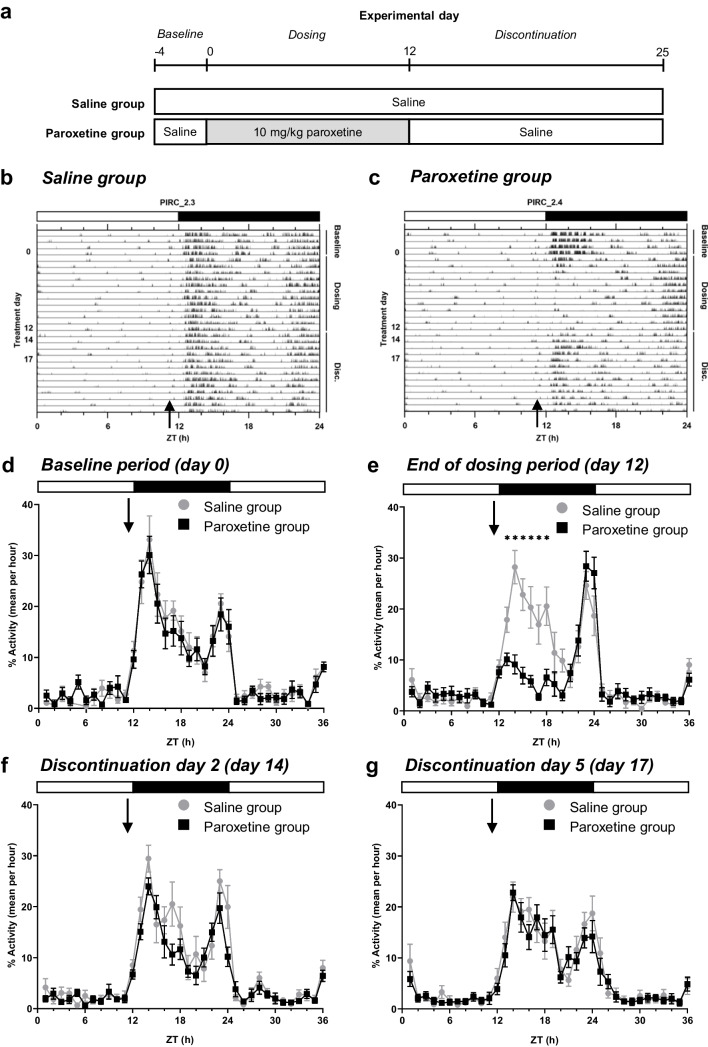
Male mice received paroxetine (10 mg/kg/day, s.c.) for 12 days, then were swapped to saline injections for a 13 day discontinuation period and compared to mice that received saline injections throughout. Mice were continuously tracked using the Continuous Open Mouse Phenotyping of Activity and Sleep Status (COMPASS) system.
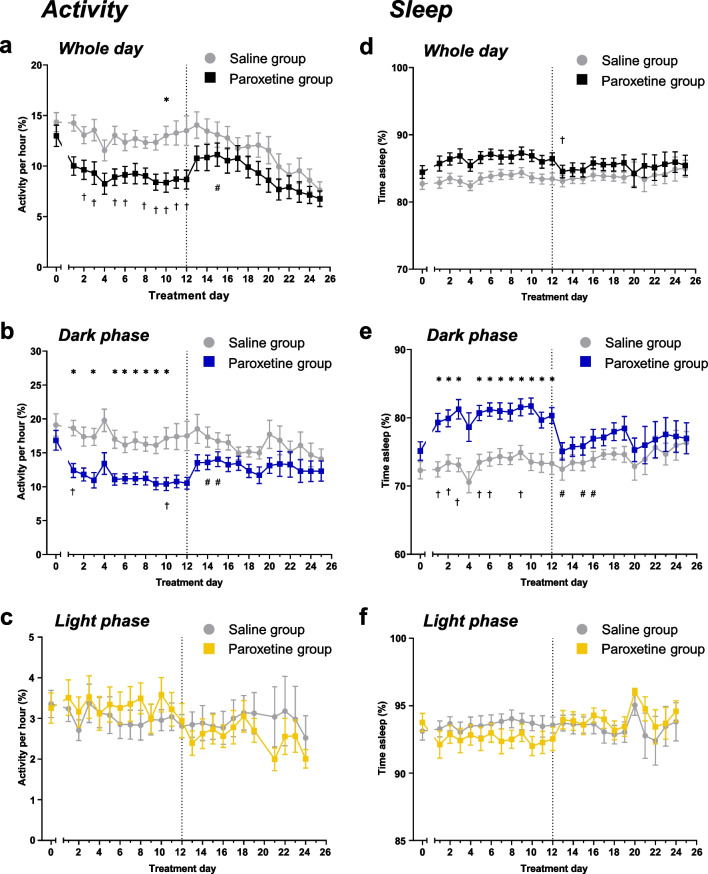
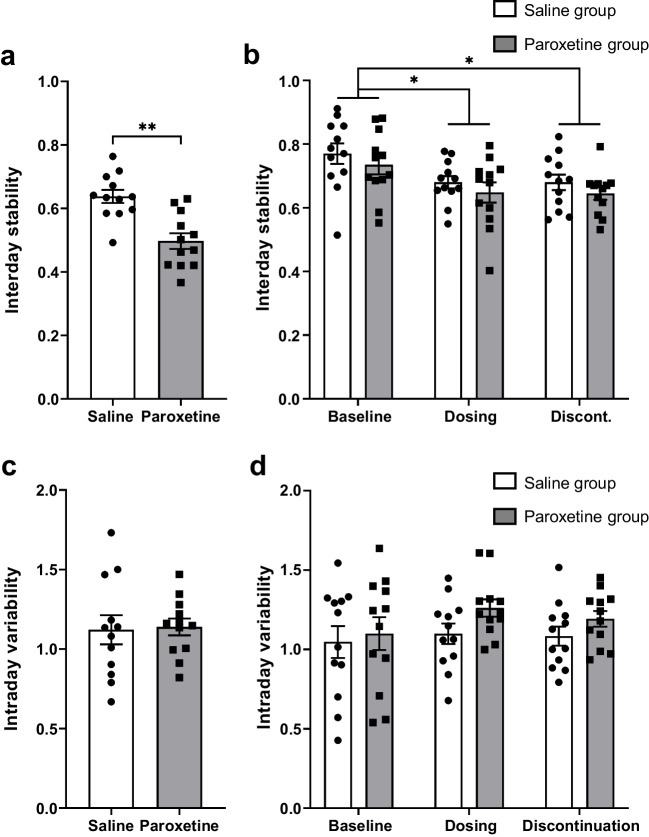
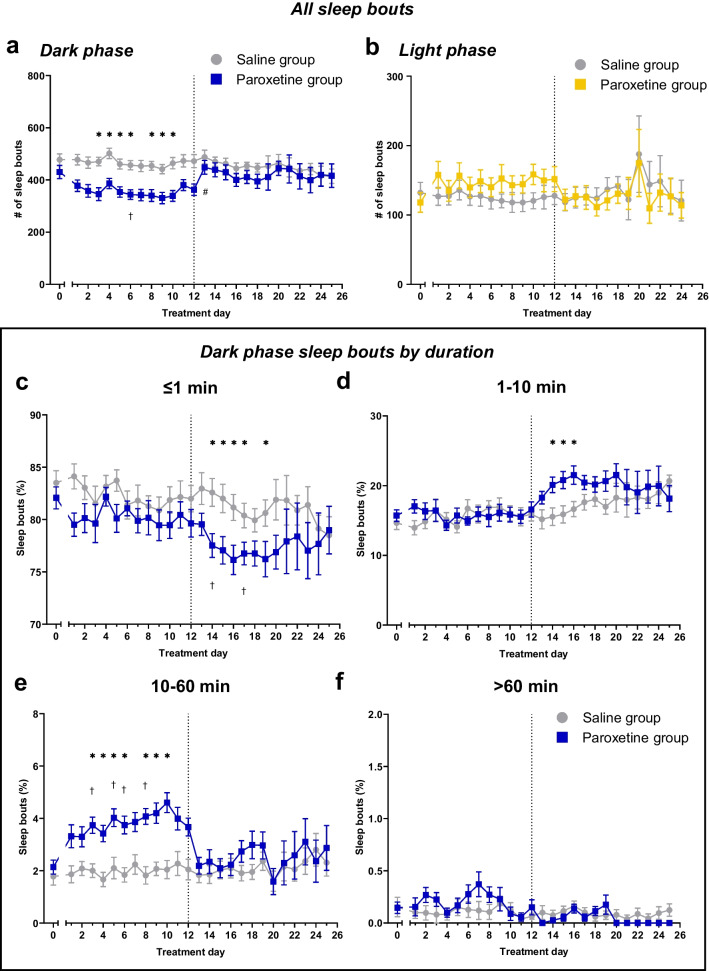
Repeated paroxetine treatment reduced activity and increased behaviourally-defined sleep in the dark phase. These effects recovered to saline-control levels within 24 h of paroxetine cessation, yet there was also evidence of a lengthening of sleep bouts in the dark phase for up to a week following discontinuation.
This study provides the first example of how continuous non-invasive home cage monitoring can be used to detect objective behavioural changes in activity and sleep during and after drug treatment in mice. These data suggest that effects of paroxetine administration reversed soon after its discontinuation but identified an emergent change in sleep bout duration, which could be used as a biomarker in future preclinical studies to prevent or minimise SSRI discontinuation symptoms.
非侵入性的家庭笼内监测正逐渐成为评估实验干预措施对小鼠行为影响的一种有价值的工具。这些技术可能有用的一个领域是重复选择性 5-羟色胺再摄取抑制剂(SSRI)治疗和停药的研究。SSRI 停药综合征是一种研究不足的病症,包括治疗停止后出现睡眠障碍。
我们使用被动红外(PIR)监测来研究重复使用 SSRI 帕罗西汀及其在小鼠中的停药期间活动、睡眠和昼夜节律的变化。
雄性小鼠接受帕罗西汀(10mg/kg/天,皮下注射)治疗 12 天,然后换用生理盐水注射 13 天停药期,并与接受生理盐水注射的小鼠进行比较。使用连续开放式小鼠活动和睡眠状态表型分析(COMPASS)系统对小鼠进行连续跟踪。
重复帕罗西汀治疗可减少活动量并增加暗期的行为定义睡眠。这些影响在帕罗西汀停药后 24 小时内恢复到生理盐水对照水平,但停药后暗期的睡眠潜伏期也有延长的证据,最长可达一周。
这项研究首次提供了一个例子,说明如何使用连续的非侵入性家庭笼内监测来检测小鼠在药物治疗期间和之后的活动和睡眠中的客观行为变化。这些数据表明,帕罗西汀停药后很快就会逆转其给药的影响,但发现睡眠潜伏期有一个新的变化,这可能在未来的临床前研究中用作生物标志物,以预防或最小化 SSRI 停药症状。