Mammalian Genetics Unit, MRC Harwell Institute, Harwell Science and Innovation Campus, Oxfordshire, UK.
Sleep and Circadian Neuroscience Institute (SCNi), Nuffield Department of Clinical Neurosciences, University of Oxford, Oxford, UK.
Sci Adv. 2020 Aug 12;6(33):eabb3567. doi: 10.1126/sciadv.abb3567. eCollection 2020 Aug.
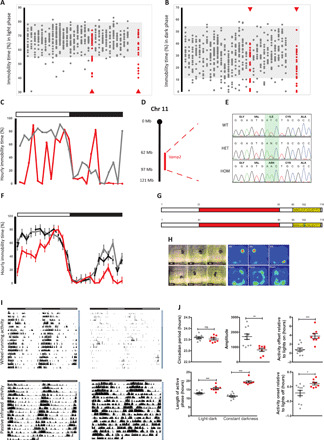
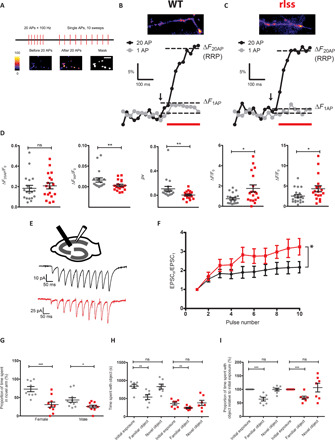
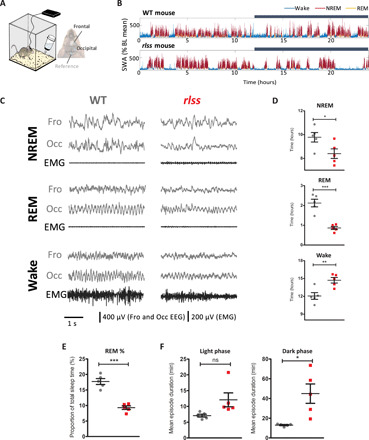
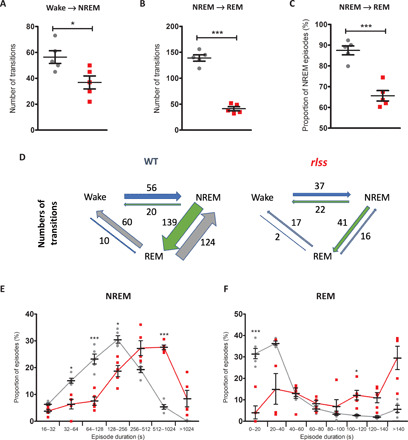
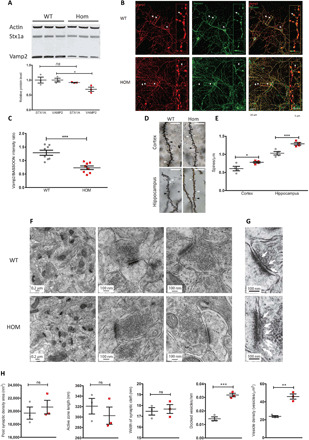
Switches between global sleep and wakefulness states are believed to be dictated by top-down influences arising from subcortical nuclei. Using forward genetics and in vivo electrophysiology, we identified a recessive mouse mutant line characterized by a substantially reduced propensity to transition between wake and sleep states with an especially pronounced deficit in initiating rapid eye movement (REM) sleep episodes. The causative mutation, an Ile102Asn substitution in the synaptic vesicular protein, VAMP2, was associated with morphological synaptic changes and specific behavioral deficits, while in vitro electrophysiological investigations with fluorescence imaging revealed a markedly diminished probability of vesicular release in mutants. Our data show that global shifts in the synaptic efficiency across brain-wide networks leads to an altered probability of vigilance state transitions, possibly as a result of an altered excitability balance within local circuits controlling sleep-wake architecture.
人们认为,从皮质下核发出的自上而下的影响决定了全球睡眠和觉醒状态之间的转换。使用正向遗传学和体内电生理学,我们鉴定了一个隐性小鼠突变系,其特征是在从觉醒到睡眠状态的转变过程中,尤其是在快速眼动 (REM) 睡眠发作的起始方面,其转变的倾向显著降低。引起这种突变的是突触小泡蛋白 VAMP2 中的 Ile102Asn 取代,它与形态突触变化和特定的行为缺陷有关,而利用荧光成像进行的体外电生理学研究显示,突变体中囊泡释放的可能性明显降低。我们的数据表明,大脑广泛网络中的突触效率的整体变化导致警觉状态转变的概率发生改变,这可能是由于控制睡眠-觉醒结构的局部回路中的兴奋性平衡发生改变所致。