Sleep and Circadian Neuroscience Institute, Nuffield Department of Clinical Neurosciences, University of Oxford, Oxford OX1 3QU, United Kingdom.
Research Support Team, IT Services, University of Oxford, Oxford OX1 2JD, United Kingdom.
Proc Natl Acad Sci U S A. 2021 Sep 28;118(39). doi: 10.1073/pnas.2101591118.
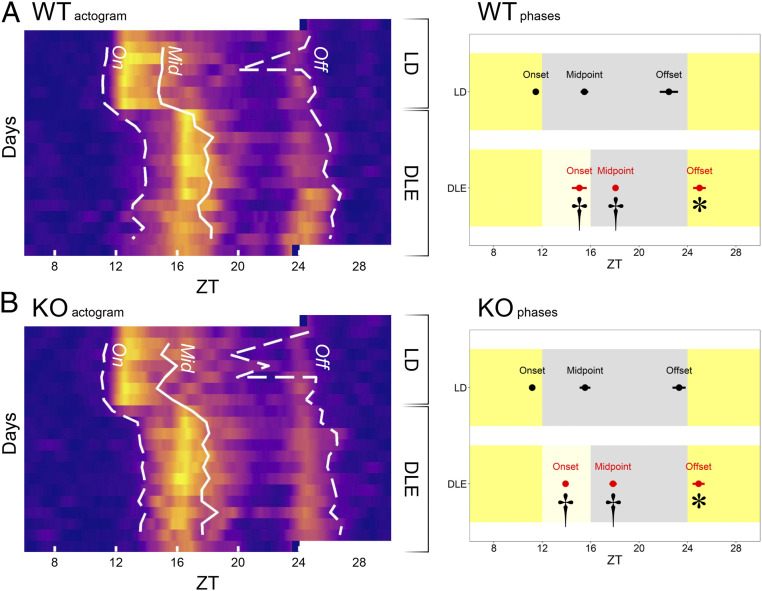
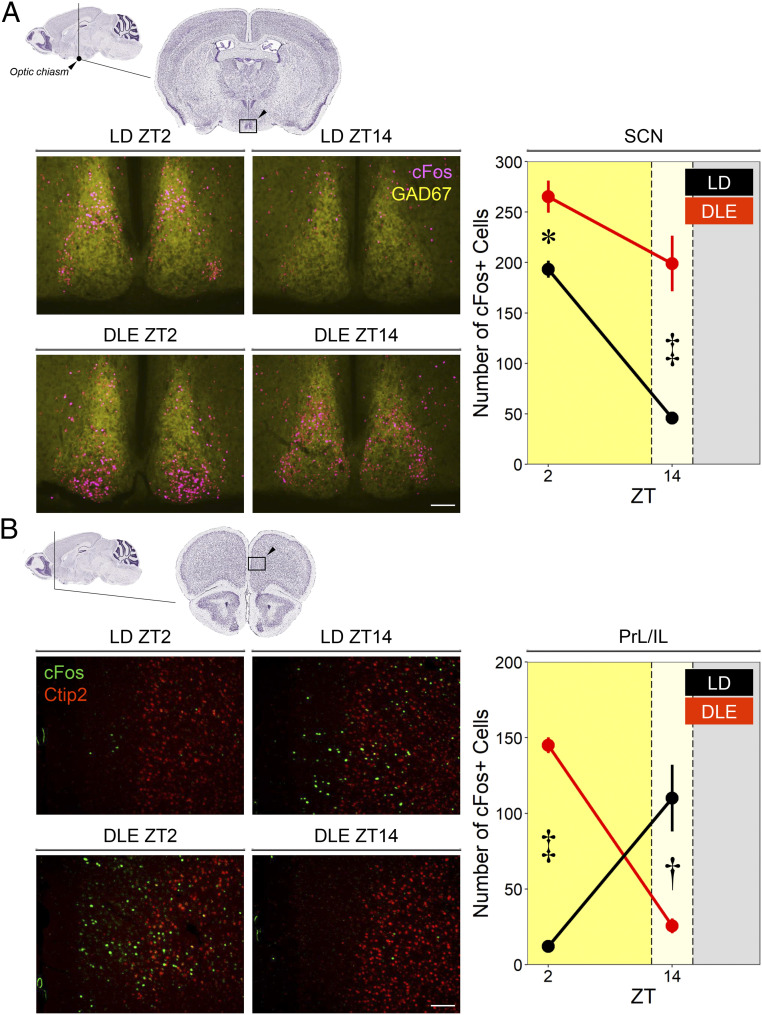
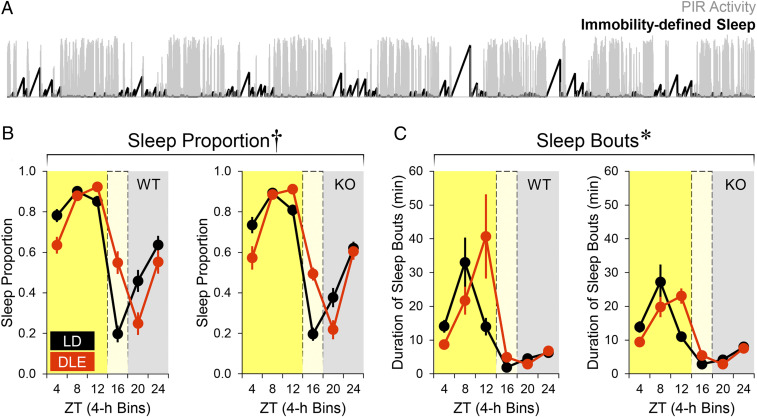
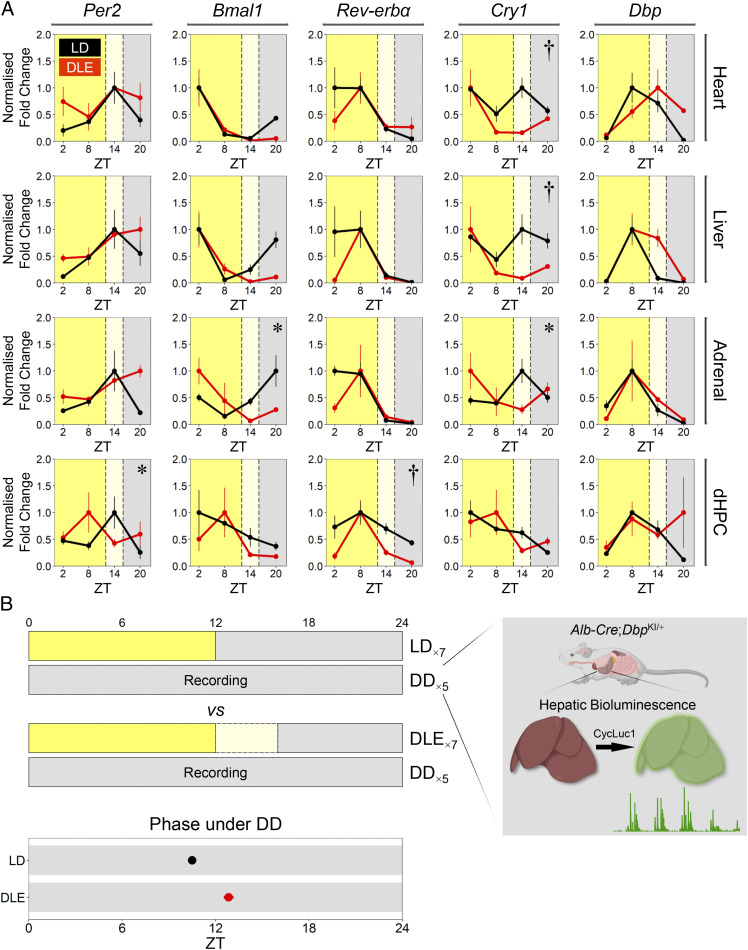
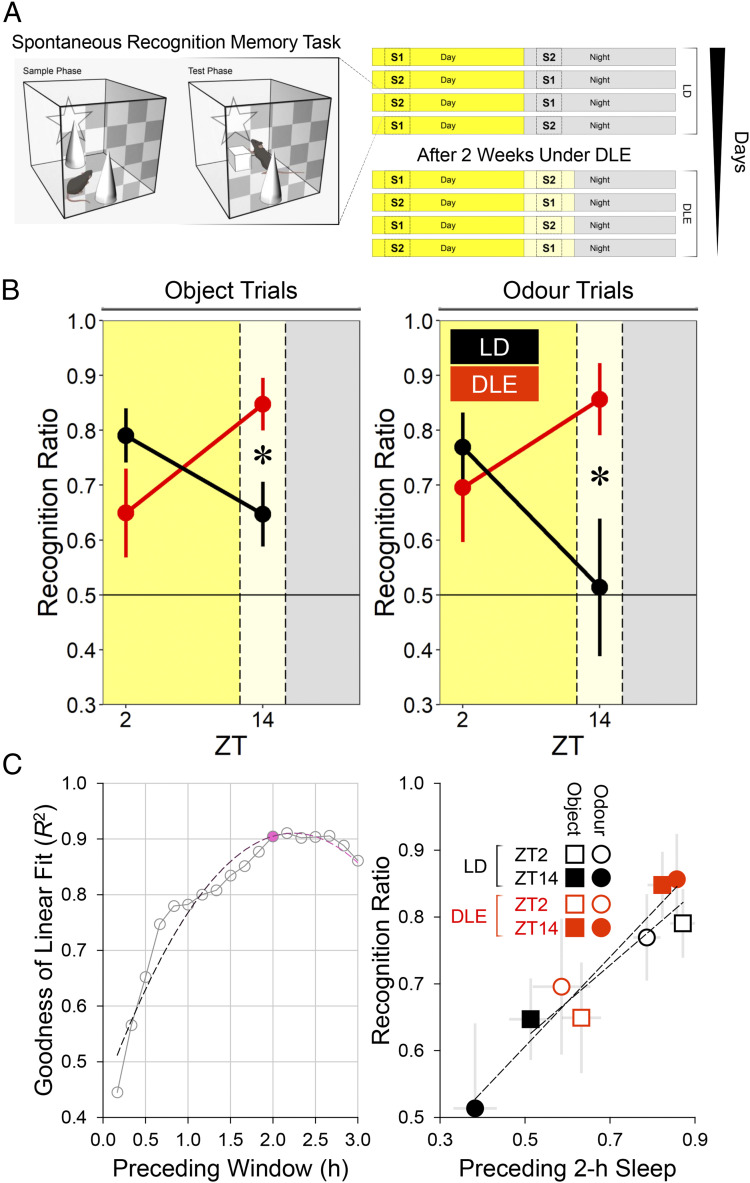
Light provides the primary signal for entraining circadian rhythms to the day/night cycle. In addition to rods and cones, the retina contains a small population of photosensitive retinal ganglion cells (pRGCs) expressing the photopigment melanopsin (OPN4). Concerns have been raised that exposure to dim artificial lighting in the evening (DLE) may perturb circadian rhythms and sleep patterns, and OPN4 is presumed to mediate these effects. Here, we examine the effects of 4-h, 20-lux DLE on circadian physiology and behavior in mice and the role of OPN4 in these responses. We show that 2 wk of DLE induces a phase delay of ∼2 to 3 h in mice, comparable to that reported in humans. DLE-induced phase shifts are unaffected in mice, indicating that rods and cones are capable of driving these responses in the absence of melanopsin. DLE delays molecular clock rhythms in the heart, liver, adrenal gland, and dorsal hippocampus. It also reverses short-term recognition memory performance, which is associated with changes in preceding sleep history. In addition, DLE modifies patterns of hypothalamic and cortical cFos signals, a molecular correlate of recent neuronal activity. Together, our data show that DLE causes coordinated realignment of circadian rhythms, sleep patterns, and short-term memory process in mice. These effects are particularly relevant as DLE conditions-due to artificial light exposure-are experienced by the majority of the populace on a daily basis.
光是将昼夜节律与生物钟同步的主要信号。除了视杆细胞和视锥细胞外,视网膜还包含一小部分表达感光色素黑视蛋白(OPN4)的光敏感视网膜神经节细胞(pRGC)。有人担心,晚上接触昏暗的人工照明(DLE)可能会扰乱生物钟和睡眠模式,而 OPN4 被认为介导了这些影响。在这里,我们研究了 4 小时 20 勒克斯的 DLE 对小鼠生物钟生理学和行为的影响,以及 OPN4 在这些反应中的作用。我们发现,2 周的 DLE 使小鼠的相位延迟约 2 到 3 小时,这与在人类中报道的情况相当。在 小鼠中,DLE 诱导的相位移动不受影响,表明在没有黑视蛋白的情况下,视杆细胞和视锥细胞能够驱动这些反应。DLE 延迟了心脏、肝脏、肾上腺和背侧海马体中的分子钟节律。它还逆转了短期识别记忆表现,这与之前的睡眠历史变化有关。此外,DLE 改变了下丘脑和皮质 cFos 信号的模式,这是最近神经元活动的分子相关物。总之,我们的数据表明,DLE 导致了小鼠生物钟、睡眠模式和短期记忆过程的协调重排。这些影响在 DLE 条件下尤为相关,因为由于人工光照暴露,大多数人每天都在经历这些条件。