• 文献检索
  • 文档翻译
  • 深度研究
  • 学术资讯
  • Suppr Zotero 插件Zotero 插件
  • 邀请有礼
  • 套餐&价格
  • 历史记录
应用&插件
Suppr Zotero 插件Zotero 插件浏览器插件Mac 客户端Windows 客户端微信小程序
定价
高级版会员购买积分包购买API积分包
服务
文献检索文档翻译深度研究API 文档MCP 服务
关于我们
关于 Suppr公司介绍联系我们用户协议隐私条款
关注我们

Suppr 超能文献

核心技术专利:CN118964589B侵权必究
粤ICP备2023148730 号-1Suppr @ 2026

文献检索

告别复杂PubMed语法,用中文像聊天一样搜索,搜遍4000万医学文献。AI智能推荐,让科研检索更轻松。

立即免费搜索

文件翻译

保留排版,准确专业,支持PDF/Word/PPT等文件格式,支持 12+语言互译。

免费翻译文档

深度研究

AI帮你快速写综述,25分钟生成高质量综述,智能提取关键信息,辅助科研写作。

立即免费体验

一切尽在掌握:人类进化与儿童发展中的移动容器

It's in the bag: mobile containers in human evolution and child development.

作者信息

Suddendorf Thomas, Kirkland Kelly, Bulley Adam, Redshaw Jonathan, Langley Michelle C

机构信息

Centre for Psychology and Evolution, School of Psychology, The University of Queensland, St Lucia 4072, Australia.

Department of Psychology, Harvard University, Cambridge, MA 02138, USA.

出版信息

Evol Hum Sci. 2020 Oct 1;2:e48. doi: 10.1017/ehs.2020.47. eCollection 2020.

DOI:10.1017/ehs.2020.47
PMID:37588341
原文链接:https://pmc.ncbi.nlm.nih.gov/articles/PMC10427442/
Abstract

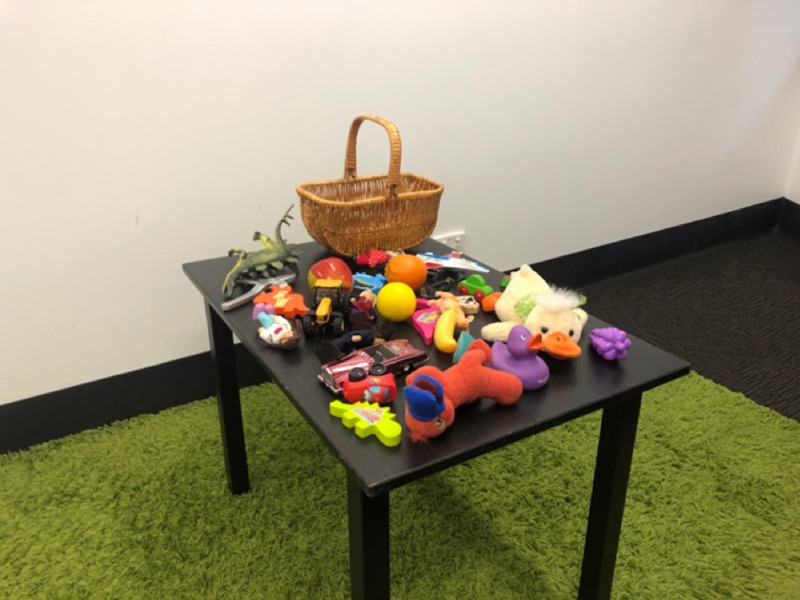
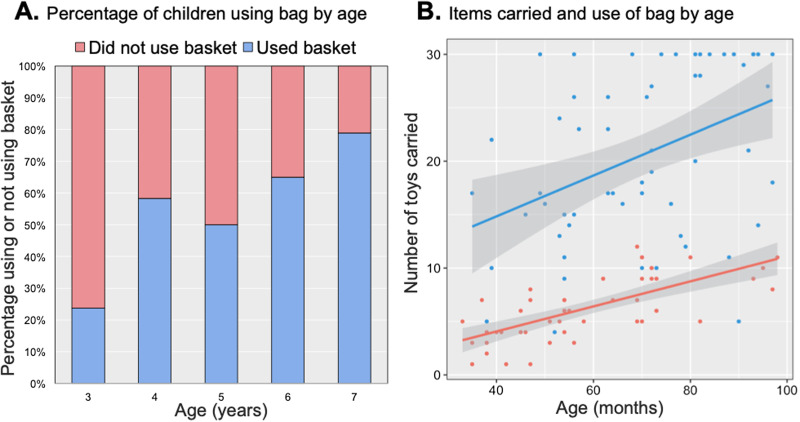
Mobile containers are a keystone human innovation. Ethnographic data indicate that all human groups use containers such as bags, quivers and baskets, ensuring that individuals have important resources at the ready and are prepared for opportunities and threats before they materialize. Although there is speculation surrounding the invention of carrying devices, the current hard archaeological evidence only reaches back some 100,000 years. The dearth of ancient evidence may reflect not only taphonomic processes, but also a lack of attention to these devices. To begin investigating the origins of carrying devices we focus on exploring the basic cognitive processes involved in mobile container use and report an initial study on young children's understanding and deployment of such devices. We gave 3- to 7-year-old children ( = 106) the opportunity to spontaneously identify and use a basket to increase their own carrying capacity and thereby obtain more resources in the future. Performance improved linearly with age, as did the likelihood of recognizing that adults use mobile carrying devices to increase carrying capacity. We argue that the evolutionary and developmental origins of mobile containers reflect foundational cognitive processes that enable humans to think about their own limits and compensate for them.

摘要

移动容器是人类一项重要的创新。人种学数据表明,所有人类群体都会使用袋子、箭袋和篮子等容器,以确保个人随时拥有重要资源,并在机会和威胁出现之前做好准备。尽管围绕携带装置的发明存在一些猜测,但目前确凿的考古证据只能追溯到大约10万年前。古代证据的匮乏可能不仅反映了埋藏学过程,也反映了对这些装置缺乏关注。为了开始探究携带装置的起源,我们专注于探索移动容器使用中涉及的基本认知过程,并报告了一项关于幼儿对这类装置的理解和运用的初步研究。我们让106名3至7岁的儿童有机会自发地识别并使用一个篮子来提高自己的携带能力,从而在未来获得更多资源。表现随着年龄的增长呈线性提高,认识到成年人使用移动携带装置来提高携带能力的可能性也是如此。我们认为,移动容器的进化和发展起源反映了基础认知过程,这些过程使人类能够思考自身的局限并加以弥补。
https://cdn.ncbi.nlm.nih.gov/pmc/blobs/6a4f/10427442/31b7da25e754/S2513843X2000047X_fig3.jpg
https://cdn.ncbi.nlm.nih.gov/pmc/blobs/6a4f/10427442/dfc7d208410f/S2513843X2000047X_figAb.jpg
https://cdn.ncbi.nlm.nih.gov/pmc/blobs/6a4f/10427442/276dda47f77e/S2513843X2000047X_fig1.jpg
https://cdn.ncbi.nlm.nih.gov/pmc/blobs/6a4f/10427442/a61bc8da60a5/S2513843X2000047X_fig2.jpg
https://cdn.ncbi.nlm.nih.gov/pmc/blobs/6a4f/10427442/31b7da25e754/S2513843X2000047X_fig3.jpg
https://cdn.ncbi.nlm.nih.gov/pmc/blobs/6a4f/10427442/dfc7d208410f/S2513843X2000047X_figAb.jpg
https://cdn.ncbi.nlm.nih.gov/pmc/blobs/6a4f/10427442/276dda47f77e/S2513843X2000047X_fig1.jpg
https://cdn.ncbi.nlm.nih.gov/pmc/blobs/6a4f/10427442/a61bc8da60a5/S2513843X2000047X_fig2.jpg
https://cdn.ncbi.nlm.nih.gov/pmc/blobs/6a4f/10427442/31b7da25e754/S2513843X2000047X_fig3.jpg

相似文献

1
It's in the bag: mobile containers in human evolution and child development.一切尽在掌握:人类进化与儿童发展中的移动容器
Evol Hum Sci. 2020 Oct 1;2:e48. doi: 10.1017/ehs.2020.47. eCollection 2020.
2
Mobile containers in human cognitive evolution studies: Understudied and underrepresented.人类认知进化研究中的移动容器:研究不足且代表性不足。
Evol Anthropol. 2020 Nov;29(6):299-309. doi: 10.1002/evan.21857. Epub 2020 Aug 3.
3
Mobile Media and Young Children's Cognitive Skills: A Review.移动媒体与幼儿认知技能:综述
Acad Pediatr. 2021 Aug;21(6):996-1000. doi: 10.1016/j.acap.2021.01.007. Epub 2021 Jan 21.
4
Putting things in and taking them out of containers: a young child's interaction with objects.将物品放入容器和从容器中取出物品:幼儿与物体的互动。
Front Psychol. 2023 May 23;14:1120605. doi: 10.3389/fpsyg.2023.1120605. eCollection 2023.
5
Young children spontaneously devise an optimal external solution to a cognitive problem.幼儿会自发地为认知问题设计出最佳的外部解决方案。
Dev Sci. 2022 May;25(3):e13204. doi: 10.1111/desc.13204. Epub 2021 Dec 9.
6
Developmental origins of cognitive offloading.认知卸载的发展起源。
Proc Biol Sci. 2020 Jun 10;287(1928):20192927. doi: 10.1098/rspb.2019.2927.
7
Young children's spontaneous use of geometry in maps.幼儿在地图中对几何图形的自发运用。
Dev Sci. 2008 Mar;11(2):F1-7. doi: 10.1111/j.1467-7687.2007.00670.x.
8
Addition of hydrochloric acid to collection bags or collection containers did not change basal endogenous losses or ileal digestibility of amino acid in corn, soybean meal, or wheat middlings fed to growing pigs.向收集袋或收集容器中添加盐酸,不会改变生长猪所采食的玉米、豆粕或小麦麸中氨基酸的基础内源损失或回肠消化率。
Anim Biosci. 2021 Oct;34(10):1632-1642. doi: 10.5713/ab.20.0838. Epub 2021 Mar 2.
9
Exposure and Use of Mobile Media Devices by Young Children.幼儿接触和使用移动媒体设备的情况。
Pediatrics. 2015 Dec;136(6):1044-50. doi: 10.1542/peds.2015-2151. Epub 2015 Nov 2.
10
The developmental origins of naïve psychology in infancy.婴儿期朴素心理学的发展起源。
Adv Child Dev Behav. 2009;37:55-104. doi: 10.1016/s0065-2407(09)03702-1.

引用本文的文献

1
A global cross-cultural analysis of string figures reveals evidence of deep transmission and innovation.一项关于绳结图案的全球跨文化分析揭示了深度传承与创新的证据。
J R Soc Interface. 2024 Dec;21(221):20240673. doi: 10.1098/rsif.2024.0673. Epub 2024 Dec 4.
2
The Ornaments of the Arma Veirana Early Mesolithic Infant Burial.阿尔马韦拉纳中石器时代早期婴儿墓葬的装饰品。
J Archaeol Method Theory. 2023;30(3):757-804. doi: 10.1007/s10816-022-09573-7. Epub 2022 Aug 30.
3
Veiled agency? Children, innovation and the archaeological record.

本文引用的文献

1
Mobile containers in human cognitive evolution studies: Understudied and underrepresented.人类认知进化研究中的移动容器:研究不足且代表性不足。
Evol Anthropol. 2020 Nov;29(6):299-309. doi: 10.1002/evan.21857. Epub 2020 Aug 3.
2
Children Devise and Selectively Use Tools to Offload Cognition.儿童设计并选择性地使用工具来减轻认知负担。
Curr Biol. 2020 Sep 7;30(17):3457-3464.e3. doi: 10.1016/j.cub.2020.06.035. Epub 2020 Jul 9.
3
Developmental origins of cognitive offloading.认知卸载的发展起源。
隐蔽的能动性?儿童、创新与考古记录
Evol Hum Sci. 2021 Feb 9;3:e12. doi: 10.1017/ehs.2021.9. eCollection 2021.
4
Children and innovation: play, play objects and object play in cultural evolution.儿童与创新:文化进化中的玩耍、玩物及物体游戏
Evol Hum Sci. 2021 Feb 5;3:e11. doi: 10.1017/ehs.2021.7. eCollection 2021.
Proc Biol Sci. 2020 Jun 10;287(1928):20192927. doi: 10.1098/rspb.2019.2927.
4
Direct evidence of Neanderthal fibre technology and its cognitive and behavioral implications.尼安德特人的纤维技术及其认知和行为意义的直接证据。
Sci Rep. 2020 Apr 9;10(1):4889. doi: 10.1038/s41598-020-61839-w.
5
Observations of increased activity and tool use in captive rhesus monkeys exposed to troughs of water.对暴露于水槽中的圈养恒河猴活动增加和工具使用情况的观察。
Am J Primatol. 1993;29(1):13-25. doi: 10.1002/ajp.1350290103.
6
Earliest occupation of the Central Aegean (Naxos), Greece: Implications for hominin and ' behavior and dispersals.希腊中央爱琴海地区(纳克索斯岛)最早的人类活动:对人类和行为及扩散的影响。
Sci Adv. 2019 Oct 16;5(10):eaax0997. doi: 10.1126/sciadv.aax0997. eCollection 2019 Oct.
7
Intelligent problem-solvers externalize cognitive operations.智能问题解决者外化认知操作。
Nat Hum Behav. 2019 Feb;3(2):136-142. doi: 10.1038/s41562-018-0509-y. Epub 2019 Feb 4.
8
Stuck in the Present? Constraints on Children's Episodic Prospection.陷入当下?儿童情景记忆展望的制约因素。
Trends Cogn Sci. 2018 Oct;22(10):846-850. doi: 10.1016/j.tics.2018.07.013.
9
Young children's capacity to imagine and prepare for certain and uncertain future outcomes.幼儿想象和为确定及不确定的未来结果做准备的能力。
PLoS One. 2018 Sep 4;13(9):e0202606. doi: 10.1371/journal.pone.0202606. eCollection 2018.
10
Earliest known hominin activity in the Philippines by 709 thousand years ago.菲律宾发现距今 70.9 万年的最早古人类活动遗迹。
Nature. 2018 May;557(7704):233-237. doi: 10.1038/s41586-018-0072-8. Epub 2018 May 2.