Nelson Sarah, Zhushchikhovskaya Irina, Li Tao, Hudson Mark, Robbeets Martine
Department of Anthropology, University of Denver, Denver, CO, USA.
Laboratory of Medieval Archaeology, Institute of History, Archaeology and Ethnography of Peoples of Far East, Far Eastern Branch of Russian Academy of Sciences, Vladivostok, Russia.
Evol Hum Sci. 2020 Feb 14;2:e5. doi: 10.1017/ehs.2020.4. eCollection 2020.
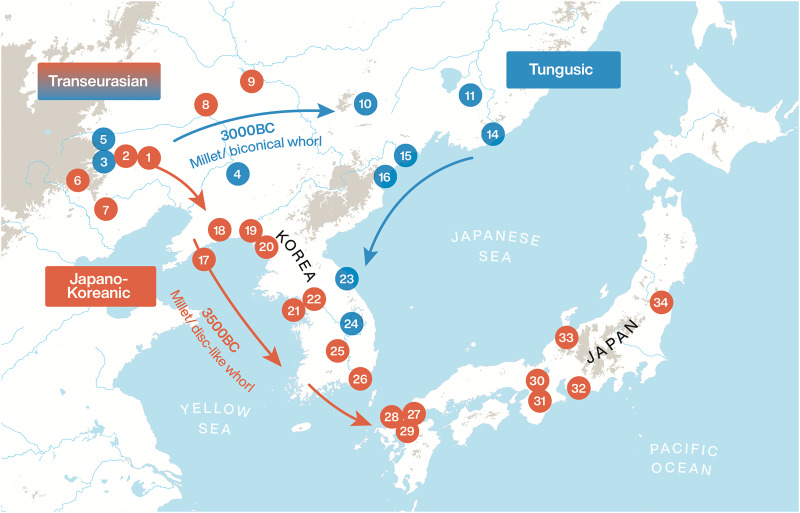
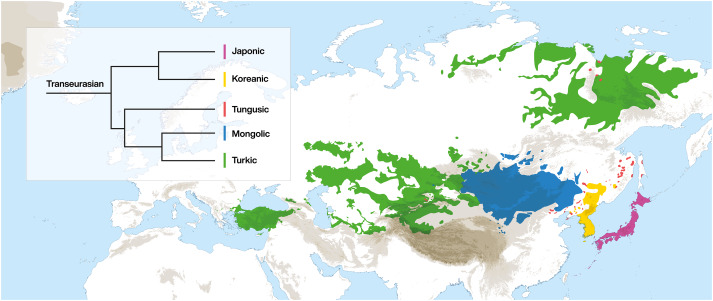
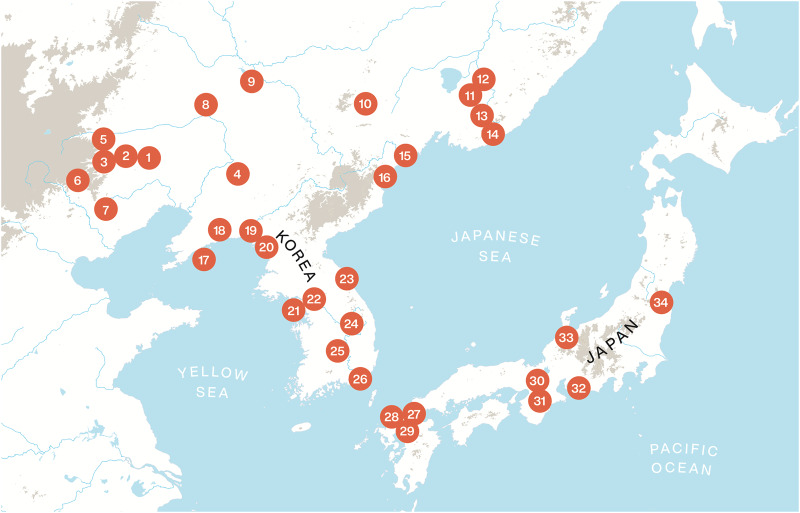
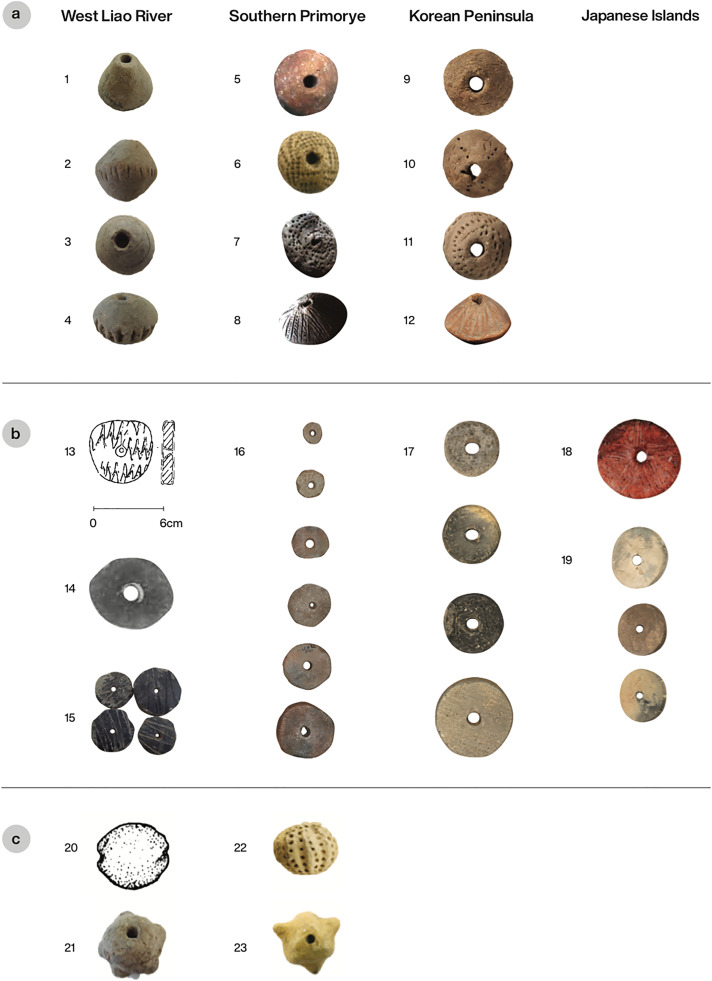
Archaeolinguistics, a field which combines language reconstruction and archaeology as a source of information on human prehistory, has much to offer to deepen our understanding of the Neolithic and Bronze Age in Northeast Asia. So far, integrated comparative analyses of words and tools for textile production are completely lacking for the Northeast Asian Neolithic and Bronze Age. To remedy this situation, here we integrate linguistic and archaeological evidence of textile production, with the aim of shedding light on ancient population movements in Northeast China, the Russian Far East, Korea and Japan. We show that the transition to more sophisticated textile technology in these regions can be associated not only with the adoption of millet agriculture but also with the spread of the languages of the so-called 'Transeurasian' family. In this way, our research provides indirect support for the Language/Farming Dispersal Hypothesis, which posits that language expansion from the Neolithic onwards was often associated with agricultural colonization.
考古语言学是一个将语言重建与考古学相结合的领域,作为人类史前史信息的一个来源,它能为加深我们对东北亚新石器时代和青铜时代的理解提供很多帮助。到目前为止,对于东北亚新石器时代和青铜时代,完全缺乏对纺织生产的词汇和工具的综合比较分析。为了弥补这种情况,我们在这里整合了纺织生产的语言和考古证据,目的是阐明中国东北、俄罗斯远东地区、朝鲜和日本古代的人口迁移情况。我们表明,这些地区向更复杂纺织技术的转变不仅可能与粟作农业的采用有关,还与所谓“跨欧亚”语系语言的传播有关。通过这种方式,我们的研究为语言/农业扩散假说提供了间接支持,该假说认为从新石器时代起语言的扩张往往与农业殖民有关。