Granito Carmen, Tehrani Jamie, Kendal Jeremy, Scott-Phillips Thom
Department of Anthropology, Durham University, Durham DH13LE, UK.
Department of Cognitive Science, Central European University, Budapest 1051, Hungary.
Evol Hum Sci. 2019 Jul 23;1:e8. doi: 10.1017/ehs.2019.8. eCollection 2019.
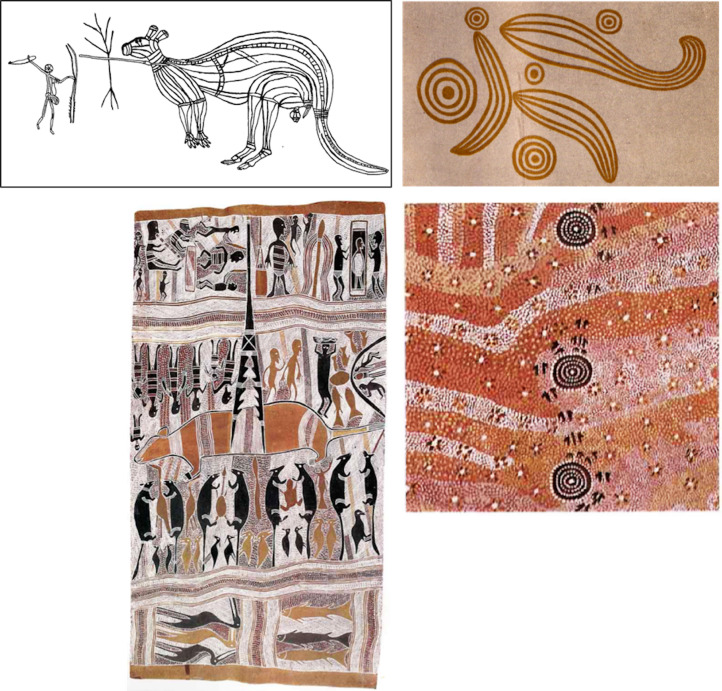
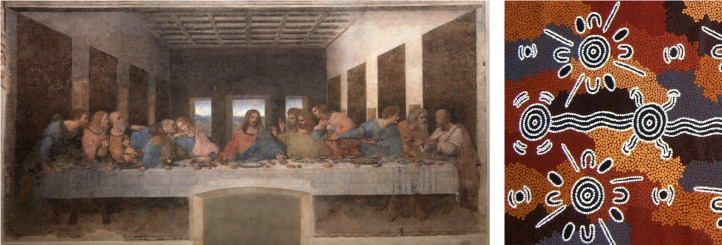
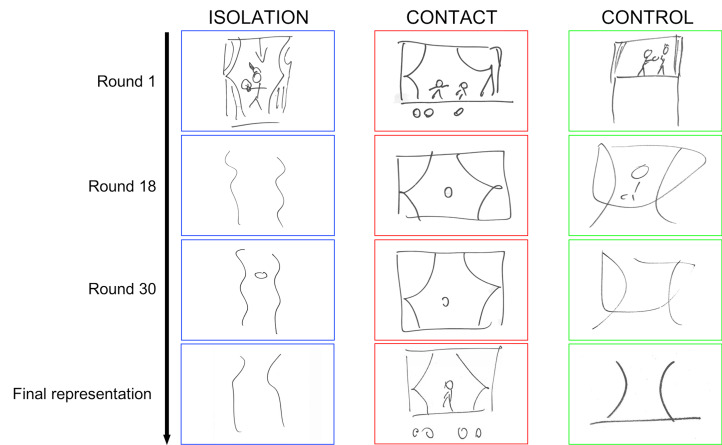
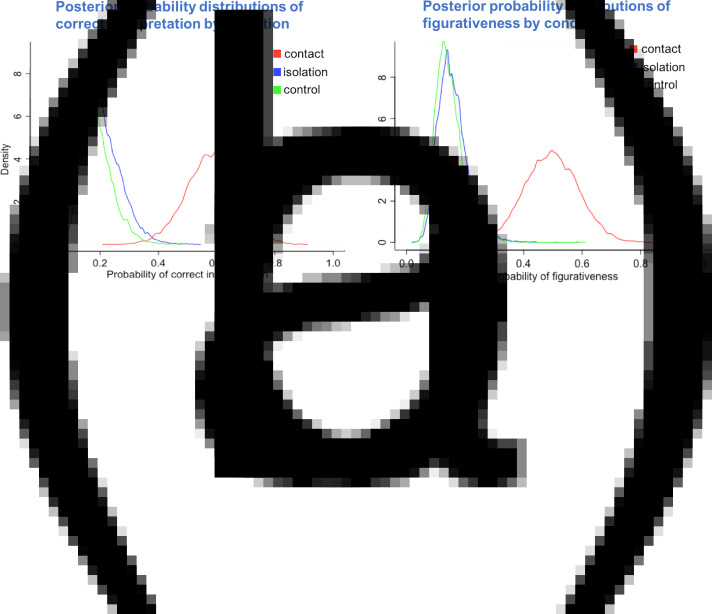
Pictorial representation is a key human behaviour. Cultures around the world have made images to convey information about living kinds, objects and ideas for at least 75,000 years, in forms as diverse as cave paintings, religious icons and emojis. However, styles of pictorial representation vary greatly between cultures and historical periods. In particular, they can differ in figurativeness, i.e. varying from detailed depictions of subjects to stylised abstract forms. Here we show that pictorial styles can be shaped by intergroup contact. We use data from experimental microsocieties to show that drawings produced by groups in contact tended to become more figurative and transparent to outsiders, whereas in isolated groups drawings tended to become abstract and opaque. These results indicate that intergroup contact is likely to be an important factor in the cultural evolution of pictorial representation, because the need to communicate with outsiders ensures that some figurativeness is retained over time. We discuss the implications of this finding for understanding the history and anthropology of art, and the parallels with sociolinguistics and language evolution.
图像表现是一种关键的人类行为。至少在75000年的时间里,世界各地的文化都通过图像来传达有关生物、物体和思想的信息,其形式多种多样,包括洞穴壁画、宗教图标和表情符号。然而,图像表现的风格在不同文化和历史时期之间差异很大。特别是,它们在具象性方面可能有所不同,即从对主题的详细描绘到风格化的抽象形式。在这里,我们表明图像风格可以受到群体间接触的影响。我们使用来自实验性微观社会的数据表明,有接触的群体所绘制的图画往往对外人来说变得更具具象性和易懂性,而在孤立的群体中,图画往往变得抽象且难懂。这些结果表明,群体间接触很可能是图像表现文化演变中的一个重要因素,因为与外人交流的需要确保了随着时间的推移一些具象性得以保留。我们讨论了这一发现对于理解艺术史和人类学的意义,以及与社会语言学和语言演变的相似之处。